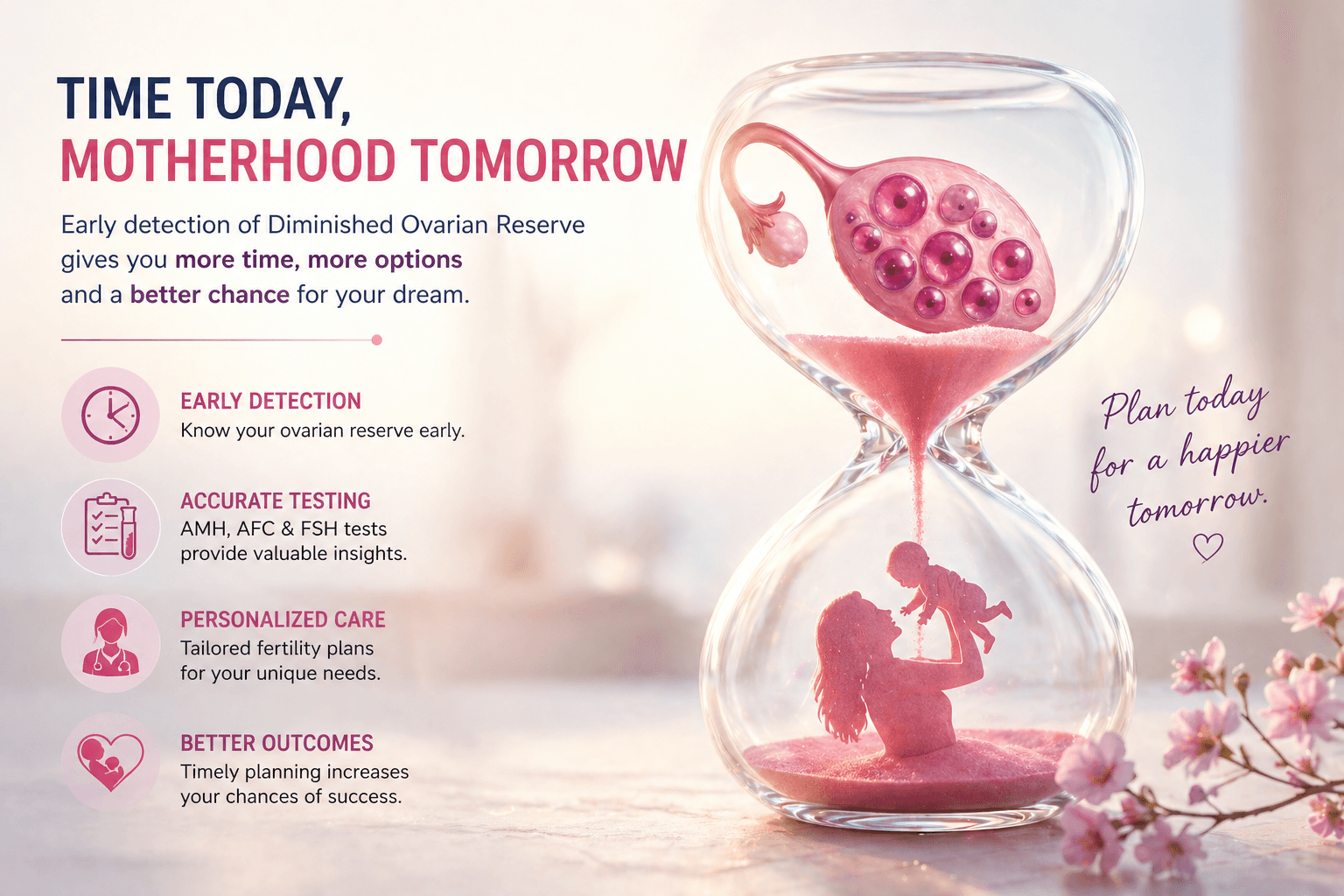
Diminished Ovarian Reserve: Early Detection and Fertility Planning
Introduction
Planning a family is one of the most important decisions in life. But what if your body’s biological clock is moving faster than expected?
Diminished Ovarian Reserve (DOR) is a condition that can quietly impact fertility without obvious symptoms. The good news is—early detection and proper planning can make a big difference.
In this blog, Dr. Poonam Goyal explains how to identify DOR early and what steps you can take to protect your fertility.
What is Diminished Ovarian Reserve?
Diminished Ovarian Reserve means the ovaries have fewer eggs than expected for a woman’s age.
It also often affects egg quality, which can make conception more difficult.
This condition can happen naturally with age, but in some women, it occurs earlier than usual.
Why Early Detection is Important
Early diagnosis gives you more options and better chances of success.
Many women discover DOR only after struggling to conceive, which delays treatment.
At clinics offering the Best female infertility in Delhi, early testing helps in timely decision-making and better outcomes.
Common Causes of DOR
Several factors can lead to reduced ovarian reserve:
Age (especially above 35 years)
Genetic factors
Previous ovarian surgery
Cancer treatments like chemotherapy
Smoking and unhealthy lifestyle
Understanding these causes helps in taking preventive steps. As Dr. Poonam Goyal often advises, awareness is the first step toward better fertility care.
How is Ovarian Reserve Tested?
Doctors use simple tests to assess ovarian reserve:
AMH Test: Measures egg reserve through a blood test
AFC Scan: Counts follicles via ultrasound
FSH Test: Checks hormone levels
These tests are quick and provide valuable insights when interpreted by experts like Dr. Poonam Goyal.
Fertility Planning Options
Having DOR does not mean you cannot become pregnant. It simply means you need a more planned approach.
1. IVF Treatment
IVF helps maximize the chances of pregnancy by retrieving and fertilizing eggs in a controlled environment.
Many centers known for the Best female fertility in Delhi offer advanced IVF protocols for better success rates.
2. Egg Freezing
If you are not ready for pregnancy, freezing eggs at an earlier stage can preserve fertility for the future.
3. Lifestyle Improvements
Small changes can support fertility:
Maintain a healthy weight
Eat a balanced diet
Reduce stress
Avoid smoking
4. Personalized Care
Every woman’s body is different.
That’s why Dr. Poonam Goyal focuses on customized treatment plans for each patient.
Role of Male Fertility
Fertility is not just about women. Male factors play an equal role.
Couples looking for the Best male fertility in Delhi should ensure both partners are evaluated for the best outcomes.
Real-Life Example
A 34-year-old woman with low AMH levels visited Dr. Poonam Goyal.
With early diagnosis and a personalized IVF plan, she successfully conceived within a short time.
This shows how timely action can change outcomes.
Conclusion
Diminished Ovarian Reserve can feel overwhelming, but it is manageable with the right approach.
Early testing, proper guidance, and timely treatment can significantly improve your chances of pregnancy.
If you are planning for the future or facing delays in conception, consulting an expert like Dr. Poonam Goyal can help you take the right steps.
Remember, fertility planning is not about fear—it’s about being informed and prepared.
FAQs
1. What is diminished ovarian reserve?
It means the ovaries have fewer eggs than expected, which can affect fertility.
2. Can I get pregnant with low ovarian reserve?
Yes, with treatments like IVF and early planning, many women conceive successfully.
3. When should I test my ovarian reserve?
Women above 30 or those delaying pregnancy should consider early testing.
4. Is diminished ovarian reserve reversible?
No, but proper treatment can improve pregnancy chances.
5. Why is male fertility important?
Both partners contribute to conception, so evaluating male fertility is equally important for success.
Appreciate the creator