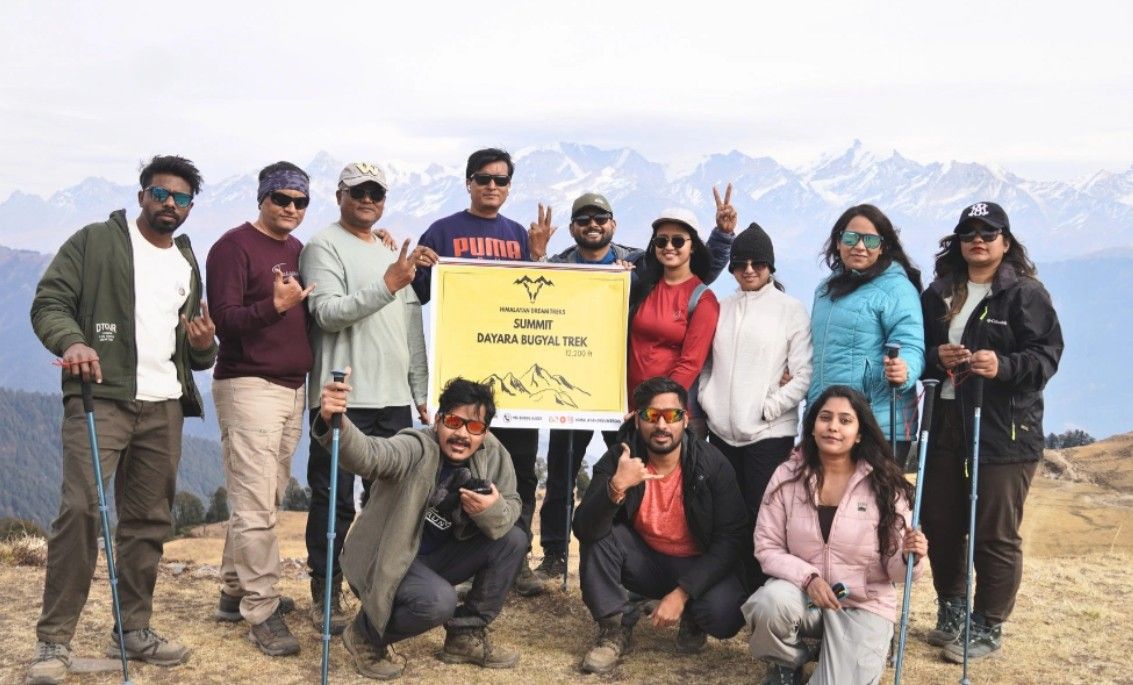
Dayara Bugyal Trek: A Complete Guide to Uttarakhand’s Beautiful Alpine Meadow
The Dayara Bugyal Trek is one of those Himalayan journeys where you do not need a complicated itinerary to enjoy the mountains. The trail takes you from the village of Raithal into wide alpine meadows, open mountain slopes, forests, and high Himalayan landscapes.
Located in Uttarkashi district of Uttarakhand, Dayara Bugyal sits at around 3,408 metres (11,181 feet) according to the Uttarakhand Tourism Development Board. The official tourism master plan also identifies Dayara Bugyal as a high-altitude meadow and a winter skiing destination.
What makes the place special is its open landscape. Instead of walking through forests for the entire trek, you eventually reach broad grass-covered slopes where the view suddenly opens up. And that is usually the moment when trekkers stop talking for a while. The mountains do that sometimes.
What Is Dayara Bugyal?
The word Bugyal is commonly used for high-altitude meadow in the Himalayan region. Dayara Bugyal is a large meadow area in Uttarakhand's Uttarkashi district.
The Uttarakhand Tourism Development Board places the meadow at about 3,408 metres and notes that the area covers roughly 28 square kilometres. The tourism master plan also highlights its potential for skiing during winter.
Dayara is not only a trekking destination. The state tourism policy lists it among Uttarakhand's adventure and eco-rural tourism destinations and also identifies it as a skiing destination.
That gives you a better idea of why Dayara attracts people in different seasons. Summer and autumn bring green and changing meadow landscapes, while winter can transform the area into a snow-covered mountain destination.
Where Is Dayara Bugyal Located?
Dayara Bugyal is located in Uttarkashi district of Uttarakhand.
The trek can be approached through more than one route. The official Uttarakhand Tourism master plan mentions both Barsu and Raithal as access villages. From Raithal, the trek to Dayara Bugyal is about 6 km, while the route from Barsu is about 8 km.
For trekkers planning the journey from Raithal, the village acts as the roadhead before the walking section begins.
Raithal is also more than just a starting point on a map. Uttarakhand Tourism describes it as an attractive village with an ancient temple overlooking the river valley.
So the journey begins before you even reach the meadow.
Dayara Bugyal Trek Route via Raithal
The Raithal to Dayara Bugyal route is popular because the walking section is relatively short compared with many longer Himalayan treks.
A simple route structure looks like this:
Raithal → Dayara Bugyal → explore the meadow → return towards Raithal
The exact itinerary can vary depending on the trek operator, camping arrangements, weather, and the amount of time you want to spend around the meadow.
The official tourism master plan states that the Raithal route requires roughly 6 km of trekking to reach Dayara Bugyal.
That distance should not make you think the trek is just a casual walk in a city park, though. You are still moving into high-altitude terrain, and the trail can feel different depending on weather, fitness, and the season.
How Difficult Is the Dayara Bugyal Trek?
The Dayara Bugyal Trek is generally considered a suitable Himalayan trek for people who have some basic fitness, but difficulty depends on the route, weather, snow, and itinerary.
The shorter approach from Raithal makes it attractive for beginners who want to experience a high-altitude meadow without committing to a very long trekking route.
Still, altitude matters.
At around 3,408 metres, Dayara is high enough for trekkers to notice the difference from the plains. You should therefore walk at a comfortable pace instead of trying to prove something to the person walking ten metres ahead of you.
Regular walking, stair climbing, and basic cardio before the trip can make the experience easier.
What Makes Dayara Bugyal Special?
The biggest attraction is the meadow itself.
Many Himalayan trails take you through forests, steep paths, rocky sections, and narrow mountain routes. Dayara gives you a different experience once you reach its open high altitude landscapes.
Dayara as a wide high altitude meadow surrounded by slopes and sparse forest or open vegetation
This open setting makes the destination particularly attractive for people who enjoy:
Wide Himalayan views
Alpine meadows
Forest trails
Snow during winter
Mountain photography
Camping
Short Himalayan treks
Peaceful village experiences
You do not need a long list of attractions here. The landscape is the attraction.
Best Time to Visit Dayara Bugyal
The best time for the Dayara Bugyal Trek depends on what you want from the journey.
Summer
Summer brings a greener side of the meadow and generally offers a pleasant setting for trekking.
The snow from winter gradually gives way to open slopes, making this season suitable for trekkers who want to experience Dayara without deep winter conditions.
Autumn
Autumn is one of the most attractive periods for Himalayan landscapes.
The skies can become clearer after the monsoon, and the meadow takes on a different character as the season changes.
If your priority is mountain views, photography, and comfortable trekking conditions, autumn can be a strong choice.
Winter
Winter completely changes the personality of Dayara.
The Uttarakhand Tourism master plan identifies Dayara as a winter skiing area and notes that its high-altitude slopes are suitable for snow-based activities.
If you want to see Dayara covered in snow, winter is the season to consider. However, snow conditions can vary from year to year, so nobody should promise a fixed amount of snow for a particular date.
That is one of those mountain realities that no SEO article should try to hide.
How to Reach Dayara Bugyal
By Road
The road journey usually takes you towards Bhatwari and then Raithal for the Raithal approach.
The official Uttarakhand Tourism master plan identifies Bhatwari as the nearby service centre and states that Raithal lies about 10 km from Bhatwari by road.
From Raithal, you continue on foot towards the meadow.
By Train
For travelers coming from other parts of India, rail travel can be combined with road travel towards Uttarkashi district.
Haridwar Railway Station as the nearest railhead in its Dayara Bugyal planning document and also notes that Dehradun railway station provides travel options.
By Air
The same tourism document identifies Jolly Grant Airport in Dehradun as the nearest airport for reaching the Dayara area. It lists the distance from Dehradun to Bhatwari at around 210 km.
Because mountain road travel can take longer than the same distance on a highway, plan your journey around actual road conditions rather than calculating travel time like you would for a city trip.
What to Pack for the Dayara Bugyal Trek
Packing for Dayara depends heavily on the season.
For a normal trekking trip, carry:
Comfortable trekking shoes
Warm layers
A waterproof jacket or rain protection
Water bottle
Sunglasses
Sunscreen
Personal medicines
Basic toiletries
Headlamp
Small first-aid kit
Backpack suitable for trekking
Winter requires more attention to insulation and protection from cold.
Do not pack your entire house. A lighter backpack makes uphill walking considerably more enjoyable.
Is Dayara Bugyal Good for Beginners?
For many first-time trekkers, Dayara can be a good introduction to Himalayan trekking because the Raithal approach to the meadow is relatively short.
But "beginner-friendly" does not mean "zero preparation required."
You still need to be comfortable walking uphill for several hours and spending time at high altitude. Weather can also change quickly in mountain regions.
Start preparing a few weeks before your trip with regular walking, stair climbing, or simple cardio.
The goal is not to become an Olympic athlete. The goal is simply to avoid discovering on the first climb that your legs had other plans.
Dayara Bugyal in Winter
Winter deserves special attention because Dayara has long been associated with snow and skiing.
Dayara as a skiing destination and notes that the meadow area provides suitable winter slopes.
A winter visit can offer snow-covered meadows, cold mountain air, and a very different landscape from the green-season experience.
However, winter trekking needs better preparation. Carry proper warm clothing, protect exposed skin, and check current weather and road conditions before starting the trip.
Why Choose Raithal for Dayara Bugyal?
Raithal is a practical starting point for trekkers who want to reach Dayara through one of its officially recognized approaches.
The route is also connected with the local village landscape rather than treating the trek as a simple point-to-point activity.
This adds a small but important part to the journey. You get to experience a Himalayan village before entering the open meadow landscape.
Responsible Trekking in Dayara Bugyal
Beautiful places stay beautiful only when visitors treat them properly.
Do not leave plastic, food wrappers, or other waste on the trail. Avoid damaging vegetation and respect local communities.
If you camp, follow the instructions of your trek team and local authorities regarding waste disposal, water use, and camping areas.
Dayara is also part of Uttarakhand's broader eco-rural and adventure tourism landscape. The state's tourism policy lists Dayara Bugyal under eco/rural tourism as well as adventure tourism.
Responsible travel helps protect the destination while supporting the local economy.
Dayara Bugyal Trek with a Local Trek Operator
If you are new to Himalayan trekking, joining an organized trek can make the logistics easier.
A good operator should clearly explain the itinerary, inclusions, accommodation, transport, meals, equipment, trek distance, and cancellation terms before you book.
Do not select a trek company only because its website says "best" five times on the same page. Check what the package actually includes.
For the Dayara Bugyal Trek, local knowledge can also help with route planning and changing mountain conditions.
Final Thoughts
The Dayara Bugyal Trek is a strong choice if you want to experience the open landscapes of the Uttarakhand Himalayas without choosing an extremely long trekking route.
Its high-altitude meadow, village approach from Raithal, forest sections, and seasonal changes give the journey a different feel throughout the year.
Dayara sits at around 3,408 metres, identifies Raithal as one of its access routes, and recognizes the area for trekking, eco-rural tourism, and winter skiing.
The best season ultimately depends on what you want to see. Choose summer or autumn for a greener and more open landscape, or winter if snow is your main reason for visiting.
Whichever season you choose, prepare properly, respect the mountains, and give yourself enough time to enjoy the trail. Dayara is not a place you need to rush through. The meadow will still be there when you stop for that extra photograph.
Frequently Asked Questions
What is the altitude of Dayara Bugyal?
Dayara Bugyal is located at approximately 3,408 metres (11,181 feet) above sea level, according to the Uttarakhand Tourism Development Board.
How long is the trek from Raithal to Dayara Bugyal?
The Uttarakhand Tourism master plan states that the trek from Raithal to Dayara Bugyal is about 6 km.
Where does the Dayara Bugyal Trek start?
The trek can start from Raithal or Barsu. For the Raithal route, Raithal serves as the roadhead before the trekking section begins.
Is Dayara Bugyal suitable for beginners?
The Raithal approach is relatively short, making Dayara a popular option for people looking for an introduction to high-altitude trekking. However, trekkers still need basic fitness and proper preparation for mountain conditions.
Which season is best for the Dayara Bugyal Trek?
It depend on your preference. Summer and autumn are suitable for green meadows and mountain landscapes, while winter is the season to consider if Your main goal is snow.
Appreciate the creator