Daily Habits That Keep Delhi Doctors Legally Safe
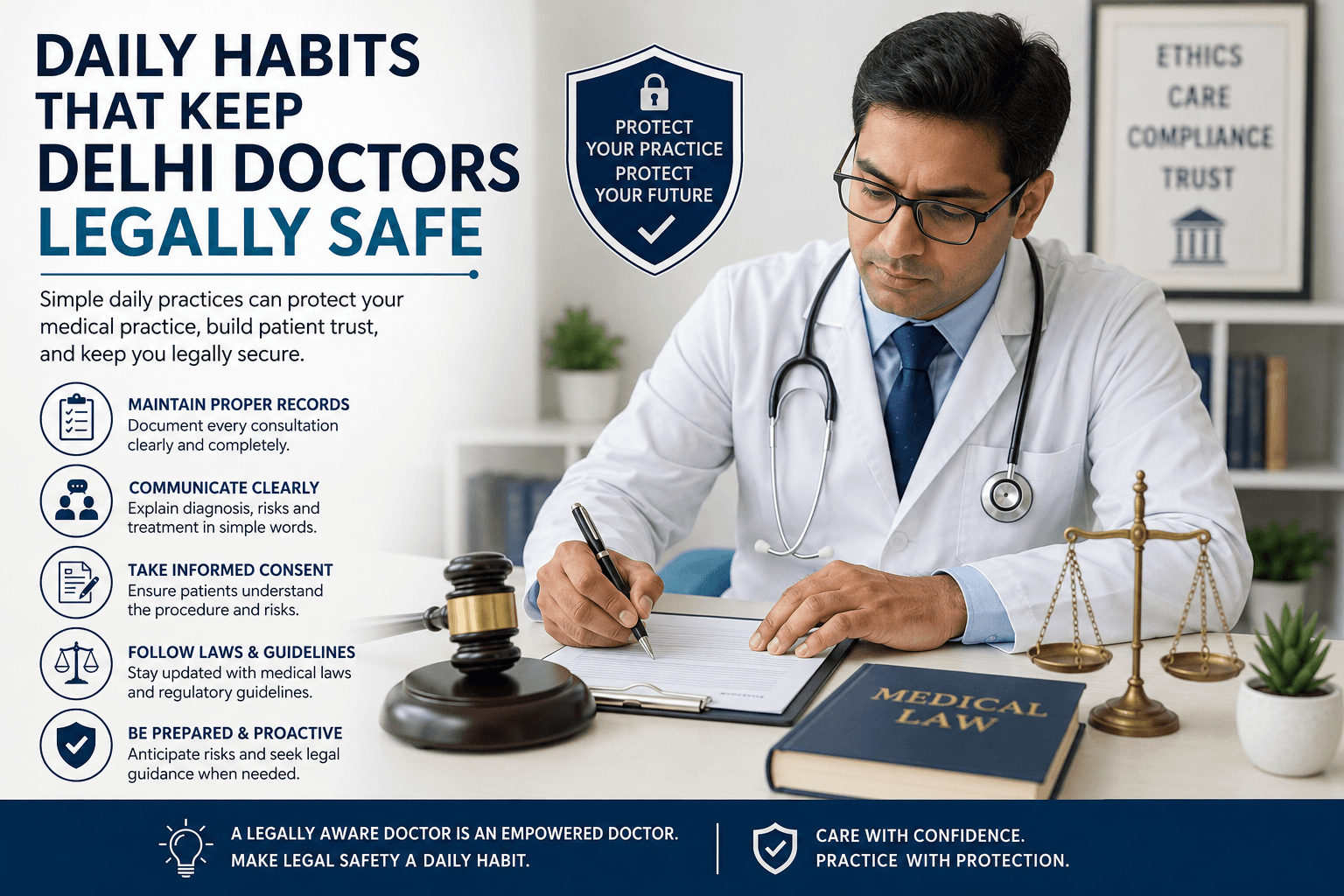
Introduction
Doctors in Delhi work under constant pressure. Long working hours, emergency cases, patient expectations, and increasing legal awareness among patients have made medical practice more challenging than ever. Even a small mistake in communication or documentation can lead to legal complaints, hospital disputes, or medico-legal cases.
This is why legal safety is no longer optional for doctors. Following simple daily habits can reduce risks and protect both professional reputation and mental peace. According to Dr. Vimalkant Goyal, doctors who maintain proper records, communicate clearly, and stay updated with medical laws are far less likely to face legal complications.
In today’s healthcare environment, every doctor should understand the importance of Medico legal advice for doctors in Delhi. Preventive legal awareness is always better than handling a lawsuit later. This blog explains practical daily habits that help doctors remain professionally and legally safe while building stronger trust with patients.
Common Causes of Legal Problems for Doctors
Many legal issues in medical practice happen because of routine mistakes that could have been avoided. Understanding the common causes is the first step toward prevention.
1. Poor Documentation
Incomplete or unclear medical records are among the biggest reasons doctors face legal trouble. If treatment details, prescriptions, investigations, or consent forms are missing, it becomes difficult to defend the case later.
Doctors should remember:
“No documentation” often means “No defense” legally.
Every consultation should be properly recorded.
Digital or handwritten records must be clear and readable.
2. Lack of Proper Communication
Many disputes happen not because of treatment failure, but because patients feel ignored or confused. Miscommunication regarding diagnosis, treatment risks, complications, or expenses can create misunderstanding.
Doctors who communicate calmly and transparently usually face fewer complaints.
3. Ignoring Consent Procedures
Performing procedures without proper informed consent can create serious legal complications. Patients must understand:
Nature of treatment
Risks involved
Possible complications
Alternative options
Proper consent is an essential part of the Legal compliance guide for doctors in Delhi.
4. Overconfidence or Verbal Assurances
Giving unrealistic guarantees like “100% recovery” or “nothing can go wrong” can become legally dangerous. Medical science always has limitations, and doctors should explain this honestly.
5. Non-Compliance with Medical Regulations
Delhi doctors must follow updated medical guidelines, biomedical waste rules, prescription norms, telemedicine regulations, and patient confidentiality standards.
Failing to follow these regulations may lead to penalties or complaints.
Signs You Should Not Ignore
Certain warning signs indicate that a case may become medico-legal in the future. Identifying these early can help doctors protect themselves.
1. Aggressive or Repeated Patient Complaints
If patients repeatedly question treatment, demand explanations aggressively, or threaten complaints, doctors should immediately strengthen documentation and communication.
2. Refusal to Follow Medical Advice
Patients who ignore treatment advice but later blame doctors can create legal challenges. Always document refusal of treatment, discharge against medical advice, or non-compliance.
3. High-Risk Procedures Without Documentation
Surgical cases, emergency management, ICU care, cosmetic procedures, and obstetric cases require extra caution. Missing consent or incomplete notes can become major problems later.
4. Social Media Threats or Online Reviews
Negative online allegations should never be ignored. Doctors should respond professionally and avoid emotional reactions. Taking proper legal guidance early is important.
5. Frequent Misunderstandings with Patients
If patients often appear confused about treatment plans, costs, or outcomes, communication methods may need improvement.
As explained by Dr. Vimalkant Goyal, early attention to these warning signs can prevent bigger legal complications in the future.
How to Fix / Treat Legal Risks in Medical Practice
Legal safety is not about fear. It is about building disciplined professional habits every day.
1. Maintain Detailed Medical Records
Good documentation is one of the strongest legal protections for doctors.
Include:
Patient history
Examination findings
Diagnosis
Prescriptions
Investigation reports
Follow-up advice
Consent forms
Digital records with date and time stamps are especially helpful.
2. Use Clear and Simple Communication
Avoid overly technical language while speaking with patients. Explain medical conditions in simple words.
Patients appreciate honesty more than false reassurance.
Good communication:
Builds trust
Reduces misunderstandings
Prevents conflicts
3. Follow Standard Treatment Protocols
Doctors should always stay updated with accepted clinical guidelines and hospital protocols.
Deviation from standard practice without justification can create legal vulnerability.
4. Obtain Proper Informed Consent
Consent forms should be:
Procedure-specific
Signed voluntarily
Clearly explained
Available in understandable language whenever possible
Never treat consent as just paperwork.
5. Stay Updated with Medical Laws
Healthcare laws and regulations continue to change. Doctors should regularly learn about:
Medical negligence laws
Consumer protection rules
Telemedicine guidelines
Record maintenance rules
Patient confidentiality standards
Seeking Best Medico legal Guidance for doctors in Delhi can help doctors stay updated and compliant.
6. Avoid Casual Communication on WhatsApp
Sharing prescriptions, medical opinions, or patient details casually on social media or messaging apps may create legal issues.
Always maintain professionalism in digital communication.
7. Take Professional Liability Insurance
Medical indemnity insurance provides financial protection during legal disputes. Every practicing doctor should consider adequate coverage.
Expert Tips
Build Patient Trust Daily
Patients who trust their doctors are less likely to file complaints. Respectful behavior, empathy, and patience make a major difference.
Never Alter Medical Records
Changing records later can create serious legal consequences. Corrections should always be transparent and properly marked.
Keep Emergency Protocols Ready
Clinics and hospitals should maintain:
Emergency preparedness
Referral systems
Staff training
Proper documentation systems
Conduct Regular Legal Awareness Training
Doctors and clinic staff should periodically learn about medico-legal safety practices.
According to Dr. Vimalkant Goyal, preventive legal education is one of the smartest investments for healthcare professionals today.
Seek Early Legal Guidance
If any dispute arises, doctors should not wait until the situation becomes serious. Early professional guidance often prevents escalation.
Many healthcare professionals now actively seek Medico legal advice for doctors in Delhi to reduce risks before problems occur.
Conclusion
Medical practice in Delhi is becoming increasingly complex. While doctors focus on patient care, legal awareness has also become essential for professional safety. Simple daily habits like proper documentation, informed consent, transparent communication, and regulatory compliance can significantly reduce medico-legal risks.
Doctors do not need to practice in fear. They simply need structured systems and responsible habits. Following a proper Legal compliance guide for doctors in Delhi helps create safer medical practice and stronger patient trust.
As emphasized by Dr. Vimalkant Goyal, prevention is always better than legal defense. A legally aware doctor is better prepared to protect both patients and professional reputation.
Healthcare professionals looking for Best Medico legal Guidance for doctors in Delhi should prioritize legal awareness as part of regular medical practice rather than waiting for legal problems to arise.
FAQs
1. Why is documentation important for doctors?
Documentation acts as legal evidence of treatment provided. Proper records help doctors defend themselves during disputes or complaints.
2. Can poor communication lead to legal cases?
Yes. Many medico-legal disputes arise because patients feel uninformed or misunderstood, even when treatment was medically correct.
3. Is informed consent legally necessary?
Absolutely. Informed consent protects both doctors and patients by ensuring transparency before treatment or procedures.
4. How can Delhi doctors reduce medico-legal risks?
Doctors can reduce risks by maintaining records, following treatment protocols, communicating clearly, and seeking regular legal awareness training.
5. When should a doctor seek medico-legal guidance?
Doctors should seek guidance whenever they face patient disputes, legal notices, consent issues, or uncertainty regarding medical regulations.
Appreciate the creator