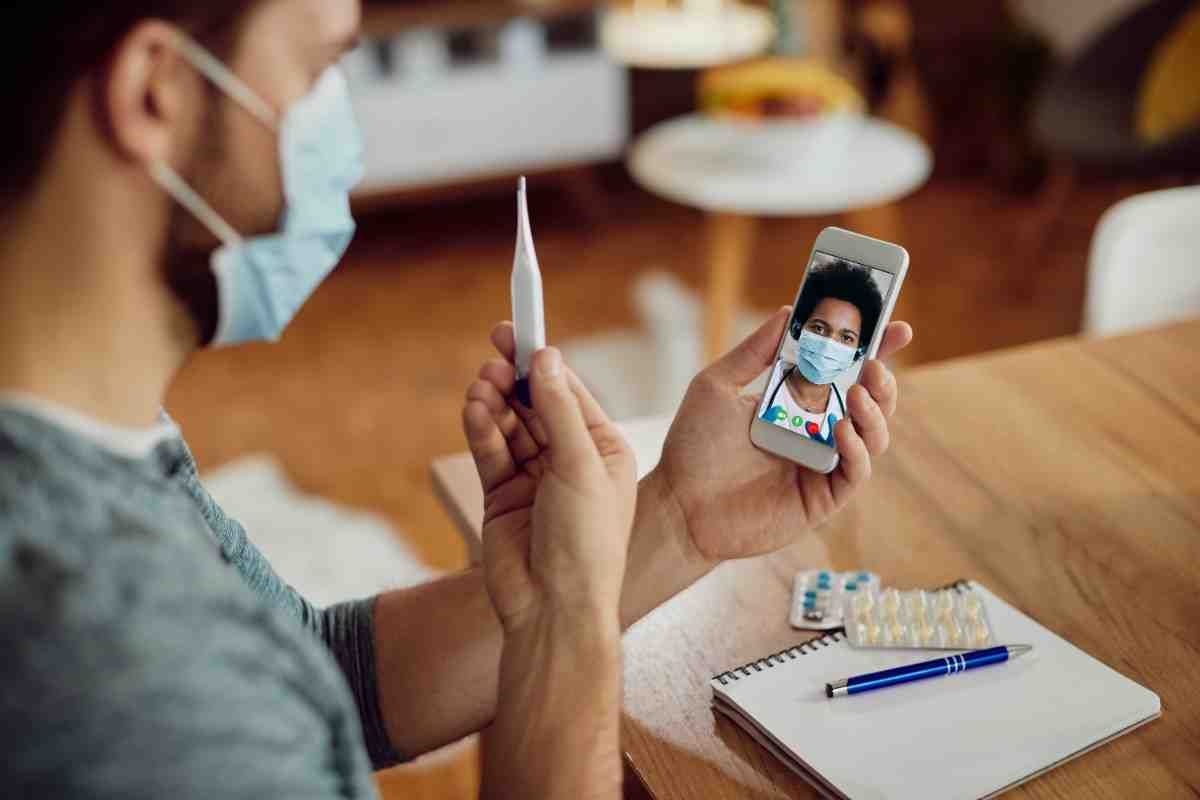
Custom Telemedicine App Development for Hospitals
Telemedicine isn’t new anymore. What’s new is the expectation.
Patients now assume they can consult a doctor the way they book a cab: quickly, clearly, and without a dozen “please try again” moments. Clinicians assume the system won’t crash mid-consult, won’t hide critical notes, and won’t turn every appointment into a tech support ticket. Hospital leadership assumes the platform will be secure, compliant, and measurable—because healthcare isn’t a place for “good enough.”
That’s why many hospitals are moving away from generic video tools and choosing custom telemedicine app development. Not because they want to reinvent the wheel, but because in healthcare, the wheel needs to fit the road: your workflows, your EMR, your specialties, your policies, your patient population.
If you’re exploring what a hospital-grade build looks like, here’s a direct reference: telemedicine video conferencing solutions.
Why hospitals outgrow off-the-shelf telemedicine tools
In the early phase, off-the-shelf tools feel like relief. You can start quickly. Clinicians can meet patients. Leadership can say, “We have telehealth.”
But then reality arrives:
A cardiology consult needs structured vitals and device data, not just video.
A follow-up visit needs seamless access to lab results and medication history.
Consent must be captured, stored, and audited correctly.
Different departments need different workflows.
Billing rules vary by region and payer.
Integration gaps create duplicate work—and clinicians are already stretched.
Hospitals don’t fail at telemedicine because video is hard. They struggle because care workflows are complex, and generic platforms force healthcare teams to bend around the software instead of the software bending around care delivery.
That’s where a custom approach becomes a strategic decision—not an IT indulgence.
What “custom telemedicine” actually includes (beyond video calls)
A telemedicine app is not a video feature with a hospital logo. A hospital-grade platform typically includes:
Patient experience
simple onboarding (mobile-first, low friction)
identity verification and patient profile
appointment booking and rescheduling
digital consent forms
pre-visit questionnaire (symptoms, history, attachments)
payments (if applicable) and invoice records
reminders via SMS/WhatsApp/email (based on local patient habits)
Clinician experience
a clean schedule with visit context
access to notes, past visits, meds, allergies
clinical documentation during the call
e-prescription workflow
lab orders, follow-up tasks, referrals
quick escalation to in-person care when needed
Hospital operations
admin panel for departments, roles, permissions
audit logs and security controls
reporting: no-show rates, consult time, outcomes signals
quality monitoring (call quality + workflow completion)
integration with EMR/EHR, LIS, RIS, PACS, pharmacy, billing
In other words: custom telemedicine is a care pathway, not just a call.
The workflows you should map before building anything
If you want the build to be smooth, don’t start with features. Start with patient journeys and clinical workflows.
Core flows hospitals typically map:
OPD follow-up
patient books → pre-visit form → doctor reviews → consult → prescription → follow-up schedule
Specialist consult
referral created → slot assigned → reports attached → consult → tests + next steps
Chronic care
recurring check-ins → monitoring data → adherence → escalation triggers
Post-discharge care
discharge summary → scheduled tele-follow-ups → symptom tracking → early warning flags
When hospitals skip this step, they end up with an app that “works,” but still forces staff to do manual work on the side—spreadsheets, phone calls, WhatsApp messages, and duplicate EMR entries. That’s where adoption drops.
Features that make clinicians and admins say “yes”
1) Reliable real-time communication (the base layer)
Hospitals need more than “video works sometimes.” They need consistent performance across real networks. That’s why the foundation must be telemedicine app development services in usa-grade in terms of reliability, security, and operational readiness—especially when serving diverse patient environments.
What that means in practice:
adaptive bitrate (degrade gracefully instead of failing)
audio-first stability (patients forgive soft video; not broken audio)
reconnect logic that feels automatic
device compatibility across common Android/iOS versions
2) Pre-consult “clinical snapshot”
Before a doctor joins, they should instantly see:
chief complaint + symptom summary
recent vitals (if available)
last visit notes
allergies and current medications
relevant reports or images uploaded by the patient
This saves time and improves clinical confidence.
3) Scheduling rules built for hospitals
Hospitals don’t schedule like salons. You need:
specialty-wise slot lengths
buffer time for documentation
emergency overrides
clinician availability across facilities
department-specific booking rules
4) Consent + documentation that stands up to audit
Consent isn’t a checkbox. Hospitals often need:
consent templates per department
OTP/e-sign confirmation
timestamp + audit trail
retention aligned to policy
5) Prescription + follow-up built in
Patients shouldn’t have to “wait for a WhatsApp PDF.” A proper flow includes:
structured prescription generation
download/share options
pharmacy workflow integration where feasible
follow-up scheduling prompts
Security and compliance: what “hospital-grade” should mean
Telemedicine touches sensitive health data. Whether you’re aligning to HIPAA, GDPR, local health data regulations, or internal hospital governance, the principles stay consistent:
role-based access control (RBAC)
encryption in transit and at rest
secure authentication + short-lived session tokens
audit logs for access, changes, downloads, recordings
data minimization (store only what’s required)
secure uploads for reports, prescriptions, medical images
consent and retention policies that match hospital standards
If you plan to record consultations, treat it as a separate high-risk feature with explicit consent, strict access control, and secure storage.
Integrations: where telemedicine projects win or lose
A hospital telemedicine app is only as useful as its ability to connect with existing systems.
Common integration targets:
EMR/EHR for clinical records
billing systems for payments/claims
LIS for lab orders/results
RIS/PACS for imaging workflows
pharmacy for e-prescriptions and fulfillment
SSO/Identity for staff access control
If full integration can’t happen immediately, plan it in stages:
Phase 1: basic sync (patient ID, appointment ID, visit summary)
Phase 2: orders, notes, medications
Phase 3: unified workflow (no duplicate entry)
Hospitals should aim to reduce “double documentation.” That’s what makes clinicians resent new platforms.
Cost reality: what hospitals should consider (without overcomplicating it)
Hospitals often ask about budget early, and the honest answer is: cost depends on scope, integrations, and compliance depth.
A useful way to think about telehealth software cost in india (or any region) is to separate it into:
Build cost (features + platforms + integrations)
Operational cost (video infrastructure, scaling, monitoring, support)
Compliance cost (audits, security hardening, governance)
Change cost (training, adoption, internal processes)
A “cheap” telemedicine app becomes expensive when it fails in production or forces clinicians into extra work.
A realistic roadmap hospitals can actually execute
Phase 1: MVP (foundation)
patient onboarding
appointment booking
secure video consult
basic documentation
prescription download
admin panel + roles
Phase 2: Workflow depth
department-wise scheduling rules
consent templates by specialty
structured visit notes
initial EMR integration
Phase 3: Scale + optimization
multi-hospital rollout
analytics dashboards
call quality monitoring + alerts
automation (reminders, follow-ups)
deeper integrations (LIS/PACS/pharmacy)
Phase 4: Differentiation
chronic care programs
post-discharge pathways
remote monitoring integration
AI-assisted summaries (with strict governance)
Common mistakes hospitals should avoid
Starting with video instead of workflow
Ignoring clinician UX (documentation friction kills adoption)
Weak onboarding and patient support
No observability (you can’t improve what you can’t measure)
Treating integration as a “later” problem
The human part: telemedicine is about confidence
When telemedicine works, it’s almost invisible. The patient feels cared for. The doctor feels in control. The hospital feels safe and compliant. That quiet confidence—steady, reliable, predictable—is what custom development is really buying.
Because in healthcare, the best technology isn’t the one that looks impressive in a demo. It’s the one that holds up when a worried parent calls at night, when a chronic patient needs clarity, or when a clinician is already behind schedule.
FAQs
1) Why should hospitals build a custom telemedicine app instead of using Zoom/Meet?
Generic tools are great for calls, but hospitals need clinical workflows: scheduling rules, consent, documentation, prescriptions, integrations, audit logs, and compliance controls. Custom builds fit care delivery.
2) What features matter most for hospital adoption?
Reliable audio/video, pre-consult clinical snapshot, fast documentation, e-prescriptions, department-based scheduling, and seamless EMR integration are usually the biggest adoption drivers.
3) How do we ensure telemedicine works on low bandwidth?
Use adaptive bitrate, audio-first stability, reconnect logic, and device optimization. Build patient UX that prevents failures before they happen (permission checks, pre-join testing).
4) Can telemedicine integrate with our EMR/EHR?
Yes. Most hospitals integrate via APIs or standards like HL7/FHIR (depending on the EMR). Many projects do it in phases to reduce disruption.
5) Is recording teleconsultations recommended?
Only when clinically required and legally permitted. If enabled, it must include explicit consent, strict access control, audit logs, and secure storage.
CTA
If your hospital wants telehealth that clinicians actually use and patients actually trust, build it around care—not around a generic meeting tool.
Explore a robust delivery approach here: best telemedicine app development company in usa
#Telemedicine #Telehealth #HealthcareIT #HospitalSoftware #TelemedicineAppDevelopment #DigitalHealth #RemoteCare #VirtualCare #HIPAA #EHRIntegration #PatientExperience #HealthcareInnovation
Appreciate the creator