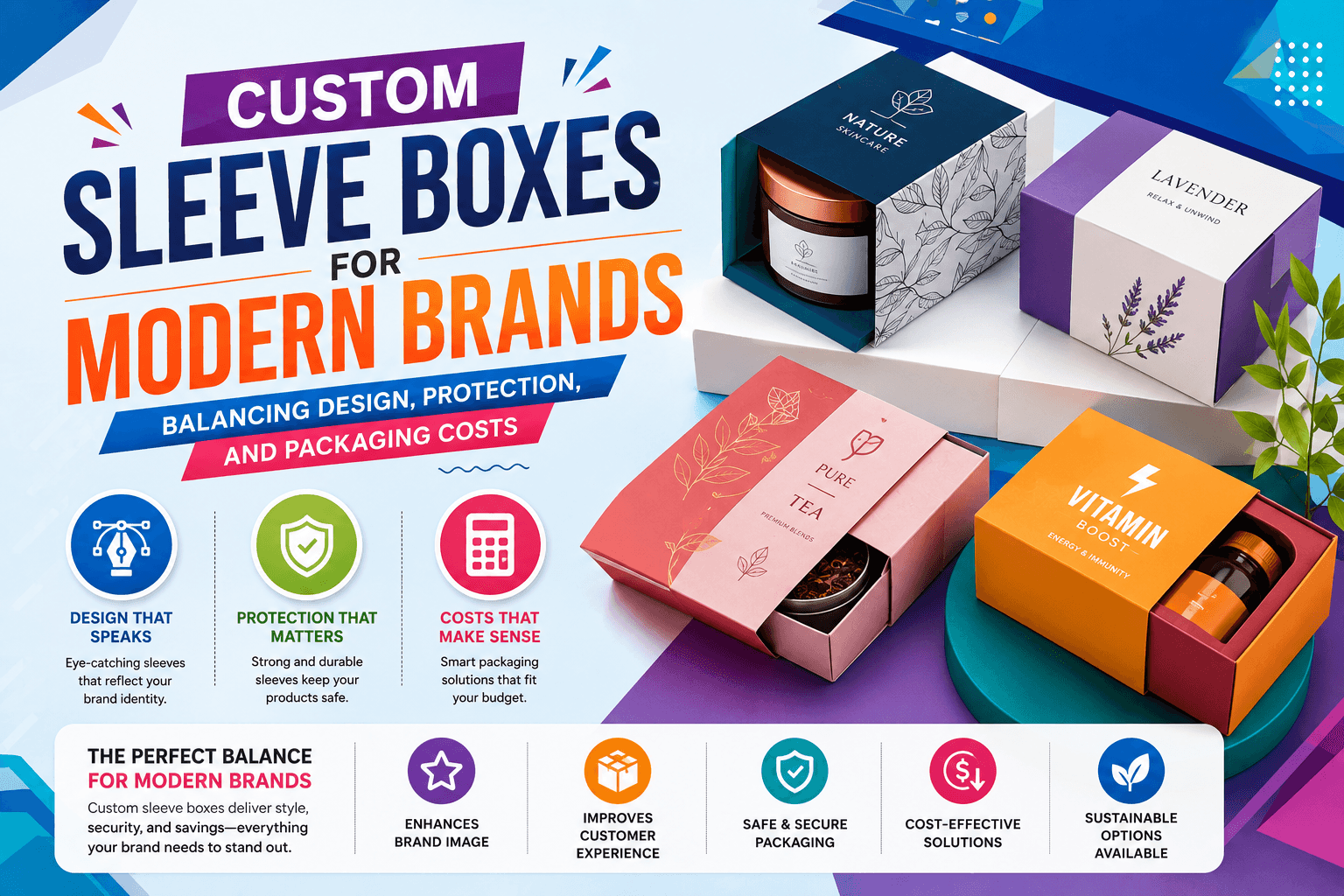
Custom Sleeve Boxes for Modern Brands: Balancing Design, Protection, and Packaging Costs
A product can be excellent, but customers often meet the packaging before they meet the product. The box they see on a shelf or receive at their door can shape their first opinion about the brand. This makes packaging an important part of the product experience.
Modern businesses are looking for packaging that can do several jobs at the same time. It should look attractive, protect the item, communicate the brand, and remain affordable to produce. Custom sleeve boxes are one option that can bring these needs together.
A sleeve box usually combines a structured inner box with a printed outer sleeve. The inner part gives the product support, while the sleeve provides a large surface for branding and design. This simple combination gives businesses room to create a distinctive package without making the whole structure unnecessarily complex.
The real challenge is finding the right balance. A brand needs enough design to stand out, enough strength to protect its product, and enough cost control to keep the packaging financially sensible.
Why the Outer Layer Matters So Much
The outer part of a package is often the first visual contact between a customer and a product.
Before opening the box, customers may notice the logo, colors, product name, graphics, and overall finish. These details can quickly tell them whether the product feels simple, premium, playful, natural, modern, or professional.
A custom sleeve gives brands control over this first impression.
Instead of relying on a plain box, a company can use the sleeve to create a clear visual introduction. It can show what the product is and give customers a quick idea of what the brand stands for.
This makes the sleeve more than a cover. It becomes part of the product presentation.
One Box, Two Different Jobs
The main advantage of a sleeve box is that its two parts can perform different functions.
The inner box can focus on holding and protecting the product. It provides the structure needed during storage, handling, and transportation.
The outer sleeve can focus more on appearance and communication. It can carry the brand logo, product details, artwork, colors, and other visual elements.
Because the responsibilities are divided, businesses can create a package that is both practical and attractive.
This approach can also make future design changes easier because the outside appearance can be updated without completely changing the basic box concept.
Design Should Follow the Product, Not Fight It
Good packaging design starts with the product.
A sleeve for a luxury item should not necessarily look the same as one for a casual everyday product. The audience, price level, product category, and brand personality should all influence the design.
A clean design may work well for a minimalist brand. A colorful design may suit a product aimed at younger customers. A natural-looking design may fit a company that wants to communicate simplicity.
The important point is that the sleeve should make sense for the product.
When the design feels connected to what is inside, the package becomes easier for customers to understand.
Strong Branding Does Not Need a Crowded Sleeve
Some brands try to use every part of the sleeve. They add large graphics, multiple fonts, long descriptions, several colors, and many promotional messages.
The result can become difficult to read.
Modern packaging often works better when it has a clear visual focus. The brand name, product name, and most important message should be easy to find.
Empty space is not wasted space. It can help important elements stand out.
A simple sleeve with a strong layout can look more professional than a complicated design filled with unnecessary details.
Protection Begins With Accurate Measurements
Before thinking about artwork, a business should understand the physical needs of its product.
The box should be measured according to the product's length, width, height, weight, and shape. Fragile products may need additional support, while stronger items may require less internal protection.
A box that is too loose can allow the product to move during transportation. A box that is too tight can make packing and opening difficult.
Accurate sizing helps create a safer package and can also prevent unnecessary material use.
This is one area where careful planning can improve both protection and cost.
The Sleeve Is Not a Substitute for Product Protection
It is important to understand the role of the sleeve.
The sleeve mainly adds branding and presentation. It can provide some extra coverage, but it should not be expected to perform the entire protective job of the inner box.
The main box should be strong enough for the product and the conditions it will face.
For products that travel long distances, the packaging should also consider handling, stacking, movement, and possible pressure during delivery.
When the inner structure is properly designed, the sleeve can focus on its visual role without being overloaded with protective responsibilities.
Material Choices Can Change the Whole Equation
Packaging material affects several parts of the final result.
A thicker board may create a stronger and more substantial feel, but it may also cost more and add weight. A lighter material may reduce expenses while still being suitable for products that do not require heavy protection.
The correct choice depends on the product.
A company should not automatically choose the thickest option. Instead, it should determine how much strength is actually needed.
Using the right material rather than simply using more material can help a brand create better packaging efficiency.
A Beautiful Finish Is Only Valuable When It Adds Value
Special finishing can make sleeve packaging more noticeable.
Options such as foil details, raised elements, soft-touch surfaces, or different textures may create a premium appearance. But these features can also increase production costs.
The question should not be, “What finishes can we add?”
A better question is, “Which finish supports our product and customers?”
If a small finishing detail makes the package more attractive and fits the brand, it may be worth the extra cost. If it adds expense without improving the customer experience, it may be better to leave it out.
Packaging Costs Begin Before Printing
The final price of a sleeve box is influenced by more than the printed design.
Businesses may need to consider:
Box material
Sleeve material
Package dimensions
Printing method
Finishing choices
Production quantity
Setup requirements
Storage
Shipping
Design and sampling
Looking at the complete cost gives a more realistic picture.
A package that seems cheap during production may become expensive if it takes up too much warehouse space or increases shipping costs.
Smaller Dimensions Can Help Control Expenses
Size matters more than many businesses realize.
A larger box can require more material. It can also take up more space during storage and transportation.
If the product can safely fit into a smaller package, reducing unnecessary space may help control several costs at once.
However, the goal should not be to make the package as small as possible.
There must be enough room for the product, protective materials when needed, and a comfortable opening experience.
The best size is the one that fits the product properly without creating unnecessary space.
Production Quantity Can Change the Price Per Box
The number of boxes ordered can influence the unit cost.
Larger production runs may lower the cost per package, while small quantities may have a higher unit price.
For a growing business, this creates an important decision.
Ordering too little may increase the cost per unit. Ordering too much can leave the company with unused packaging if the product design or branding changes.
Businesses should consider expected sales, product stability, storage capacity, and future design changes before choosing a quantity.
Shipping Should Be Considered During Design
A package may look perfect in a showroom but create problems when it enters the delivery system.
Products shipped to customers can experience movement, pressure, stacking, and repeated handling. The package should be designed with these conditions in mind.
Size and weight can also affect delivery costs.
A smart sleeve box design considers the entire journey from the production facility to the customer's hands.
This is why packaging decisions should not be made only by looking at the package on a table.
A Consistent Sleeve Can Build a Product Family
Brands with several products can use sleeve design to create a connected product range.
The basic design language can remain the same while colors, names, images, or other details change for each product.
This allows customers to recognize that different products belong to the same company.
For example, a brand might use the same logo position and typography across all products while giving each item its own color.
This creates consistency without making every package look identical.
Testing the Package Can Reveal Hidden Problems
A digital design may look perfect on a screen, but physical packaging can behave differently.
A sample can show whether the sleeve fits correctly, whether the box closes properly, whether the product moves inside, and whether the printed design looks as expected.
Testing also gives businesses a chance to hold the package and experience it as a customer would.
This step can prevent larger problems during mass production.
Spending time on a sample can be much cheaper than correcting thousands of finished boxes.
Cost Cutting Should Not Damage the Brand Image
Reducing packaging costs is useful when it removes waste.
It becomes risky when it removes the features customers actually notice.
For example, using an unnecessarily large box may be wasteful. Removing important product information may not be.
Likewise, simplifying an overly complex design can save money without making the package look cheap. But choosing very poor printing quality may damage the brand image.
The goal should be smart savings rather than simply choosing the lowest possible price.
Custom Sleeves Can Make Packaging Changes Easier
Markets change quickly.
Brands may introduce seasonal products, limited editions, special offers, or updated visual campaigns.
A custom sleeve can make these changes easier because the outer presentation can be modified while the basic box structure remains similar.
This can give businesses more flexibility.
Instead of creating a completely new package for every small campaign, a brand may be able to use a new sleeve design with an existing box format, depending on its packaging setup.
What Customers Notice Is Not Always What Costs Most
One useful lesson in packaging is that expensive does not always mean impressive.
Customers may respond strongly to simple things such as:
Clear branding
Good color choices
Clean printing
Proper proportions
A sleeve that fits neatly
A box that feels secure
Easy-to-read information
These details may not require the most expensive production methods.
A smart brand focuses its budget on the elements customers can actually see, feel, and use.
Finding the Right Packaging Balance
Modern packaging requires more than choosing between cheap and expensive options.
A brand needs to think about the complete purpose of the package.
Design should attract attention and represent the brand.
Protection should keep the product safe during handling and delivery.
Cost should remain suitable for the company's pricing and profit goals.
If one of these areas is ignored, the package may create problems elsewhere.
A beautiful package that damages easily is not a good solution. A strong package that looks completely generic may miss a branding opportunity. An inexpensive package that makes the product look low-quality can also work against the business.
The best sleeve box brings all three areas together.
Building a Packaging Strategy That Can Grow
A good packaging decision should work not only for today's product but also for the future.
Brands should consider whether the box size can support new products, whether the sleeve design can be adapted, and whether the packaging process can handle increased orders.
Thinking ahead can reduce the need for frequent packaging changes.
It also helps create a more consistent brand experience as the business grows.
Final Thoughts: Better Packaging Comes From Better Choices
Custom sleeve boxes can give modern brands a useful middle ground between appearance, protection, and cost. The sleeve creates space for branding and visual creativity, while the inner box can be designed around the physical needs of the product.
The smartest approach is not to add every possible packaging feature. It is to understand what the product needs, what customers notice, and where the packaging budget should go.
A well-sized box, suitable material, focused artwork, and sensible production plan can create packaging that feels valuable without becoming unnecessarily expensive.
For modern brands, successful packaging is about making every part work together. When design attracts attention, structure protects the product, and costs stay under control, a simple sleeve box can become a powerful part of the product experience.
Read More Information about this Product: https://ibexpackaging.com/custom-sleeve-boxes (https://ibexpackaging.com/custom-sleeve-boxes)
Appreciate the creator