Credit Balance Services
In today’s complex healthcare billing environment, managing revenue efficiently is more important than ever. One often-overlooked area that significantly impacts financial performance is credit balance management. Without proper monitoring, credit balances can lead to compliance risks, revenue leakage, and payer disputes.
Credit balance services help healthcare providers identify, analyze, and resolve overpayments before they become costly problems.
What Are Credit Balances?
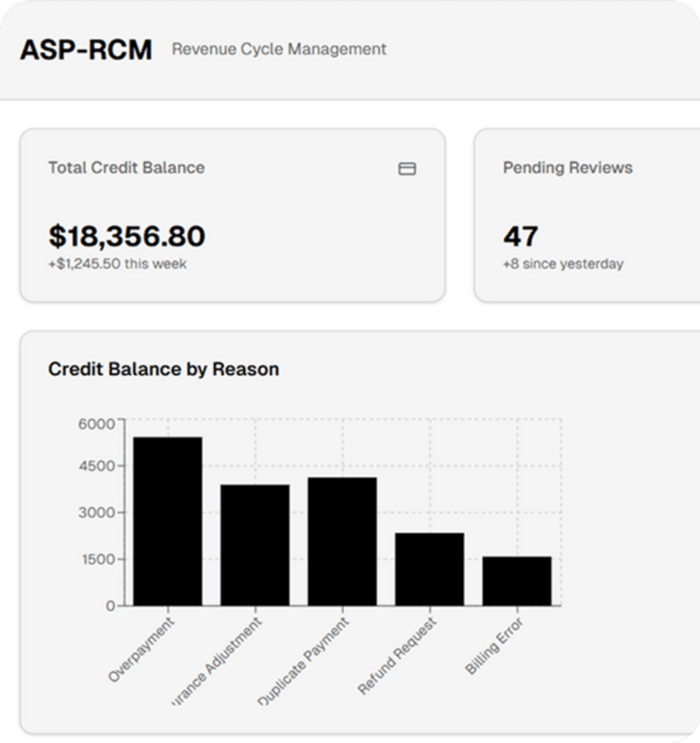
A credit balance occurs when a healthcare provider receives payment that exceeds the amount owed for a claim. This can happen due to:
Duplicate payments from insurance payers
Coordination of benefits errors
Overpayments from government programs like Medicare
Patient overpayments
Incorrect contractual adjustments
If not addressed promptly, credit balances may result in audits, penalties, or refund demands.
Why Credit Balance Resolution Is Critical
1. Compliance with Federal Regulations
Government programs such as Medicaid and Medicare require providers to report and refund overpayments within specific timeframes. Failure to do so may lead to penalties under the False Claims Act.
2. Reduced Audit Risk
Unresolved credit balances can trigger payer audits. A proactive credit balance review minimizes compliance risks and strengthens audit readiness.
3. Improved Cash Flow Accuracy
Proper reconciliation ensures financial statements accurately reflect accounts receivable and prevents revenue distortion.
4. Stronger Payer Relationships
Timely refunds and accurate adjustments improve trust with insurance payers and reduce future claim disputes.
What Do Credit Balance Services Include?
Professional credit balance services typically cover:
Detailed account review and reconciliation
Root cause analysis of overpayments
Payer and patient refund processing
Compliance documentation and reporting
Prevention strategies to reduce recurring errors
By outsourcing this function, healthcare providers can focus on patient care while revenue cycle experts handle complex payment discrepancies.
Common Causes of Credit Balances
Understanding the root cause is key to prevention. Frequent issues include:
Incorrect payment posting
Failure to update insurance information
Billing errors or coding discrepancies
Contract miscalculations
Secondary insurance processing delays
A structured review process identifies trends and helps prevent repeat issues.
Benefits of Outsourcing Credit Balance Services
Many healthcare organizations choose to outsource credit balance management because it offers:
Faster identification of overpayments
Dedicated compliance oversight
Reduced internal workload
Cost savings compared to in-house audits
Enhanced revenue cycle efficiency
An experienced Revenue Cycle Management (RCM) team ensures refunds are processed accurately and in accordance with federal and state regulations.
Conclusion
Credit balance services are essential for maintaining compliance, protecting revenue, and ensuring financial transparency. In an increasingly regulated healthcare environment, proactive credit balance management is no longer optional — it is a critical component of a healthy revenue cycle.
Healthcare providers who invest in professional credit balance services can reduce risk, improve operational efficiency, and maintain strong payer relationships.
Appreciate the creator