Connecting Smart Sensors Across Remote Irish Farms
The landscape of Irish agriculture is undergoing a quiet, high-tech revolution. Progressive farmers are increasingly turning to 'smart' technology to maximise yields, reduce waste, and improve environmental sustainability. The cornerstone of this new approach is the deployment of hundreds of small, battery-powered smart sensors across the farm. These devices monitor everything from soil moisture levels in distant arable fields to the exact temperature and humidity within remote grain silos. This constant stream of data allows the farmer to make highly precise, informed decisions. However, this entire high-tech ecosystem collapses if the remote sensors cannot find a reliable mobile network to transmit their data back to the farmhouse.
The Power of Real-Time Agricultural Data
The value of a smart sensor lies entirely in its ability to provide real-time information. For example, a soil moisture sensor placed in a remote potato field can alert a farmer exactly when irrigation is required, preventing crop stress and saving massive amounts of water. Similarly, sensors placed in grain stores can instantly detect a dangerous rise in temperature, allowing the farmer to activate cooling fans before the entire harvest spoils. However, these sensors do not have the power to broadcast this data over long distances via Wi-Fi. They rely almost exclusively on low-power cellular networks, similar to a basic mobile phone connection, to send their vital alerts.
The Challenge of Geography and Distance
The primary obstacle to this smart farming revolution is the sheer size and rugged geography of the typical Irish farm. Agricultural land is frequently located miles away from the nearest town and its associated telecommunications masts. Furthermore, the land itself is rarely flat. A sensor placed at the bottom of a deep valley or behind a dense, mature forestry plantation will severely struggle to establish a line of sight with any distant cellular tower. If the sensor is located in a geographical dead zone, it cannot transmit its data. The farmer is left completely blind to the conditions in that remote field, rendering the expensive sensor entirely useless.
The Frustration of Incomplete System Coverage
When a farmer invests heavily in an automated sensor network, they expect comprehensive coverage. If only the sensors located near the main farmyard can connect to the network, while the devices in the outlying fields drop offline constantly, the system is fundamentally flawed. The farmer cannot make accurate, farm-wide decisions based on incomplete data. Furthermore, constantly driving out to remote fields simply to check if a sensor is working or to manually download data defeats the entire purpose of investing in remote automation in the first place. The technology must work seamlessly in the background to be truly effective.
Establishing a Dedicated Agricultural Network
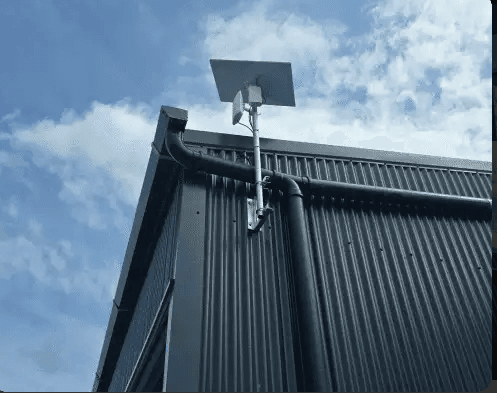
To fully realise the incredible benefits of smart agriculture, farmers must take proactive steps to bridge these geographical communication gaps. Relying on patchy ambient coverage is insufficient for a modern commercial operation. The most robust solution is to establish a dedicated, amplified network across the property. By installing a powerful, agricultural-grade mobile phone signal booster system on a high point of the farm—such as the top of a grain silo or a tall dedicated mast—the farmer can capture a faint distant signal and broadcast it powerfully across the remote fields. This ensures that every smart sensor, regardless of its location in a dip or behind trees, has a rock-solid connection to transmit its vital data continuously.
Conclusion
Smart sensors offer Irish farmers unprecedented control and insight into their operations, but these devices are entirely dependent on reliable cellular connectivity. Acknowledging that the vast distances and rugged terrain of a rural farm actively block these crucial data transmissions is the first step toward a solution. By investing in dedicated, high-power network amplification, farmers can guarantee that their entire smart ecosystem remains online, ensuring maximum efficiency and profitability across every acre of their land.
Call to Action
Are your remote agricultural sensors dropping offline due to poor mobile coverage in distant fields? Ensure your smart farm operates with absolute reliability. Contact our agricultural tech team today to discuss high-power, wide-area amplification solutions for your land.
Visit
Appreciate the creator