Comprehensive Guide to Slurry Pumps: Principles, Types, and Applications
Introduction
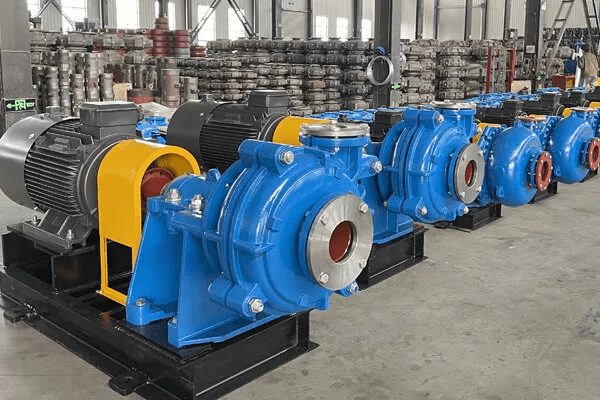
Slurry pumps play a crucial role in various industries, particularly in mining, wastewater treatment, construction, and dredging. These industrial slurry pumps are specifically designed to transport liquid mixtures containing solid particles and must be highly resistant to abrasion and corrosion to withstand harsh operating conditions.
This guide provides an in-depth exploration of slurry pumps, including their definition, working principles, different types, application areas, and key factors to consider when selecting the right slurry pump. By understanding these elements, you can make informed decisions to enhance equipment efficiency and reduce operational costs.
Definition and Function of Slurry Pumps
A slurry pump is a pump designed to handle high-density liquid mixtures containing solid particles. Unlike standard water pumps, slurry pumps must resist wear, corrosion, and high-stress conditions to ensure effective transportation in demanding industrial applications.
Primary Functions:
Provide sufficient hydraulic energy to ensure smooth slurry flow through pipelines and channels.
Handle highly abrasive materials while extending pump lifespan.
Serve various industries, including mining, metallurgy, wastewater treatment, and chemical processing.
Types of Slurries
Based on solid particle content, size, and abrasiveness, slurries can be classified into the following categories:
Light-Duty Slurry
Contains small, low-abrasion particles.
Common applications: paper manufacturing, food processing, certain chemical processes.
Key challenge: preventing clogging while maintaining smooth pump operation.
Medium-Duty Slurry
Higher solid concentration and more abrasive than light-duty slurries.
Common applications: chemical processing, wastewater treatment, coal slurry pump applications for coal transport.
Key challenge: balancing wear resistance with efficiency to reduce energy consumption and maintenance costs.
Heavy-Duty Slurry
Contains large, highly abrasive particles and high solid concentrations.
Common applications: ore transport, tailings management, mineral processing.
Key challenge: requiring robust pump materials to withstand extreme wear and tear.
Differences Between Slurry Pumps and Sludge Pumps
While slurry and sludge pumps share similarities, their designs and applications differ significantly.
Feature
Slurry Pumps
Sludge Pumps
Primary Transport Material
Solid-liquid mixtures
High-viscosity fluids, such as sludge
Solid Particle Content
High solid content, particle sizes vary from fine dust to coarse sand
Typically contains finer solid particles, with a higher concentration of suspended solids
Abrasion Resistance
Requires abrasion-resistant materials such as high-chrome alloys and rubber linings to withstand highly abrasive environments
Focuses more on anti-clogging and corrosion resistance, as sludge is less abrasive
Fluid Characteristics
Flows more easily, relies on liquid medium to transport solid particles
Higher viscosity, may contain fibrous or gelatinous substances, prone to flocculation
Impeller Design
Optimized impeller design to handle large particles and minimize wear
Usually features low-shear impellers to preserve the sludge structure
Sealing System
Utilizes mechanical seals or packing seals to prevent solid particles from damaging the shaft seal
Special sealing designs to prevent clogging and leakage caused by high-viscosity sludge
Pump Body Structure
Robust construction, suitable for high-pressure and high-flow environments
More compact design, optimized for low-speed, high-viscosity material handling
Common Applications
Mining, metallurgy, dredging, chemical processing
Wastewater treatment, agriculture, paper production, food processing
Types of Slurry Pumps
1. Centrifugal Slurry Pumps
Working Principle: Uses impeller rotation to generate centrifugal force, drawing slurry into the pump chamber and expelling it at high velocity.
Key Features:
Made from wear-resistant materials for high-abrasion environments, often utilizing cast iron foundry components for exceptional durability.
Capable of handling large volumes and various particle sizes.
High efficiency and suitable for continuous operation.
Typical Applications: Mining, mineral processing, dredging, power plants.
2. Submersible Slurry Pumps
Working Principle: Fully submerged in slurry, with a motor directly driving the impeller.
Key Features:
Compact design for confined spaces.
Corrosion-resistant, ideal for underwater applications.
Low maintenance and easy installation.
Typical Applications: Underwater mining, wastewater treatment, construction sites, agriculture.
3. Horizontal Slurry Pumps
Working Principle: The impeller rotates, generating centrifugal force to move slurry from the inlet to the discharge outlet.
Key Features:
Easy to maintain with replaceable components.
Suitable for high-flow operations.
Adaptable to various slurry types.
Typical Applications: Mining, mineral processing, chemical industry, sand and gravel processing.
4. Vertical Slurry Pumps
Working Principle: The slurry pump impeller is positioned below the bearing assembly, keeping the motor and bearings above the slurry surface.
Key Features:
Ideal for sump and fluctuating liquid level applications.
Durable construction for corrosive environments.
Simplified maintenance with accessible motor and bearing assembly.
Typical Applications: Mining, mineral processing, wastewater treatment.
Applications of Slurry Pumps
1. Mining Industry
Used for ore and tailings transport.
Essential in mineral processing and slurry handling.
2. Construction Industry
Removal of slurry from tunneling and foundation drilling.
Sediment management at construction sites.
3. Dredging
Maintenance of ports and waterways.
Land reclamation projects and environmental dredging.
4. Wastewater Treatment
Efficient sludge transport and dewatering processes.
Chemical dosing and aeration applications.
5. Other Industrial Applications
Pulp and paper slurry transport.
Ash handling in power plants.
Corrosive liquid transport in chemical industries.
Choosing the Right Slurry Pump
Key Considerations
Slurry Type: Particle size, concentration, and viscosity affect pump selection.
Pump Material: High-chrome alloys, rubber linings, and specialized coatings ensure durability. Components manufactured by a reliable Sand casting foundry provide superior quality and wear resistance.
Power Requirements: Matching pump capacity with flow rate and head height optimizes efficiency.
Installation Environment: Selecting horizontal, vertical, or submersible pumps based on operational conditions.
Maintenance Tips
Regular inspections to prevent premature failure.
Proper lubrication to extend the lifespan of bearings and seals.
Monitor pressure and flow rates for early fault detection.
Replace worn components like impellers and liners as needed.
Leading Slurry Pump Manufacturers
1. FoundryMan Tech
Specializes in durable, innovative slurry pump solutions produced by a solid foundry with proven expertise.
Offers centrifugal, submersible, and sludge pumps for various applications.
2. Other Notable Brands
Weir Group: Industry leader in high-wear-resistant pumps.
Xylem: Energy-efficient pumping solutions.
ITT Goulds Pumps: Known for heavy-duty industrial pumps.
KSB: Global leader in industrial pump manufacturing.
The Importance of Choosing a High-Quality Slurry Pump
Selecting a high-quality slurry pump improves productivity, reduces maintenance costs, and extends equipment lifespan. Partnering with a reputable manufacturer directly impacts operational costs and efficiency.
For expert consultation and premium slurry pump solutions, contact FoundryMan Tech today!
Appreciate the creator