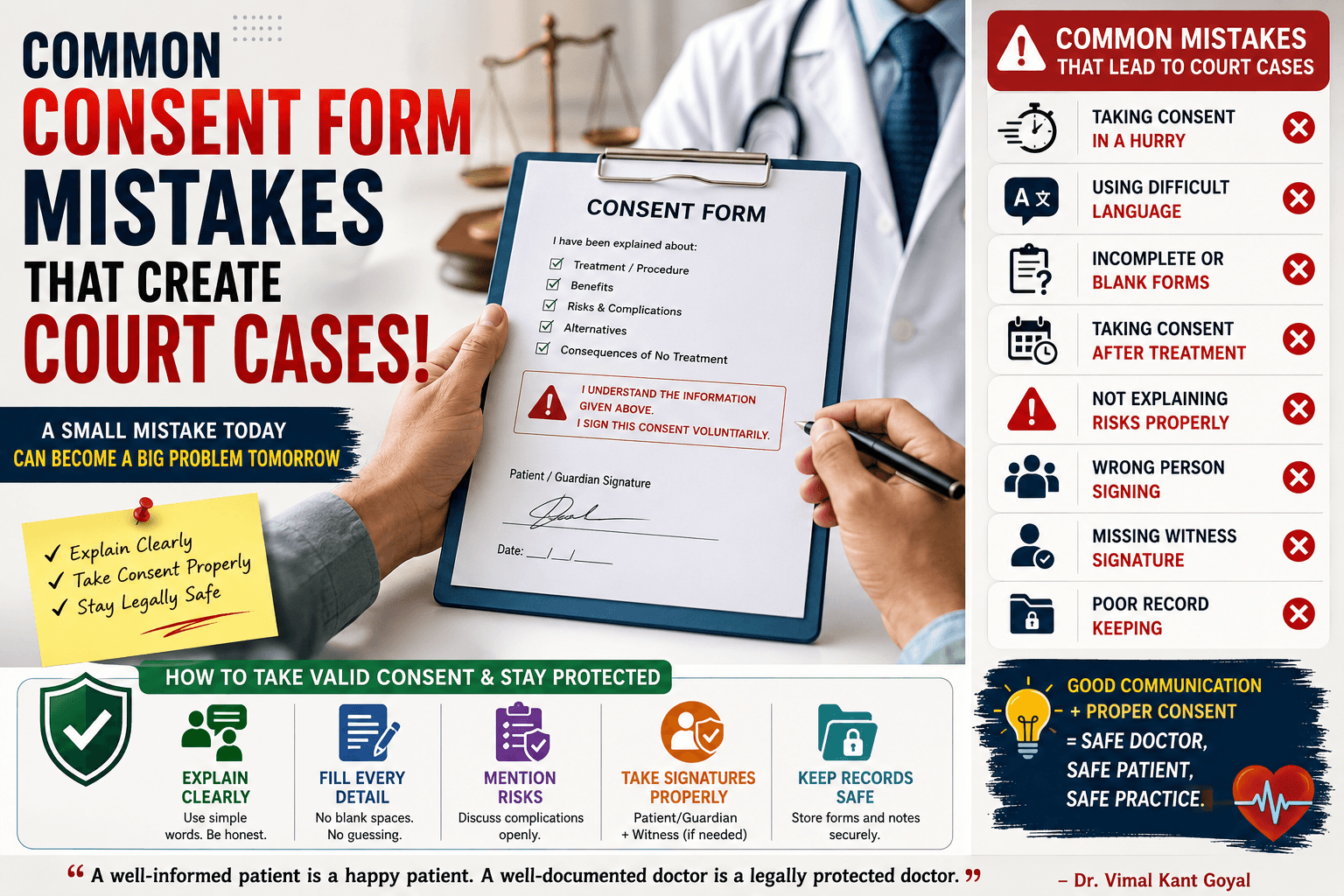
Common Consent Form Mistakes That Create Court Cases
Introduction
Many doctors think a consent form is just a simple paper with a patient’s signature. But in reality, it is one of the most important legal documents in medical practice.
A proper consent form helps:
Patients understand treatment
Doctors stay legally protected
Hospitals avoid disputes
Today, patient awareness is growing very fast. Patients and family members ask more questions about treatment, surgery, risks, and side effects. If doctors do not take consent properly, small mistakes can later become serious legal problems or even court cases.
Sometimes doctors give excellent treatment, but poor consent documentation creates trouble later.
According to Dr. Vimal Kant Goyal, proper consent is not only a legal duty but also a way to build trust with patients.
That is why many healthcare professionals now seek guidance from a Top medico legal advisor Delhi to improve legal safety and avoid future disputes.
Common Causes of Consent Form Problems
1. Taking Consent Too Fast
Some doctors take signatures quickly without properly explaining:
Important Things Patients Should Understand
Treatment
Risks
Side effects
Possible complications
Later, patients may say:
“I did not understand anything before signing.”
2. Using Difficult Medical Words
Many consent forms contain hard medical language.
Patients often sign forms without understanding the meaning.
Why Simple Language Matters
Simple language is always safer and better.
3. Blank or Incomplete Forms
Leaving empty spaces in consent forms can create legal doubt later.
Problems Caused by Incomplete Forms
Even small missing details can become a big issue in court.
4. Taking Consent After Treatment
Consent should always be taken before:
Procedures That Need Consent
Surgery
Procedures
Risky treatment
Late consent creates serious legal risk.
5. Not Explaining Risks Clearly
Every treatment has some risk.
Why Honest Communication Is Important
If doctors explain only positive results and hide complications, patients may later feel angry or cheated.
6. Wrong Person Signing the Form
Consent should be signed by:
Correct People for Consent
The patient
Legal guardian (if required)
Authorized family member in special situations
Wrong signatures weaken legal protection.
7. Missing Witness Signatures
Witness signatures provide extra legal safety during important procedures.
8. Losing Consent Forms
Some hospitals fail to safely store:
Important Documents Doctors Must Keep
Consent forms
Medical records
Treatment notes
Missing records can create major problems during complaints.
According to Dr. Vimal Kant Goyal, proper documentation is one of the strongest protections for doctors.
9. Poor Communication with Family
Family members should clearly understand:
Important Information Families Should Know
Patient condition
Risks
Emergency situations
Expected outcomes
Poor communication often creates anger and misunderstanding later.
10. Using Same Consent Form for Everyone
Every patient and treatment is different.
Why Personalized Consent Is Better
Using copy-paste consent forms may create confusion and legal trouble.
How to Fix / Treat the Problem
1. Explain Treatment Clearly
Doctors should explain:
Important Treatment Information
Disease condition
Treatment plan
Risks
Benefits
Other options
Use simple words patients can easily understand.
Good communication builds trust.
2. Use Easy Language
Consent forms should be simple and readable.
Avoid Difficult Terms
Avoid difficult medical terms whenever possible.
3. Take Consent Before Treatment
Never wait until the last moment.
Correct Time for Consent
Consent should always be signed before treatment starts.
4. Fill Every Detail Properly
Doctors should never leave:
Things That Should Never Be Missing
Blank spaces
Missing dates
Incomplete information
Complete forms improve legal safety.
5. Explain Risks Honestly
Doctors should clearly discuss:
Risks Patients Must Know
Side effects
Possible complications
Treatment limits
Honest communication reduces future conflict.
6. Keep Records Safe
Hospitals and clinics should safely maintain:
Records That Must Be Protected
Consent forms
Reports
Medical records
Treatment notes
Good records help doctors during disputes.
7. Take Witness Signatures
Witness signatures add extra legal support during important procedures.
8. Train Hospital Staff
Staff should know:
Important Staff Responsibilities
How to manage consent forms
How to communicate politely
How to maintain records safely
A trained team reduces mistakes.
9. Update Consent Forms Regularly
Consent formats should follow:
Things Doctors Should Update Regularly
Latest laws
Medical guidelines
Hospital policies
Many healthcare professionals seek help from the Best Medicolegal consultant in Delhi to improve consent procedures and legal protection.
10. Take Legal Guidance Early
Doctors should not wait for legal notices.
Benefits of Early Legal Guidance
Documentation improvement
Better communication
Risk management
Safer patient handling
As explained by Dr. Vimal Kant Goyal, prevention is always better than legal stress later.
Expert Tips
Talk Politely with Patients
Why Respectful Communication Matters
Respectful communication increases trust and reduces complaints.
Give Time for Questions
Let Patients Feel Comfortable
Patients should feel comfortable asking questions before signing forms.
Never Force Consent
Importance of Patient Choice
Patients should never feel pressured to sign quickly.
Use Local Language When Needed
Better Understanding for Patients
Patients understand treatment better in simple local language.
Focus on Transparency
Honest Communication Prevents Problems
Clear and honest communication prevents many disputes.
Conclusion
Consent forms are not just simple paperwork. They are important legal protection for doctors and patients.
Small Mistakes That Can Create Big Problems
Incomplete forms
Poor explanation
Missing signatures
Lost records
can create serious legal trouble and court cases later.
Ways Doctors Can Protect Themselves
Explaining clearly
Taking proper consent
Keeping records safe
Communicating honestly
Simple preventive steps can save doctors from unnecessary stress and complaints.
This is why many healthcare professionals trust a reliable Medico legal advisor in Delhi for legal awareness and documentation support.
According to Dr. Vimal Kant Goyal, proper consent improves patient trust and protects doctors from future disputes.
A legally aware doctor can provide safer and more confident healthcare services.
FAQs
1. Why is a consent form important?
It proves that the patient understood and agreed to the treatment.
2. Can poor consent create court cases?
Yes, incomplete or improper consent can create serious legal problems.
3. When should doctors take consent?
Doctors should always take consent before surgery or major treatment.
4. Why should risks be explained clearly?
Patients have the right to understand treatment risks and complications.
5. How can doctors improve consent procedures?
Doctors can improve consent through simple communication, proper documentation, and legal awareness.
Appreciate the creator