Common Causes of Hospital-Acquired Infections and How to Prevent Them
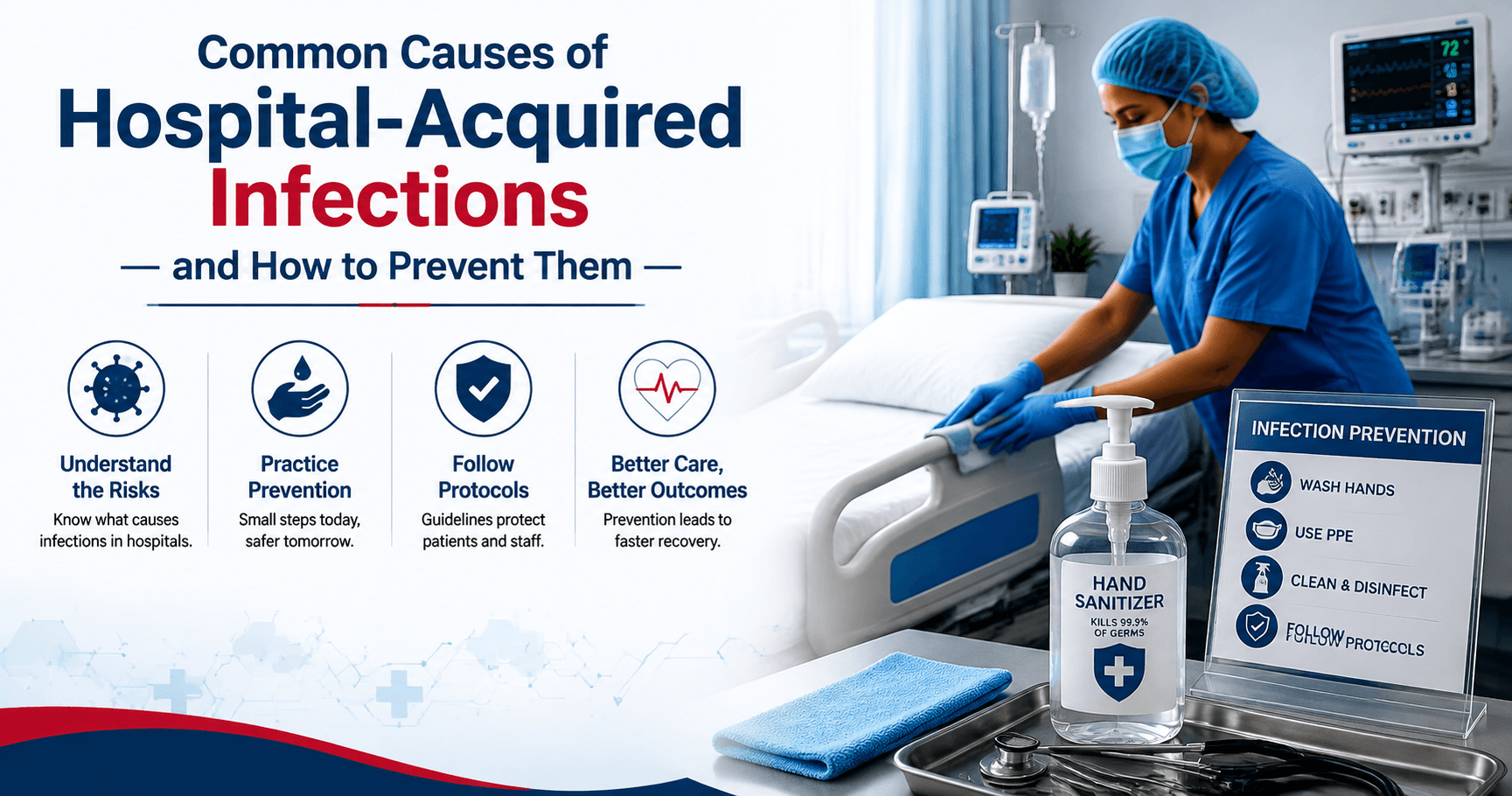
Hospital-acquired infections (HAIs) remain one of the most preventable threats to patient safety worldwide. For any facility following a Hospital Quality Guide in Delhi (https://drvimalkantgoyal.com/hospital-quality-guide-in-delhi.php), reducing these infections is not just a clinical goal but a legal and ethical responsibility. Patients trust hospitals to heal them, not expose them to new risks, and understanding how these infections occur is the first step toward stopping them.
What Are Hospital-Acquired Infections and Why They Matter
A hospital-acquired infection is any infection a patient develops during a hospital stay that was not present or incubating at the time of admission. These infections matter because they extend recovery time, increase treatment costs, and in severe cases, threaten a patient's life.
Understanding the Scope of the Problem
HAIs commonly affect the urinary tract, surgical sites, bloodstream, and respiratory system. They spread through contaminated hands, medical equipment, or prolonged use of invasive devices like catheters and ventilators. Even a well-run hospital can see infection rates rise if basic protocols slip, which is why continuous monitoring is essential.
The Human and Financial Cost
Beyond physical suffering, HAIs create financial strain for patients and legal exposure for hospitals. Extended stays, additional medications, and repeat procedures raise costs significantly. Hospitals that fail to prevent avoidable infections may also face medico-legal claims, making infection control a matter of both patient safety and institutional risk management.
Common Causes of Hospital-Acquired Infections
Most HAIs trace back to a small set of recurring causes. Identifying them clearly allows hospitals to design targeted prevention strategies rather than generic policies.
Poor Hand Hygiene and Cross-Contamination
Hands remain the single biggest carrier of hospital pathogens. When healthcare workers move between patients without proper handwashing or sanitizing, bacteria and viruses travel easily. Shared equipment, bed rails, and door handles can also become silent transmission points if cleaning schedules are inconsistent.
Invasive Devices and Prolonged Hospital Stays
Catheters, ventilators, and IV lines create direct pathways for bacteria to enter the body. The longer these devices remain in place, the higher the infection risk. Similarly, extended hospital stays increase exposure to resistant organisms circulating within the facility, particularly in intensive care units.
The Role of a Hospital Quality Guide in Delhi in Infection Prevention
A structured Hospital Quality Guide in Delhi helps facilities standardize infection control across departments instead of relying on individual staff judgment. This consistency is what separates hospitals with low infection rates from those facing repeated outbreaks.
Clinical Governance and Risk Management
Strong clinical governance means infection prevention is monitored, audited, and improved continuously. Risk management teams track infection trends, investigate causes, and update protocols based on real data rather than assumptions. This proactive approach reduces both harm to patients and legal liability for the hospital.
Documentation and Medical Records Accuracy
Accurate medical records are central to infection control. When documentation errors occur, such as missed vital signs or incomplete infection logs, it becomes difficult to trace outbreaks or defend clinical decisions later. Every entry in a patient's medical record should reflect real-time, accurate information.
Healthcare Quality Guide in Delhi: Building Stronger Patient Safety Systems
Following a comprehensive Healthcare Quality Guide in Delhi (https://drvimalkantgoyal.com/hospital-quality-guide-in-delhi.php) gives hospitals a practical framework for building patient safety systems that actually work in daily practice, not just on paper.
Standardized Protocols and Staff Training
Every hospital needs written protocols for hand hygiene, sterilization, and device management, paired with regular staff training. Refresher sessions ensure that even experienced staff stay updated on the latest infection control guidelines and hospital compliance standards.
Consent Forms and Compliance Requirements
Patients should be informed about infection risks associated with procedures through clear consent forms. This transparency supports compliance with healthcare regulations and protects both the patient's right to information and the hospital's legal standing if complications arise.
Medico-Legal Dimensions of Hospital-Acquired Infections
Infection prevention is not only a clinical matter, it is also a core part of medico-legal documentation. Hospitals must be able to show that reasonable, standard precautions were followed at every stage of care.
When Documentation Errors Lead to Legal Risk
Incomplete infection surveillance records, missing consent details, or unclear treatment notes can weaken a hospital's legal position if a patient later files a complaint. Courts and regulatory bodies often rely heavily on documentation to determine whether a facility acted responsibly.
Medico Legal Guide in South Delhi: What Patients and Hospitals Should Know
A reliable medico legal guide in south Delhi (https://drvimalkantgoyal.com/medico-legal-guide.php) helps both patients and hospital administrators understand their rights and responsibilities. For hospitals, this means maintaining thorough records; for patients, it means knowing what documentation they are entitled to request if an infection occurs during treatment.
Best Practices to Prevent Hospital-Acquired Infections
Prevention works best when it combines strict clinical protocols with strong administrative oversight. No single measure is enough on its own.
Practical Steps for Hospitals
Hospitals should enforce strict hand hygiene compliance, sterilize equipment between uses, limit unnecessary use of invasive devices, and isolate infected patients promptly. Regular audits and infection surveillance help catch problems before they escalate into larger outbreaks.
What Patients and Families Can Do
Patients and family members can also play a role by asking healthcare workers about hand hygiene practices, keeping wound sites clean, and reporting any signs of infection immediately. Active patient involvement supports the broader goals of any Hospital Quality Guide in Delhi.
Reducing hospital-acquired infections requires ongoing commitment from clinical staff, hospital administration, and patients alike. By combining accurate documentation, consistent protocols, and a strong medico-legal guide in south Delhi for reference, hospitals can protect both patient health and institutional integrity while meeting the highest standards of care.
Appreciate the creator