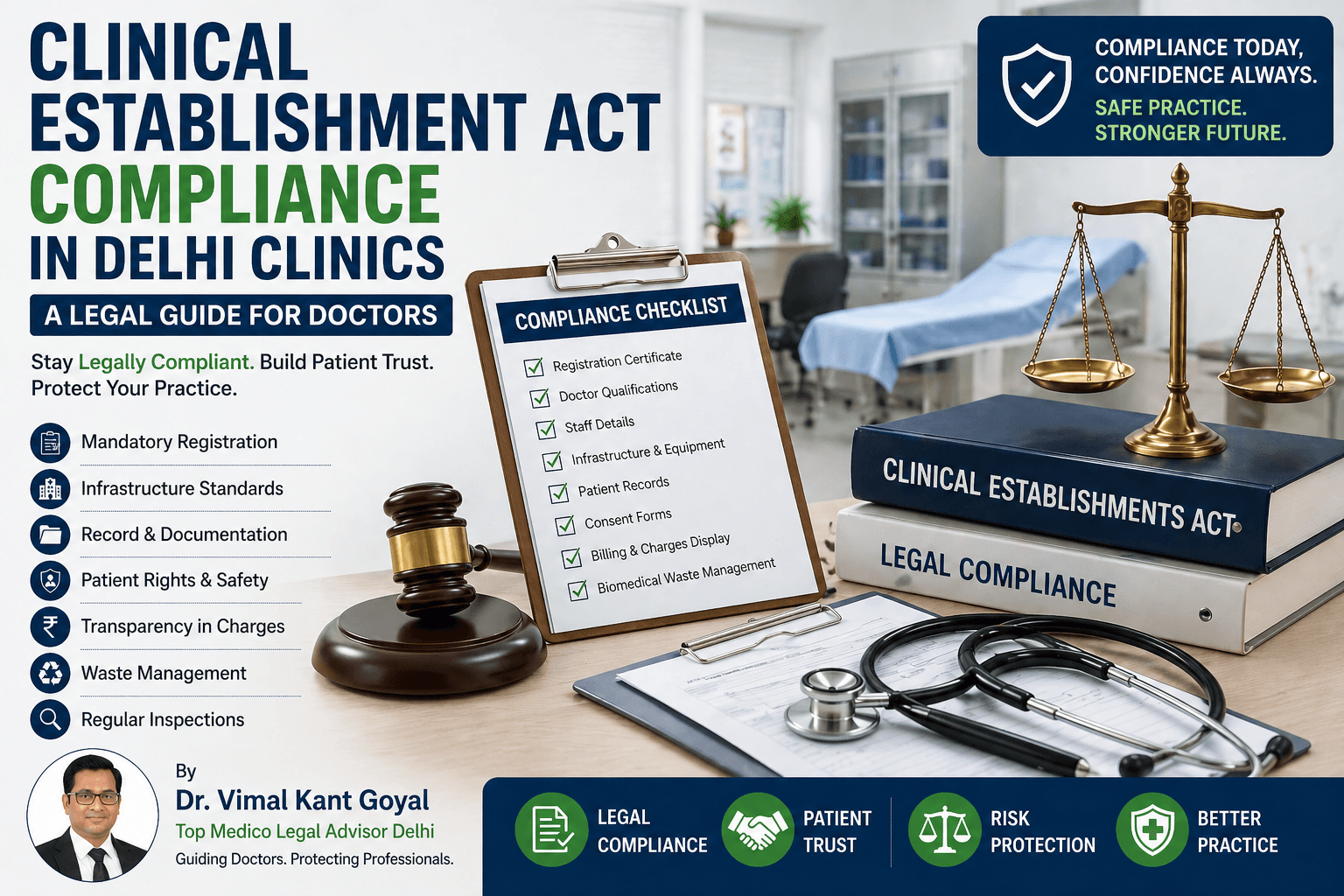
Clinical Establishment Act Compliance in Delhi Clinics: A Complete Legal Guide
Running a clinic in Delhi today is not just about providing quality healthcare—it also involves strict adherence to legal and regulatory frameworks. One of the most important laws governing private healthcare facilities is the Clinical Establishments Act. Compliance with this Act is essential for doctors to operate legally, maintain standards, and avoid unnecessary legal complications.
In this blog, Dr. Vimal Kant Goyal explains the key aspects of Clinical Establishment Act compliance for Delhi clinics in a simple, practical, and actionable way.
What is the Clinical Establishments Act?
The Clinical Establishments (Registration and Regulation) Act was introduced to standardize healthcare services across India. While Delhi has its own regulatory framework aligned with similar principles, clinics must comply with registration, infrastructure, and operational standards.
The Act ensures:
Minimum standards for facilities and services
Proper record maintenance
Transparency in treatment and charges
Patient safety and rights protection
For doctors, following a Legal compliance guide for doctors in Delhi is crucial to understand these requirements clearly.
Why Compliance is Important for Delhi Clinics
Ignoring compliance is not a minor issue—it can lead to serious consequences such as penalties, license cancellation, or even legal action.
Key Benefits of Compliance:
Legal protection against disputes
Improved patient trust
Standardized clinical practices
Better clinic management
According to Dr. Vimal Kant Goyal, compliance is not a burden but a safeguard that strengthens your professional credibility.
Mandatory Registration of Clinics
Every clinic in Delhi must be registered with the appropriate authority before starting operations.
Requirements for Registration:
Valid qualifications of the doctor
Clinic infrastructure details
Equipment availability
Staff qualifications
Operating without registration is illegal and can attract heavy penalties. This is one of the most critical steps highlighted in any Legal compliance guide for doctors in Delhi.
Infrastructure and Facility Standards
The Act requires clinics to maintain minimum infrastructure standards to ensure patient safety.
Basic Requirements Include:
Clean and hygienic environment
Adequate space for consultation and treatment
Proper ventilation and lighting
Availability of basic medical equipment
Maintaining these standards not only ensures compliance but also enhances patient satisfaction.
Record Maintenance and Documentation
Proper documentation is a legal necessity for clinics.
Records to Maintain:
Patient records
Treatment details
Prescriptions
Consent forms
Billing information
These records must be stored securely and made available when required by authorities.
A Medico legal advisor in Delhi can guide clinics on maintaining proper documentation systems to avoid future disputes.
Display of Information
Clinics must display important information clearly within the premises:
Registration certificate
Doctor’s qualifications
Consultation charges
Working hours
Transparency builds trust and is a legal requirement under the Act.
Patient Rights and Ethical Practices
The Clinical Establishments Act emphasizes patient rights and ethical medical practice.
Doctors Must Ensure:
Informed consent before treatment
Confidentiality of patient data
Clear communication of diagnosis and treatment
Non-discriminatory practices
As emphasized by Dr. Vimal Kant Goyal, respecting patient rights is at the core of both ethical and legal compliance.
Pricing Transparency and Billing
Clinics must maintain transparency in pricing:
Clearly mention consultation fees
Provide detailed bills
Avoid hidden charges
Unfair billing practices can lead to complaints and legal scrutiny.
Biomedical Waste Management
Proper disposal of biomedical waste is mandatory.
Clinics Must:
Segregate waste correctly
Use authorized waste disposal agencies
Follow pollution control guidelines
Non-compliance can result in heavy penalties and environmental violations.
Regular Inspections and Audits
Authorities may conduct inspections to ensure compliance.
Be Prepared For:
Verification of registration
Inspection of infrastructure
Review of records
Regular internal audits can help clinics stay prepared. Consulting a Top medico legal advisor Delhi ensures that your clinic is always audit-ready.
Common Mistakes Clinics Should Avoid
Many clinics unknowingly violate compliance rules. Here are common mistakes:
Operating without proper registration
Poor record maintenance
Lack of patient consent documentation
Non-compliance with waste disposal rules
Not displaying mandatory information
According to Dr. Vimal Kant Goyal, avoiding these mistakes can significantly reduce medico-legal risks.
Role of Medico-Legal Experts in Compliance
Compliance can be complex, especially with evolving regulations. This is where medico-legal experts play a crucial role.
A Medico legal advisor in Delhi can help with:
Registration process
Legal documentation
Compliance audits
Handling legal notices
Working with a Top medico legal advisor Delhi ensures that your clinic operates smoothly without legal hurdles.
Practical Compliance Tips for Delhi Clinics
To ensure smooth operations:
Keep all licenses updated
Maintain digital and physical records
Train staff on legal requirements
Conduct regular compliance checks
Seek expert medico-legal guidance
As advised by Dr. Vimal Kant Goyal, proactive compliance is always better than reactive legal defense.
Conclusion
The Clinical Establishments Act is designed to improve healthcare quality and protect patient rights. For doctors in Delhi, compliance is not just a legal obligation but a professional responsibility.
By following proper registration, maintaining infrastructure standards, ensuring documentation, and respecting patient rights, clinics can operate confidently and successfully.
With guidance from experts like Dr. Vimal Kant Goyal and support from a Top medico legal advisor Delhi, doctors can focus on what truly matters delivering quality patient care while staying legally protected.
FAQs
1. Is registration mandatory for all clinics in Delhi?
Yes, all clinics must be registered with the appropriate authority before starting operations.
2. What happens if a clinic does not comply with the Act?
Non-compliance can lead to penalties, closure of the clinic, or legal action.
3. How long should patient records be maintained?
Patient records should generally be maintained for at least 3 years or as per applicable regulations.
4. Can a medico-legal advisor help in compliance?
Yes, a Medico legal advisor in Delhi can guide clinics in registration, documentation, and handling legal issues effectively.
Appreciate the creator