Cigarette Box Dimensions & Packaging Types: The Complete Guide for 2026
When it comes to selling cigarettes, the packaging is more than just a container. It is your brand's first impression, a legal requirement, and a key factor in production cost. Whether you are a tobacco brand looking for custom packaging or a packaging professional researching cigarette box dimensions, understanding the full picture of cigarette packaging will help you make smarter decisions.
In this complete guide, we cover everything from standard cigarette box dimensions and pack types to materials, printing options, and how to choose the right cigarette packaging for your brand.
Why Cigarette Box Dimensions Matter More Than You Think
Every millimeter counts in cigarette packaging. Boxes that are too loose let cigarettes rattle and break. Boxes that are too tight make opening difficult. The right dimensions protect product freshness, fit comfortably in a shirt pocket, and pass retail shelf requirements.
Beyond functionality, dimensions affect how much material is used, which directly impacts production costs. A brand ordering millions of packs can save significantly by optimizing even small amounts of excess material.
Standard Cigarette Box Dimensions by Pack Size
Here are the most common cigarette box dimensions used globally in 2026:
20-Cigarette Pack (Most Common)
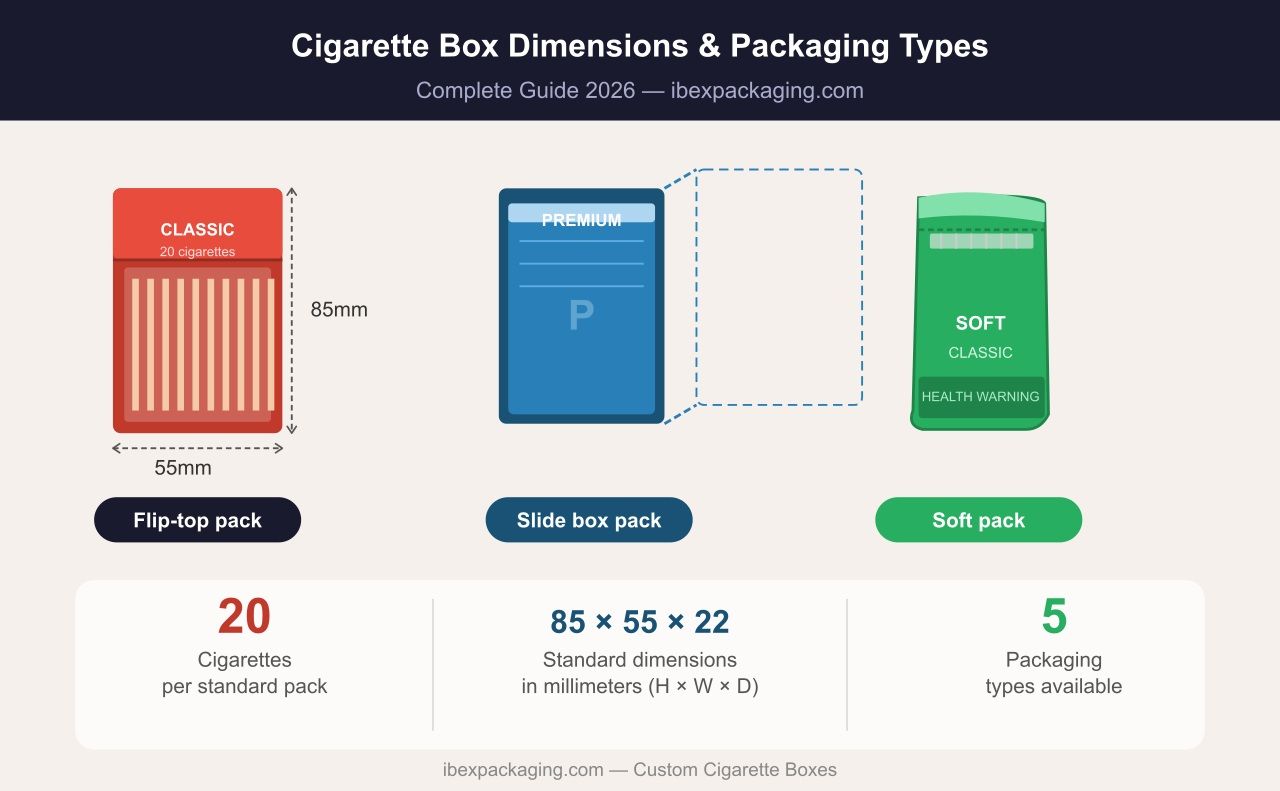
Standard Flip-Top: 85mm (H) x 55mm (W) x 22mm (D)
King Size Flip-Top: 90mm (H) x 57mm (W) x 23mm (D)
Slim Pack: 100mm (H) x 55mm (W) x 17mm (D)
Super Slim: 100mm (H) x 55mm (W) x 15mm (D)
10-Cigarette Pack (Where Available)
Regular Flip-Top: 70mm (H) x 55mm (W) x 20mm (D)
Mini Slide Box: 68mm (H) x 52mm (W) x 18mm (D)
Carton (10 Packs / 200 Cigarettes)
Outer Carton: 230mm (H) x 120mm (W) x 90mm (D) — standard size
Slim Carton: 230mm (H) x 105mm (W) x 75mm (D)
Types of Cigarette Packaging: Which One Is Right for Your Brand?
Choosing the right packaging type is as important as the dimensions. Each style offers different benefits for the consumer experience and brand image.
1. Flip-Top (Hinged Lid) Pack
The flip-top pack is the most widely used cigarette packaging in the world. It features a rigid lid attached by a hinge at the back. This design is easy to open with one hand and offers strong protection for cigarettes.
Best for: Premium brands, mainstream cigarettes, shelf display in retail stores.
2. Slide Box Pack (Drawer Style)
The slide box uses an inner tray that slides out of an outer sleeve. This gives a premium, modern feel and is popular with high-end cigarette brands looking to stand out on shelves.
Best for: Luxury or premium cigarette lines, gift sets, limited edition packaging.
3. Soft Pack (Soft Cup Pack)
Soft packs are made from flexible paper material rather than rigid cardboard. They are lightweight, cheaper to produce, and are still popular in certain markets like the United States and parts of Asia.
Best for: Budget-friendly cigarette lines, markets where soft packs have strong brand traditions.
4. Standardized / Plain Packaging
In countries like Australia, the UK, and France, government regulations require plain packaging with no logos or branding — only health warnings and the brand name in a standard font and color.
Best for: Markets with strict tobacco packaging laws. Manufacturers must comply regardless of preference.
5. Custom Shaped Boxes
Some brands differentiate with unique structural designs — beveled edges, rounded corners, shoulder boxes, or hexagonal shapes. These offer a distinctive shelf presence but require more complex manufacturing.
Best for: Premium brands launching in competitive markets or targeting luxury consumers.
Packaging Materials Used in Cigarette Boxes
The material choice affects durability, print quality, and compliance with regulatory standards. The most common materials include:
Paperboard / Cardboard: The primary material for flip-top and slide boxes. Available in different thicknesses (300–400 gsm is standard).
Foil Lining: Inner foil or metalized paper is used to protect cigarettes from moisture and preserve freshness.
Kraft Paper: Used for eco-friendly or natural branding. Increasingly popular with boutique tobacco brands.
Rigid Board: Used for premium gift sets and luxury packaging with a heavier, more substantial feel.
Printing & Finishing Options for Cigarette Boxes
Printing plays a huge role in cigarette packaging, especially where regulations allow branding. Top finishing options include:
Matte Lamination: Gives a premium, soft-touch feel. Popular with high-end brands.
Gloss UV Coating: Creates a shiny, eye-catching look that stands out on retail shelves.
Embossing / Debossing: Adds tactile texture to logos or design elements for a luxury feel.
Hot Stamp Foiling: Gold, silver, or holographic foil stamping is used for premium visual impact.
Spot UV: Highlights specific design areas like logos or text with a clear gloss layer.
Regulatory Requirements You Must Know Before Ordering
Cigarette packaging is one of the most regulated product categories in the world. Before placing any custom packaging order, verify the following for your target market:
Health Warning Size: In the EU, health warnings must cover at least 65% of the front and back. In Australia, plain packaging laws apply with near-total coverage.
Minimum Pack Size: The EU prohibits packs with fewer than 20 cigarettes. Always confirm local minimums.
Tax Stamps & Barcodes: Most countries require designated areas on the packaging for fiscal stamps and barcode placement.
Tamper-Evident Wrapping: Many markets require cellophane overwrapping with a tear strip for retail packs.
How to Choose the Right Cigarette Box for Your Brand
Selecting the best packaging involves balancing several factors:
Know your market's regulations first. Compliance is non-negotiable. Build your packaging around what is legally permitted.
Match packaging to your price point. Budget cigarettes work well in soft packs. Premium brands benefit from rigid flip-tops or slide boxes.
Consider the shelf environment. If cigarettes are stored behind counters (as in many countries), packaging must be recognizable from a distance.
Think about the consumer experience. One-handed opening, fresh-seal integrity, and pack durability all affect repeat purchases.
Conclusion
Getting cigarette packaging right is a combination of accurate dimensions, the right box style, compliant materials, and smart finishing. Whether you are launching a new tobacco brand or upgrading your existing packaging, working with an experienced packaging partner ensures your boxes are not only visually strong but structurally sound and regulation-compliant.
If you need custom cigarette boxes tailored to your exact specifications, Ibex Packaging offers full-service design, material selection, and printing for tobacco brands worldwide.
Frequently Asked Questions (FAQs)
What are the standard dimensions of a cigarette box?
A standard 20-cigarette flip-top pack measures approximately 85mm (H) x 55mm (W) x 22mm (D). King size packs are slightly taller at around 90mm.
What material is used for cigarette boxes?
Most cigarette boxes use 300–400 gsm paperboard with an inner foil lining to maintain freshness. Premium packs may use rigid board, and eco-conscious brands sometimes use Kraft paper.
Can cigarette boxes be fully custom printed?
Yes, in markets where branding is permitted. Custom printing options include CMYK full-color printing, matte or gloss lamination, embossing, foil stamping, and spot UV. In regulated markets (EU, Australia, UK), design options are limited by law.
What is the difference between a flip-top and a slide box cigarette pack?
A flip-top has a lid that opens upward via a hinge. A slide box has a separate inner tray that slides out horizontally from the outer sleeve. Slide boxes feel more premium and are often used by luxury brands.
Appreciate the creator