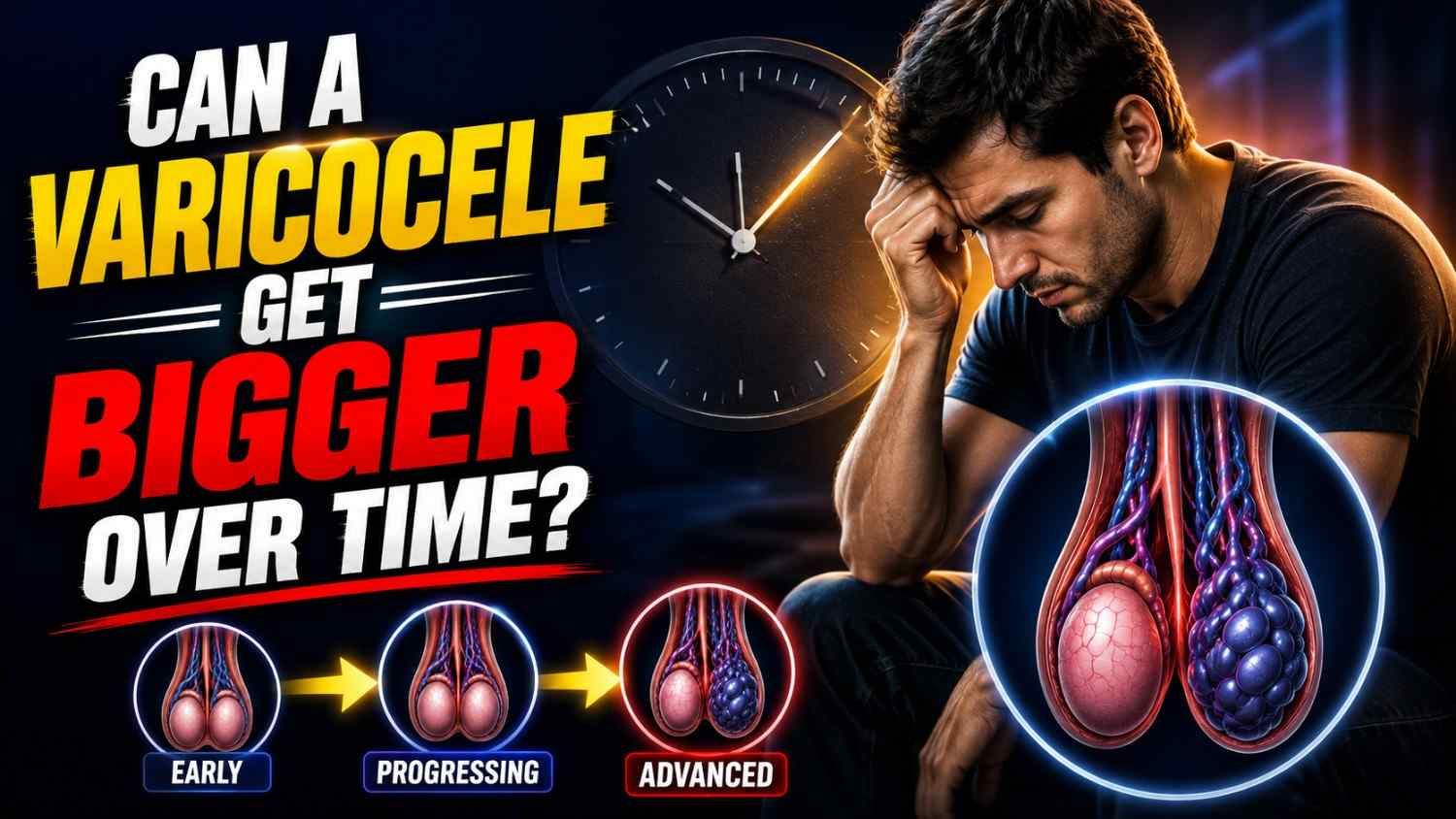
Can a Varicocele Get Bigger Over Time?
Yes, a varicocele can get bigger over time in some men, although the rate of progression varies from person to person. A varicocele develops when the valves inside the testicular veins fail to function properly, allowing blood to pool around the testicle. As venous pressure gradually increases, the enlarged veins may become more noticeable and symptoms such as scrotal heaviness or discomfort may develop. However, not every varicocele progresses, and many remain stable for years.
Some men live with a varicocele for a long time without significant changes, while others notice gradual enlargement. Understanding varicocele helps explain why progression occurs and when specialist evaluation is important.
Why Can a Varicocele Become Larger?
A varicocele is caused by faulty valves inside the testicular veins.
When these valves stop working effectively:
Blood flows backward.
Blood pools within the veins.
Venous pressure gradually increases.
The veins stretch and enlarge over time.
This process may cause the varicocele to become more noticeable.
Does Every Varicocele Continue to Grow?
No.
Many varicoceles remain stable throughout life.
Whether a varicocele enlarges depends on factors such as:
Severity of venous reflux
Individual vein anatomy
Age
Overall vein health
Duration of the condition
Some men never experience progression.
What Symptoms May Develop as a Varicocele Gets Bigger?
As the enlarged veins become more prominent, some men may notice:
A dull aching pain
Scrotal heaviness
A pulling sensation
Enlarged veins that are easier to see or feel
Discomfort after standing for long periods
Symptoms that worsen after exercise
The severity of symptoms does not always match the size of the varicocele.
Can a Larger Varicocele Affect Fertility?
It may.
A larger varicocele may increase the likelihood of:
Changes in sperm production
Reduced sperm quality
Testicular dysfunction
However, many men with larger varicoceles remain fertile, while some men with smaller varicoceles experience fertility problems.
According to the American Urological Association (AUA), treatment decisions should be based on symptoms, fertility evaluation, and clinical findings rather than the size of the varicocele alone.
How Do Doctors Determine Whether a Varicocele Is Progressing?
Doctors usually perform:
Medical history
Physical examination
Examination while standing
Valsalva manoeuvre
A scrotal ultrasound is commonly used to evaluate:
Vein size
Blood flow
Venous reflux
Testicular size
Overall severity of the varicocele
Comparing ultrasound findings over time helps doctors identify progression.
When Should You See a Doctor?
Medical evaluation is recommended if you notice:
Increasing scrotal pain
Enlarging veins
Changes in testicular size
Fertility concerns
Symptoms affecting daily activities
Early assessment helps determine whether treatment is appropriate.
What Treatment Options Are Available?
Treatment depends on symptoms, fertility goals, and examination findings.
Options include:
Observation with regular follow-up
Pain management when appropriate
Surgical varicocelectomy
Varicocele Embolization
Varicocele Embolization is a minimally invasive procedure performed by an interventional radiologist. Through a thin catheter, tiny coils or embolic agents are placed into the abnormal veins, blocking them and redirecting blood through healthy veins without open surgery.
Can Early Treatment Prevent Further Progression?
When treatment is medically indicated, it may help:
Eliminate abnormal venous reflux
Relieve scrotal discomfort
Protect testicular function
Reduce further enlargement of the affected veins
The decision to treat is individualised and based on the patient's symptoms and reproductive goals.
Conclusion
A varicocele can get bigger over time because faulty vein valves allow blood to continue pooling inside the testicular veins. Although many varicoceles remain stable for years, others gradually enlarge and may lead to discomfort, fertility concerns, or changes in testicular function. A physical examination and scrotal ultrasound help determine whether the condition is progressing and whether treatment is needed.
For men with symptomatic or progressive varicoceles, Varicocele Embolization offers a minimally invasive alternative to surgery by blocking the abnormal veins and restoring healthier blood flow without open surgery. Men seeking advanced, non-surgical care can consult a varicocele treatment in jaipur specialist to discuss the most appropriate management based on their symptoms and imaging findings.
Frequently Asked Questions
Can a varicocele become larger over time?
Yes. Some varicoceles gradually enlarge because abnormal blood flow continues to increase pressure within the affected veins, although many remain stable.
Does a larger varicocele always cause more symptoms?
No. The size of a varicocele does not always match the severity of symptoms. Some large varicoceles cause little discomfort, while smaller ones may be painful.
How do doctors monitor whether a varicocele is getting bigger?
Doctors use physical examinations and scrotal ultrasound to compare vein size, blood flow, and testicular health over time.
Does a growing varicocele always require treatment?
No. Treatment depends on symptoms, fertility concerns, testicular changes, and examination findings rather than enlargement alone.
Can Varicocele Embolization stop further progression?
When treatment is appropriate, Varicocele Embolization blocks the abnormal veins, eliminates venous reflux, and helps prevent further enlargement of the treated veins.
Appreciate the creator