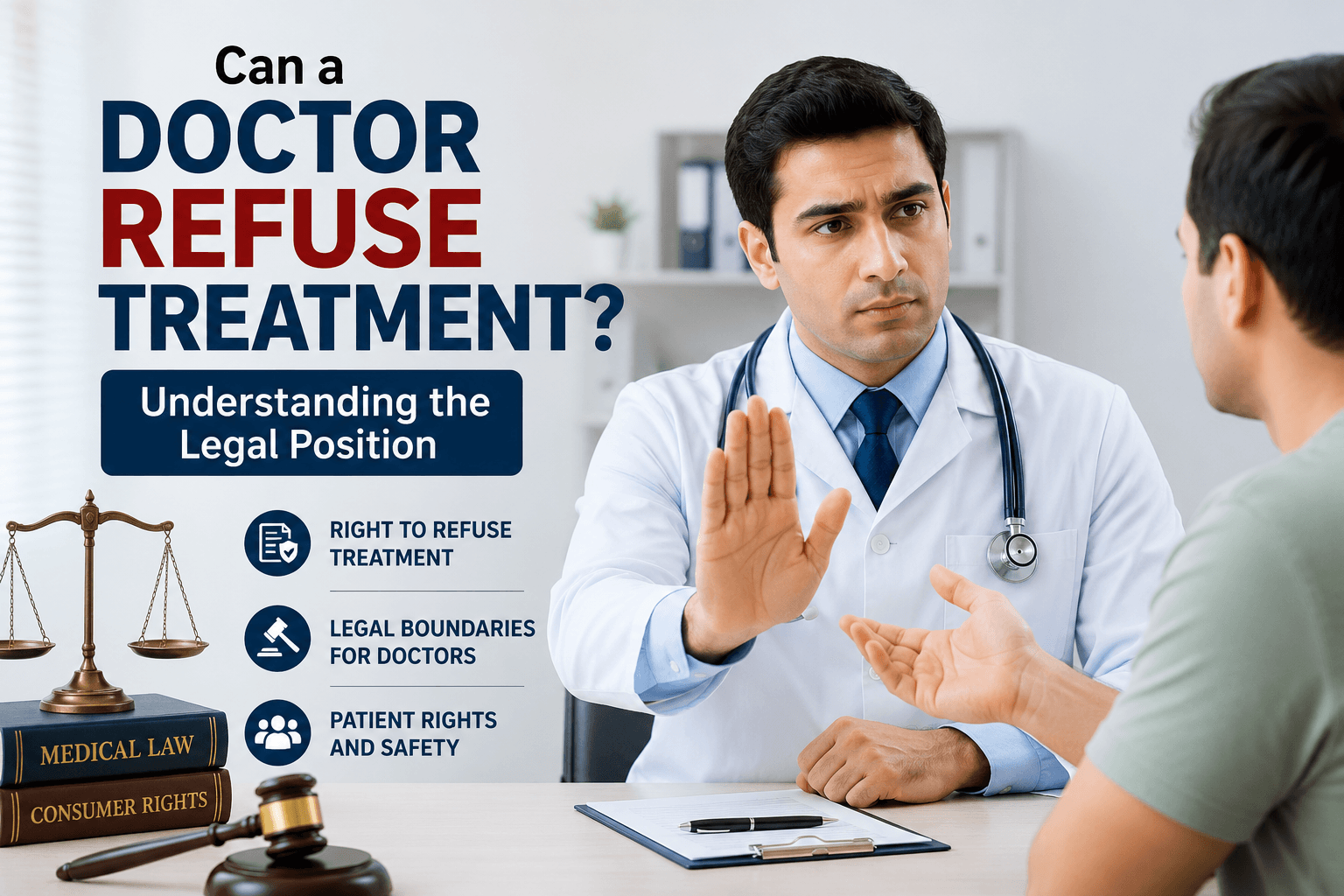
Can a Doctor Refuse Treatment? Understanding the Legal Position
Doctors sometimes face situations where treating a patient feels difficult or even inappropriate. Knowing exactly where the legal line sits matters, and this is where a medico legal expert guide in Delhi becomes genuinely useful. The answer isn't a simple yes or no; it depends heavily on context.
Refusing treatment carries real legal weight, especially in emergency situations. Doctors and hospitals need clarity here, and following a solid healthcare quality guide in Delhi (https://drvimalkantgoyal.com/hospital-quality-guide-in-delhi.php) helps ensure decisions are both ethical and legally sound.
Why This Question Matters for Doctors and Patients
Patients assume they'll receive care whenever they seek it, while doctors sometimes face valid reasons to decline. Understanding both perspectives helps clarify where the actual legal boundaries lie.
The Patient's Expectation of Care
Most patients believe doctors are obligated to treat them under all circumstances. This assumption isn't entirely accurate, though emergency situations do create stronger obligations. Clear communication about this distinction helps prevent misunderstandings and complaints.
Why Doctors Need Legal Clarity Here
Doctors who refuse treatment without understanding the legal framework risk serious professional and legal consequences. Even valid reasons for refusal need to be handled correctly to avoid disputes. A dependable medico legal expert guide in Delhi helps doctors make these decisions with confidence.
The General Legal Duty to Treat Patients
Indian medical ethics establish a general expectation that doctors provide care to those who seek it. This duty, however, isn't absolute in every situation.
What the Law Generally Expects
The Indian Medical Council's ethics regulations expect doctors to attend to patients seeking care, particularly in emergencies. This duty reflects the profession's core commitment to patient welfare. Doctors are generally discouraged from refusing care without a valid, documented reason.
Where This Duty Has Limits
The duty to treat isn't unconditional; it accounts for practical constraints like specialty, capacity, and safety. A cardiologist isn't obligated to perform surgery outside their expertise, for example. Understanding these limits helps doctors act appropriately without violating their professional responsibilities.
Situations Where Doctors Can Legally Refuse Treatment
Certain circumstances allow doctors to decline treatment without legal or ethical violation. Recognizing these situations clearly helps avoid confusion later.
Cases Outside a Doctor's Expertise or Capacity
A doctor can appropriately decline to treat a condition outside their training or specialty. Referring the patient to an appropriate specialist fulfills the duty of care responsibly. This kind of referral should be documented clearly to show proper handling of the situation.
Non-Emergency Situations With Valid Reasons
In non-emergency cases, doctors may decline treatment for reasons like full patient capacity, conflict of interest, or safety concerns. These reasons should be communicated respectfully and documented at the time. A thoughtful hospital quality guide in Delhi (https://drvimalkantgoyal.com/hospital-quality-guide-in-delhi.php) typically includes clear protocols for handling these situations consistently.
Emergency Cases and the Limits on Refusal
Emergency situations carry the strongest legal expectation to provide care. Refusing treatment here carries significantly higher risk.
Why Emergency Care Cannot Be Denied
Doctors and hospitals are generally expected to provide at least stabilizing care in emergency situations, regardless of a patient's ability to pay or other administrative factors. Refusing emergency care can lead to serious legal and professional consequences. This expectation exists to protect patients during their most vulnerable moments.
What Counts as an Emergency Under the Law
An emergency typically involves a situation where delay in treatment could result in serious harm or death. Courts and medical councils generally interpret this broadly to protect patient safety. When in doubt, treating the situation as an emergency is the safer legal and ethical choice.
Documenting a Refusal Correctly
When treatment is appropriately declined, documentation becomes the doctor's strongest protection. Poor documentation can turn a valid refusal into a legal liability.
What Should Be Recorded
The record should include the reason for refusal, any referral provided, and the time and circumstances involved. Vague or missing documentation weakens a doctor's position if the decision is later questioned. Clear, specific notes protect both the doctor and the patient's continuity of care.
Communicating the Refusal to the Patient
Patients should be informed clearly and respectfully about why treatment is being declined and where they can seek care instead. This communication should be documented alongside the clinical record. Handling this conversation well often prevents the situation from becoming a formal complaint.
How a Medico Legal Expert Guide in Delhi Helps Doctors Navigate Refusal
Understanding the legal framework in theory is useful, but applying it correctly during real situations requires practical guidance. This is where expert support adds real value.
Getting Clarity Before a Difficult Decision
Doctors facing an unclear or borderline refusal situation benefit from quick access to legal guidance. A medico legal expert guide in Delhi (https://drvimalkantgoyal.com/medico-legal-guide.php) can help clarify whether a specific case qualifies for refusal under current regulations. This clarity reduces the risk of an incorrect or poorly documented decision.
Building Hospital-Wide Protocols for Consistency
Hospitals benefit from clear, written protocols on when and how treatment refusal is appropriate. This consistency protects both patients and staff across different departments. A strong healthcare quality guide in Delhi typically includes these protocols as part of broader compliance standards.
Conclusion
Doctors can refuse treatment under specific, well-defined circumstances, but emergency care remains a strong exception. A trusted medico legal expert guide in Delhi helps practitioners understand exactly where these boundaries lie and how to act within them confidently.
Dr. Vimal Kant Goyal reminds doctors that clear documentation and respectful communication are essential whenever treatment is declined. With guidance from a reliable hospital quality guide in Delhi, both doctors and hospitals can navigate these decisions safely and fairly.
Frequently Asked Questions
Can a doctor refuse to treat a patient in an emergency?
Generally, no. Doctors and hospitals are expected to provide at least stabilizing emergency care, regardless of a patient's ability to pay or other administrative factors.
What are valid reasons for a doctor to decline non-emergency treatment?
Reasons like a condition outside the doctor's expertise, full patient capacity, or a genuine conflict of interest are generally considered valid. These reasons should always be documented clearly.
Is a doctor legally required to treat every patient who walks in?
Not in every case, but the expectation to treat becomes much stronger in emergency situations. Non-emergency refusals require valid reasons and proper documentation.
How does a hospital quality guide in Delhi support consistent decision-making on refusals?
It typically outlines clear protocols for when and how treatment can be appropriately declined across different departments. This consistency reduces confusion and protects both patients and staff.
What should a doctor document when declining treatment?
The doctor should record the reason for refusal, any referral given, and the time and circumstances of the decision. Clear documentation protects the doctor if the refusal is later questioned.
Appreciate the creator