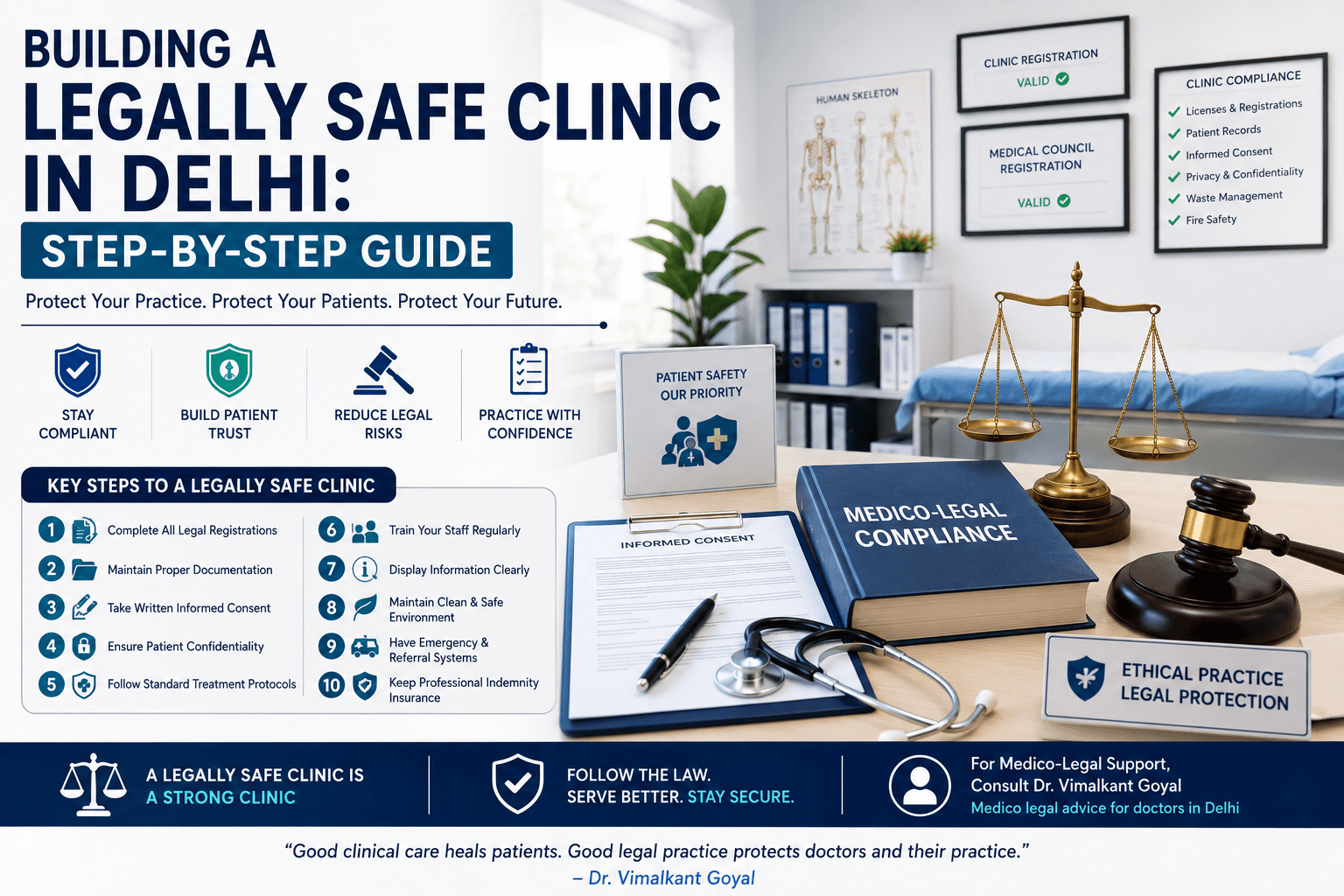
Building a Legally Safe Clinic in Delhi: Step-by-Step Guide
Introduction
Running a clinic in Delhi today involves much more than providing good medical treatment. Doctors must also ensure that their clinic follows proper legal procedures, patient safety standards, and healthcare regulations. Even small mistakes in documentation, licensing, communication, or consent can create serious medico-legal problems.
With growing patient awareness and stricter healthcare regulations, doctors are now expected to maintain both clinical excellence and legal compliance. According to Dr. Vimalkant Goyal, building a legally safe clinic is not only about avoiding legal disputes but also about creating a professional and trustworthy healthcare environment.
A legally secure clinic protects:
Doctors
Patients
Clinic staff
Professional reputation
Financial stability
Today, many healthcare professionals seek Medico legal advice for doctors in Delhi to understand how they can reduce risks and build safer medical practices. This step-by-step guide explains the essential legal and practical measures doctors should follow while running a clinic in Delhi.
Common Causes of Legal Problems in Clinics
Many legal disputes in clinics happen because doctors unknowingly ignore important compliance requirements. Understanding these common mistakes can help prevent future complications.
1. Improper Documentation
Incomplete patient records, missing prescriptions, or unclear consultation notes are among the biggest causes of medico-legal disputes.
2. Missing Licenses or Registrations
Operating a clinic without updated registrations, biomedical waste authorization, or other mandatory approvals can create legal penalties.
3. Lack of Informed Consent
Performing procedures without proper written consent exposes doctors to serious legal risks.
4. Poor Communication with Patients
Misunderstandings regarding diagnosis, treatment costs, or complications often lead to patient dissatisfaction and complaints.
5. Ignoring Patient Confidentiality
Sharing patient information carelessly, especially digitally, can create privacy-related legal issues.
6. Non-Compliance with Healthcare Regulations
Failure to follow healthcare standards, safety rules, and record maintenance guidelines may attract legal action.
This is why every doctor should follow a proper Legal compliance guide for doctors in Delhi while setting up or managing a clinic.
Signs You Should Not Ignore
Certain warning signs indicate that your clinic may be legally vulnerable. Doctors should identify and correct these issues early.
1. Frequent Patient Complaints
Repeated complaints about communication, billing, waiting time, or treatment confusion should never be ignored.
2. Incomplete Patient Records
If staff members regularly skip documentation or maintain inconsistent records, the clinic may face future legal challenges.
3. Expired Registrations or Licenses
Any delay in renewing mandatory clinic registrations increases legal risk.
4. Lack of Staff Training
Untrained staff handling records, patient communication, or emergencies can create serious compliance problems.
5. No Emergency Preparedness
Clinics without emergency protocols, referral systems, or patient safety measures may face difficulties during critical situations.
As explained by Dr. Vimalkant Goyal, identifying these signs early helps doctors prevent larger legal and professional complications.
How to Fix / Treat Legal Risks in Clinics
Building a legally safe clinic requires a structured approach. Below is a practical step-by-step guide for doctors in Delhi.
Step 1: Complete All Legal Registrations
Ensure your clinic has:
Valid clinic registration
Biomedical waste authorization
Fire safety compliance (if required)
Professional qualifications displayed properly
Updated licenses and permits
Regular renewal of these documents is essential.
Step 2: Maintain Proper Documentation
Documentation is one of the strongest legal protections for doctors.
Maintain:
Consultation notes
Prescriptions
Diagnostic reports
Consent forms
Follow-up records
Billing details
Clear documentation helps avoid misunderstandings and strengthens legal defense if disputes arise.
Step 3: Use Proper Informed Consent
Consent should not be treated as a formality.
Patients must understand:
Nature of treatment
Risks involved
Possible complications
Alternative options
Written informed consent is especially important before procedures or surgeries.
Step 4: Improve Communication Systems
Good communication reduces most medico-legal conflicts.
Doctors and staff should:
Speak respectfully
Explain treatment clearly
Discuss risks honestly
Avoid unrealistic promises
Patients who feel informed are less likely to create disputes.
Step 5: Protect Patient Confidentiality
Patient data should remain secure at all times.
Avoid:
Sharing reports casually
Discussing patient information publicly
Sending confidential details through unsecured platforms
Digital privacy is becoming increasingly important in healthcare practice.
Step 6: Train Clinic Staff Regularly
Reception staff, nurses, and assistants should understand:
Patient communication
Documentation procedures
Emergency handling
Confidentiality standards
A legally safe clinic depends on the entire team, not only the doctor.
Step 7: Follow Standard Treatment Protocols
Doctors should follow accepted medical guidelines and maintain updated clinical knowledge.
Ignoring standard protocols can increase legal vulnerability significantly.
Step 8: Maintain Professional Indemnity Insurance
Medical indemnity insurance protects doctors financially during legal disputes or negligence claims.
According to Dr. Vimalkant Goyal, every clinic owner should consider adequate professional coverage as part of responsible practice management.
Step 9: Stay Updated with Healthcare Laws
Healthcare regulations continue to evolve. Doctors should regularly update themselves regarding:
Telemedicine laws
Consumer protection rules
Record maintenance guidelines
Biomedical waste rules
Ethical standards
Seeking Best Medico legal Guidance for doctors in Delhi can help doctors stay legally updated and professionally secure.
Expert Tips
Conduct Regular Internal Audits
Review clinic records, consent forms, registrations, and staff practices regularly to identify gaps early.
Avoid Overcrowded Scheduling
Rushed consultations often increase communication errors and documentation mistakes.
Display Important Information Clearly
Clinics should display:
Doctor qualifications
Registration numbers
Consultation timings
Patient rights and responsibilities
Create Emergency Referral Networks
Maintain proper referral connections with hospitals and specialists for emergencies.
Seek Professional Legal Guidance
Doctors should not wait for legal notices before seeking advice. Regular preventive consultation is always safer.
Many professionals now actively seek Medico legal advice for doctors in Delhi to build stronger legal protection systems for their clinics.
Conclusion
Building a legally safe clinic in Delhi requires planning, awareness, and disciplined systems. Legal safety is not about fear—it is about prevention, professionalism, and patient trust. Proper documentation, informed consent, regulatory compliance, confidentiality, and staff training are essential parts of modern medical practice.
Following a proper Legal compliance guide for doctors in Delhi helps doctors reduce risks and create a safer environment for both patients and healthcare professionals.
As emphasized by Dr. Vimalkant Goyal, doctors who combine medical excellence with legal awareness build stronger, safer, and more trusted healthcare practices.
Healthcare professionals seeking Best Medico legal Guidance for doctors in Delhi should focus on preventive legal awareness rather than waiting for disputes to arise.
FAQs
1. Why is legal compliance important for clinics in Delhi?
Legal compliance protects doctors from penalties, complaints, and medico-legal disputes while improving patient trust.
2. What documents should clinics maintain properly?
Clinics should maintain patient records, consent forms, prescriptions, billing records, licenses, and registration documents.
3. How can clinics reduce medico-legal risks?
Clinics can reduce risks through proper documentation, communication, informed consent, staff training, and legal awareness.
4. Is professional indemnity insurance necessary for doctors?
Yes. Professional indemnity insurance provides financial protection during legal claims or disputes.
5. Why should doctors seek medico-legal guidance regularly?
Regular guidance helps doctors stay updated with changing healthcare laws and maintain safer medical practices.
Appreciate the creator