Beyond the Clinic: How Remote Patient Monitoring Solutions Change Care
Beyond the Clinic: How Remote Patient Monitoring Solutions Change Care
Healthcare is no longer limited to what happens inside a hospital, clinic, or doctor’s office. With connected devices, mobile technology, and digital health platforms, care can now continue while patients are at home. This shift is particularly valuable for people managing chronic conditions or recovering after treatment.
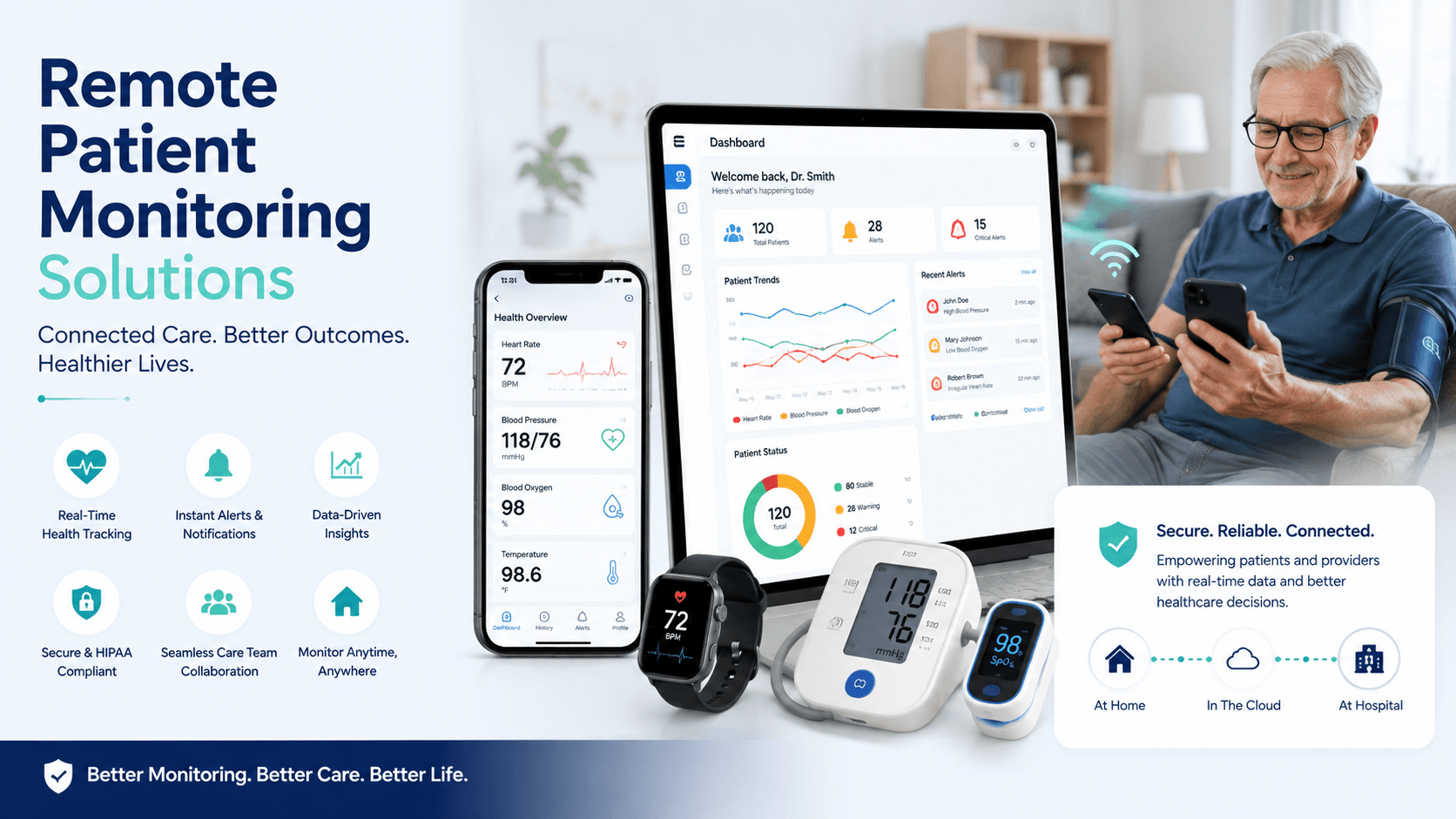
Remote patient monitoring solutions (https://synergytop.com/healthcare-services/remote-patient-monitoring-solutions/) are helping healthcare providers collect important patient information outside traditional clinical settings. Data such as blood pressure, heart rate, blood glucose, oxygen levels, weight, and other health indicators can be monitored remotely and reviewed by care teams.
This approach gives healthcare professionals a clearer picture of a patient's health between appointments. Instead of relying only on occasional check-ups, providers can use ongoing information to identify changes, support treatment decisions, and encourage patients to become more involved in their own care.
Understanding Remote Patient Monitoring in Modern Healthcare
Remote patient monitoring, often referred to as RPM, uses connected technologies to collect health-related information from patients outside a traditional healthcare facility. The information can then be transmitted securely to healthcare professionals for assessment and follow-up.
Moving Healthcare Beyond the Traditional Appointment
Traditional healthcare often depends on scheduled appointments. A patient may visit a doctor once every few weeks or months, leaving long periods when changes in their condition may go unnoticed. Remote monitoring can help bridge this gap by providing healthcare teams with more frequent information.
For example, a patient with hypertension may use a connected blood pressure monitor at home. Instead of waiting until the next appointment to discover that blood pressure has consistently increased, healthcare professionals may be able to identify the trend earlier and determine whether additional attention is required.
This creates a more continuous relationship between patients and healthcare providers. Technology does not replace clinical expertise; instead, it gives professionals additional information that can support more informed care.
How Remote Monitoring Can Improve Patient Engagement
Patient engagement is an important part of successful healthcare. When people understand their health information and participate in monitoring their condition, they may become more aware of how everyday choices affect their wellbeing.
Giving Patients a More Active Role
Remote monitoring can encourage patients to take an active role in managing their health. Instead of thinking about healthcare only when they visit a doctor, patients can regularly track relevant health measurements from home.
A person managing diabetes, for instance, may monitor blood glucose according to their care plan. Seeing changes over time can help patients have more meaningful conversations with their healthcare providers about symptoms, routines, medications, and lifestyle factors.
This ongoing interaction can also make healthcare feel more personalised. Patients can share information from their daily lives rather than trying to remember weeks of symptoms and measurements during a short appointment.
Supporting Chronic Disease Management
Chronic diseases often require long-term monitoring and consistent management. Conditions such as diabetes, hypertension, cardiovascular disease, and respiratory disorders can change over time, making regular observation important.
Identifying Changes Before They Become Bigger Problems
One of the key benefits of remote monitoring is the ability to observe health trends over time. A single measurement may not provide enough context, but a series of measurements can reveal meaningful changes.
For example, a gradual increase in weight or blood pressure may provide healthcare professionals with information worth reviewing. Depending on the patient's condition and clinical guidelines, the care team may then contact the patient, recommend a follow-up appointment, or adjust the care approach.
Early awareness does not guarantee that complications will be prevented, but it can give providers an opportunity to respond sooner. This can be especially useful for patients who require ongoing supervision.
Improving Care After Hospital Discharge
The period immediately following hospital discharge can be challenging for patients. They may need to follow medication schedules, monitor symptoms, change their routines, or attend follow-up appointments.
Creating Continuity Between Hospital and Home
Remote monitoring can help healthcare teams maintain visibility after a patient returns home. Depending on the patient's treatment plan, connected devices can collect relevant health information that may help providers understand how recovery is progressing.
This can be particularly valuable for patients recovering from surgery or managing conditions that require close observation. Instead of viewing discharge as the end of treatment, healthcare can become a more continuous process that extends into the patient's everyday environment.
The goal is not to monitor every aspect of a person's life. Rather, healthcare professionals can identify the measurements that are clinically relevant and use technology to support appropriate follow-up.
The Role of Healthcare Technology in Better Decision-Making
Modern healthcare generates a significant amount of information. The challenge is not simply collecting data but making that information useful for clinical decision-making.
Turning Health Data Into Meaningful Insights
Well-designed healthcare technology can organise information so that providers can review relevant patient data more efficiently. Instead of relying entirely on manually recorded measurements, digital systems can help present information in a structured format.
This can support healthcare professionals when reviewing trends, identifying unusual readings, and deciding whether a patient may require additional attention. However, technology should always work alongside professional judgement.
The quality of the underlying system also matters. Security, data accuracy, interoperability, usability, and appropriate alerts all contribute to whether a remote monitoring programme can effectively support patient care.
Why Security Matters in Remote Healthcare
Healthcare information is highly sensitive, making data security an essential consideration for any digital healthcare solution. As patient information moves between connected devices, applications, and healthcare systems, organisations must take appropriate steps to protect it.
Building Trust Through Responsible Technology
Patients need confidence that their personal health information is handled responsibly. Healthcare organisations therefore need to consider authentication, encryption, access controls, secure data transmission, and other appropriate security practices.
A remote monitoring platform should also be designed with usability in mind. If patients find devices or applications difficult to understand, they may struggle to use them consistently.
The best digital healthcare experiences balance convenience with privacy and security. Patients should be able to participate in remote care without feeling that technology has created unnecessary complexity.
Remote Patient Monitoring and the Future of Healthcare
Healthcare delivery is gradually becoming more connected and distributed. Patients increasingly expect convenient digital experiences, while healthcare providers are looking for ways to deliver effective care across different settings.
From Reactive Care to More Continuous Care
Remote monitoring supports a broader shift from healthcare that is primarily appointment-based towards models that can provide more continuous visibility. This does not mean every patient needs constant monitoring.
Instead, the technology can be applied where it makes clinical and practical sense. Patients with particular chronic conditions, those requiring post-treatment observation, or individuals who have difficulty frequently travelling to healthcare facilities may benefit from appropriate remote monitoring programmes.
As healthcare technology develops, integration with electronic health records, analytics platforms, mobile applications, and other digital systems may make remote care increasingly connected.
Choosing the Right Healthcare Technology Approach
Implementing remote monitoring is not simply a matter of providing patients with connected devices. Healthcare organisations need to consider their clinical objectives, patient population, workflows, technology infrastructure, security requirements, and long-term scalability.
Technology Should Support People, Not Complicate Care
A successful remote monitoring programme should fit naturally into the healthcare workflow. Healthcare professionals need access to useful information without being overwhelmed by unnecessary alerts or disconnected systems.
Patients also need simple instructions and technology that fits their everyday routines. When technology is intuitive, people are more likely to engage with it consistently.
For healthcare organisations exploring digital transformation, working with an experienced technology partner can help translate clinical requirements into practical software solutions. Companies such as SynergyTop focus on developing technology for healthcare and other industries, helping organisations explore digital approaches that align with their operational needs.
Conclusion
Remote healthcare is changing the way patients and providers interact. By allowing relevant health information to be collected outside traditional clinical settings, remote monitoring can support greater continuity, patient engagement, chronic disease management, and post-treatment observation.
The value of remote monitoring ultimately depends on how thoughtfully the technology is designed and implemented. Security, usability, clinical relevance, data quality, and integration all need to work together.
As healthcare continues moving beyond the walls of the clinic, remote patient monitoring solutions can become an important part of a more connected care environment. The technology does not replace doctors or nurses. Instead, when used appropriately, it can give healthcare professionals better visibility while helping patients remain connected to their care from wherever they are.
Appreciate the creator