Best Employee Onboarding Software Features for Technology and SaaS Companies
Technology companies lose an estimated $30,000 to $45,000 for every new hire who leaves within the first 90 days — a figure that includes recruitment costs, onboarding investment, and the productivity gap created by the departure. In the SaaS and technology sector, where talent acquisition is both expensive and intensely competitive, this number is not an abstract HR statistic. It is a direct threat to engineering velocity, product roadmap execution, and organizational growth.
The root cause of most early attrition in tech companies is not compensation or role fit — it is a failed onboarding experience. An engineer who cannot access the codebase on Day 1, a product manager who receives no structured introduction to the product strategy, or a customer success hire who spends their first week watching irrelevant generic training videos — these are not minor inconveniences. They are signals that the organization is not prepared for the people it recruits, and talented individuals in a competitive market will respond accordingly.
A purpose-built Employee Onboarding Software Suite designed specifically for the operational realities of technology and SaaS companies addresses this problem at its structural root. This article examines what that looks like, how it works, and which specific features deliver the greatest impact for technical organizations scaling their teams.
What Is Employee Onboarding Software for Technology Companies?
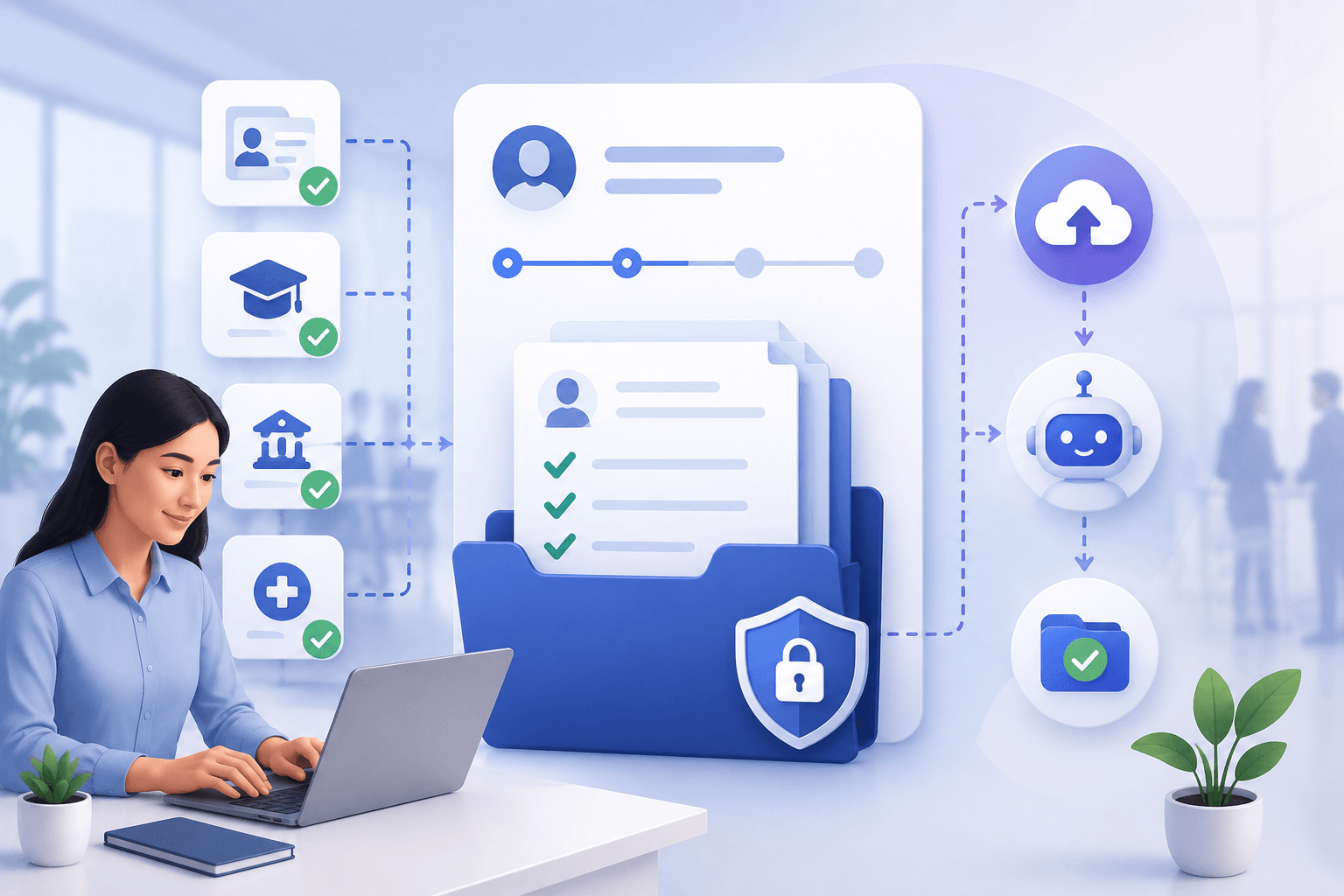
Employee onboarding software for technology companies is a purpose-built digital platform that automates, personalizes, and manages the complete new hire journey — from the moment an offer is accepted through 90-day productivity milestones — with deep integration into the HRIS, IT provisioning, DevOps, and collaboration tools that define the modern tech company operating environment.
The distinction between a generic HR onboarding module and a dedicated Employee Onboarding Software Suite is architectural, not cosmetic. Generic modules embedded within broader HRIS platforms are designed for the administrative tasks common to all industries: document collection, policy acknowledgment, and benefits enrollment. They process new hires uniformly, without differentiation by role, technical requirements, or organizational context.
A purpose-built suite for technology companies operates differently. It recognizes that a senior backend engineer and a mid-market account executive joining the same company on the same day have almost nothing in common in terms of what they need to become productive — and it delivers entirely different onboarding experiences to each, automatically, from a single configured system.
The scope of modern employee onboarding software extends well beyond the first week. It manages the preboarding period between offer acceptance and start date, orchestrates Day 1 technical setup and cultural introduction, delivers structured 30-60-90 day progression frameworks, tracks engagement signals throughout, and provides analytics that connect onboarding program quality to retention and productivity outcomes.
Why Is an Employee Onboarding Software Suite Important for SaaS Companies?
An Employee Onboarding Software Suite is important for SaaS companies because their hiring complexity — rapid headcount growth, globally distributed teams, technically differentiated roles, and multi-jurisdiction compliance requirements — fundamentally exceeds what manual processes or generic HR tools can manage reliably at scale.
The Retention Mathematics of Onboarding Quality
The Brandon Hall Group found that organizations with strong onboarding programs improve new hire retention by 82% and productivity by over 70%. These numbers are not uniform across industries — the impact is amplified in technology because tech talent attrition is disproportionately costly. The average cost to replace a software engineer ranges from 1.5 to 2 times their annual salary, factoring in recruitment fees, hiring manager time, onboarding investment, and the productivity gap during the vacancy period.
For a SaaS company scaling from 100 to 300 engineers in 18 months, the financial exposure from poor onboarding is not incremental — it is existential to the growth plan.
The Speed and Scale Problem
High-growth SaaS companies routinely double or triple their headcount within 12 to 18 months. This growth rate is structurally incompatible with manual onboarding processes, regardless of how well-intentioned the HR team executing them is. When a company hires 15 engineers in a single month — each requiring distinct tool access, technical training, compliance certifications, and manager introductions — the only scalable response is an automated, configurable onboarding system that executes all of this without proportional HR headcount increases.
The Remote Complexity Multiplier
The majority of fast-growing SaaS companies operate as fully or predominantly remote organizations. Remote new hires without structured connection mechanisms — buddy programs, async cultural content, virtual team integration — report significantly lower Day 30 engagement and higher early attrition than their co-located counterparts. An onboarding process designed for a physical office environment does not translate to a distributed team without deliberate redesign.
How Does a Smart Employee Onboarding Software Suite Work?
A Smart Employee Onboarding Software Suite works as an intelligent orchestration system that connects HR, IT, management, and the new hire themselves — automating the flow of tasks, content, access provisioning, and communications across the complete onboarding lifecycle through a four-layer architectural model.
The Four-Layer Architecture
Layer 1: Workflow Automation and Orchestration
This layer is the operational engine of the system. It manages task sequencing, deadline assignment, approval routing, and reminder automation across every stakeholder in the onboarding process. When a new hire record is created — typically triggered by an HRIS update or offer acceptance event — the automation engine activates the correct onboarding workflow based on role, department, location, and employment type. Tasks are assigned to HR, IT, the hiring manager, and the new hire simultaneously, with dependencies configured to enforce correct sequencing.
Layer 2: Integration and Data Synchronization
The integration layer connects the onboarding platform to the company's existing technology ecosystem — HRIS platforms such as Workday, BambooHR, or Rippling for employee data; identity management systems such as Okta or Azure Active Directory for access provisioning; development tools such as GitHub, GitLab, and Jira for engineering-specific setup; and communication platforms such as Slack and Microsoft Teams for workspace integration. Data flows bidirectionally, ensuring that a change in employee status in the HRIS is immediately reflected in the onboarding workflow without manual synchronization.
Layer 3: Experience Delivery and Personalization
This layer manages everything the new hire and their manager see and interact with. The new hire portal presents a personalized onboarding journey with clearly sequenced tasks, progress indicators, cultural content, training assignments, and communication touchpoints. The manager dashboard provides team-level visibility into onboarding status, outstanding tasks, and engagement signals. Content is delivered asynchronously where appropriate for distributed teams, and adapts to mobile interfaces for employees without consistent desktop access.
Layer 4: Analytics and Continuous Improvement
The analytics layer aggregates data from every interaction across the onboarding experience — task completion rates, training progress, survey responses, time-to-productivity milestones — into dashboards and reports that enable HR leaders to measure program effectiveness and identify systemic gaps. This layer transforms onboarding from an intuition-driven process into a data-driven program that improves measurably with each new hire cohort.
Core Features That Define a High-Performance Employee Onboarding Software Suite
The features that separate a high-performance onboarding suite from a basic digital checklist are not aesthetic — they are structural. Each capability below addresses a specific failure point in traditional tech company onboarding and delivers quantifiable operational impact.
Automated Preboarding Workflows
Preboarding — the period between offer acceptance and start date — is the most consistently underinvested phase of the new hire journey and the one with the greatest leverage on Day 1 experience quality.
An automated preboarding workflow activates immediately upon offer acceptance, delivering welcome communications, company culture content, benefits enrollment prompts, IT equipment requests, and pre-Day 1 tool access setup without any manual HR intervention. The new hire receives a clear picture of what to expect on their first day, feels acknowledged as a valued addition before they arrive, and eliminates the anxiety of walking into an unprepared environment.
The IT provisioning component of preboarding is particularly critical for tech companies. An engineer who arrives on Day 1 with GitHub access, a configured development environment, and an active Slack account is fundamentally different from one who spends their first three days waiting for an IT ticket to be resolved. Research from employee experience surveys consistently identifies IT access delays as the most damaging Day 1 experience in technical roles — one that sets a negative tone that is difficult to recover from.
Organizations with structured preboarding programs report up to 31% reductions in early attrition, attributable primarily to the engagement and preparedness signals preboarding delivers before the new hire has experienced a single day of work.
Role-Based and Persona-Specific Onboarding Paths
The most analytically straightforward insight in tech company onboarding — that different roles need different onboarding experiences — is also the most commonly violated principle in practice. The majority of companies route every new hire through the same onboarding sequence, regardless of whether they are joining as a principal engineer or a business development representative.
A role-based onboarding path configuration system within the Employee Onboarding Software Suite creates distinct onboarding journeys for every role category, automatically assigned based on the new hire's role data from the HRIS. An incoming senior backend engineer receives: codebase access and repository orientation, architecture documentation review, CI/CD pipeline and deployment process training, engineering code review norms, and a structured 30-day engineering contribution roadmap. An incoming customer success manager receives: product certification training, CRM workflow setup, SLA framework orientation, customer portfolio introduction, and escalation procedure documentation.
Both experiences are delivered through the same platform, managed by the same HR team, and measured against the same analytics framework — but they share almost no content. This differentiation is the single most impactful structural change that tech companies can make to their onboarding programs.
HRIS, IT, and DevOps Tool Integrations
Integration depth is the primary technical differentiator between enterprise-grade onboarding platforms and basic HR tools — and it is where most technology companies experience the sharpest gap between their onboarding software's capability and their operational requirements.
The integration requirements for a technology company onboarding environment span three distinct categories. HRIS integration with platforms such as Workday, BambooHR, HiBob, or Rippling ensures that employee data created during recruitment flows automatically into the onboarding system without manual re-entry, and that onboarding status is visible within the source HR system. Identity management integration with Okta, Azure Active Directory, or Google Workspace enables automated SSO account creation and role-based access provisioning the moment an employee record is activated.
DevOps tool integration is where technology-specific onboarding platforms earn their differentiation. Automated GitHub organization membership, Jira project board access, Confluence space permissions, and Linear workspace invitations — configured from a single onboarding workflow trigger — represent the difference between an engineer who is productive within hours and one who is productive within days. At the scale of a fast-growing engineering organization, that difference compounds into weeks of recovered productivity per month.
Compliance Training Automation and Tracking
SaaS companies operating globally face compliance training requirements that vary significantly by jurisdiction, role category, and product domain — and the consequences of non-compliance range from regulatory fines to security certification failures.
A compliant Employee Onboarding Software Suite automates the assignment, delivery, and completion tracking of mandatory training based on each employee's role and location. Information security and cybersecurity awareness training is assigned to all technical roles. GDPR data privacy training is assigned to all employees in or handling data from EU jurisdictions. SOC 2 compliance awareness is assigned to roles with access to production systems. California, New York, and Illinois employees receive state-specific harassment prevention training that meets distinct legal requirements for each jurisdiction.
Completion records are stored with full audit trails within the platform — providing the documentation required for SOC 2 audits, ISO 27001 certification reviews, and employment dispute proceedings without manual record compilation.
30-60-90 Day Milestone Tracking and Manager Dashboards
The onboarding period does not end at the conclusion of the first week. The 30-60-90 day framework is the most widely validated structure for new hire progression, providing clarity of expectation for the new hire, accountability for the manager, and measurable milestones for the HR team to track.
Within the onboarding suite, milestone tracking works by configuring role-specific success criteria at each checkpoint — what a new engineer should have accomplished, understood, and contributed by Day 30, 60, and 90 — and surfacing progress against those criteria in real-time manager dashboards. Managers receive automated alerts when milestone completion falls behind schedule, enabling proactive conversations rather than reactive crisis management.
The impact on new hire clarity is significant. Research consistently shows that new hires who understand what success looks like at 30, 60, and 90 days report substantially higher engagement and confidence scores than those operating without defined expectations. In a remote-first environment where informal feedback loops are limited, this structured clarity becomes the primary mechanism for new hire orientation.
New Hire Engagement Surveys and Sentiment Tracking
The most valuable early warning system available to HR leaders in a high-growth tech company is a well-designed Day 7 pulse survey — delivered automatically to every new hire seven days after their start date, before most attrition decisions have solidified.
A new hire who is disengaged at Day 7 has, in most cases, already begun evaluating their options. A prompt, personalized response from their manager or HR partner — informed by honest survey data — can change the trajectory of that evaluation. Without the survey, the disengagement remains invisible until the resignation arrives.
The Employee Onboarding Software Suite automates pulse survey delivery at Day 7, Day 30, Day 60, and Day 90, with aggregate sentiment data displayed in HR dashboards alongside individual flags for responses that indicate elevated attrition risk. Cohort-level analysis across survey waves reveals systemic onboarding program weaknesses — not just individual experience outliers — enabling program-level improvements that benefit future new hire cohorts.
Real-World Applications in Technology Environments
High-Growth SaaS Scale-Up
A B2B SaaS platform growing from 80 to 250 employees in 14 months deployed an Employee Onboarding Software Suite with role-based paths, HRIS integration, and automated IT provisioning. Time-to-productivity for engineering hires dropped from an average of 11 weeks to 7 weeks. First-90-day attrition fell from 18% to 9%. The HR team managed the tripling of headcount without adding onboarding-specific headcount.
Fully Remote Developer Tools Company
A fully remote developer tools company operating across 12 countries implemented asynchronous onboarding content delivery, virtual buddy program management, and multilingual compliance training through their onboarding suite. Day 30 engagement scores improved by 34% within two quarters of implementation. The company successfully onboarded engineers across APAC, EMEA, and Americas time zones within the same cohort without scheduling conflicts or content gaps.
HealthTech SaaS Platform
A healthcare SaaS company handling patient data automated HIPAA compliance training assignment within their engineering and customer success onboarding paths — with completion tracking integrated into their SOC 2 audit documentation workflow. What had previously required manual tracking spreadsheets and quarterly compliance review meetings became an automated, audit-ready system maintained without dedicated compliance staff.
Challenges and Best Practices in Onboarding Software Deployment
The most common implementation failure in onboarding software deployment is configuring the platform before designing the process. Organizations that build onboarding workflows in software without first documenting their intended onboarding experience inevitably replicate their existing process inefficiencies in digital form — simply faster and at greater scale.
The correct sequence is: map the intended onboarding experience by role first, define success milestones at 30-60-90 days, assign task ownership across HR, IT, and management, then configure the platform to execute the documented process. This discipline produces onboarding programs that are genuinely improved by the software, rather than merely digitized versions of existing gaps.
Manager engagement represents the second most common failure point. Onboarding software cannot compensate for managers who treat new hire integration as HR's responsibility. The most effective deployments include manager onboarding dashboards with explicit task ownership, completion metrics included in team performance reporting, and training that positions managers as the most critical variable in new hire success — which the research consistently confirms they are.
Future Trends Shaping Employee Onboarding Software for Tech Companies
The next generation of Employee Onboarding Software Suite platforms is being shaped by three converging forces: the maturation of AI-driven personalization, the deepening integration between onboarding platforms and Internal Developer Platforms, and the growing regulatory complexity of global remote hiring.
AI-personalized onboarding paths — systems that adjust content, pacing, and emphasis in real time based on new hire engagement signals and learning behavior — will replace static role-based templates as the primary personalization mechanism. A new hire who completes technical documentation quickly and engages deeply with architecture content will receive progressively advanced materials; one who struggles with onboarding tasks at a particular stage will receive targeted support automatically, without manager intervention.
Predictive attrition prevention will become a standard capability rather than a premium feature, with machine learning models analyzing the composite signal of task completion pace, survey sentiment, manager engagement frequency, and tool adoption patterns to generate individual attrition risk scores that surface in HR dashboards alongside recommended interventions.
Internal Developer Platform integration — connecting onboarding workflows directly with platforms like Backstage — will automate the complete technical environment setup for engineering new hires, from repository access and development environment configuration to CI/CD pipeline orientation, as a coordinated sequence within the onboarding system rather than a series of manual IT and engineering manager tasks.
Key Takeaways
A purpose-built Employee Onboarding Software Suite for technology companies is architecturally distinct from generic HRIS onboarding modules — designed specifically for rapid headcount growth, distributed teams, technical role differentiation, and global compliance complexity
Automated preboarding and IT provisioning integration are the two highest-impact features for tech companies, directly addressing the Day 1 access failures that create irreversible negative first impressions among technical hires
Role-based onboarding paths — delivering fundamentally different experiences to engineers, product managers, customer success teams, and sales professionals from the same configured platform — are the single most impactful structural change available to tech company HR programs
Day 7 pulse surveys are the most valuable early warning system for early attrition risk — providing actionable intelligence before most new hire disengagement decisions solidify into departure decisions
Analytics-driven onboarding — measuring time-to-productivity, cohort engagement scores, and completion rates by role — transforms the onboarding program from an intuition-driven HR process into a continuously improving operational asset with measurable ROI
The future of tech company onboarding software converges on AI-personalized learning paths, predictive attrition prevention, and Internal Developer Platform integration — progressively reducing both new hire friction and HR administrative overhead simultaneously
Appreciate the creator