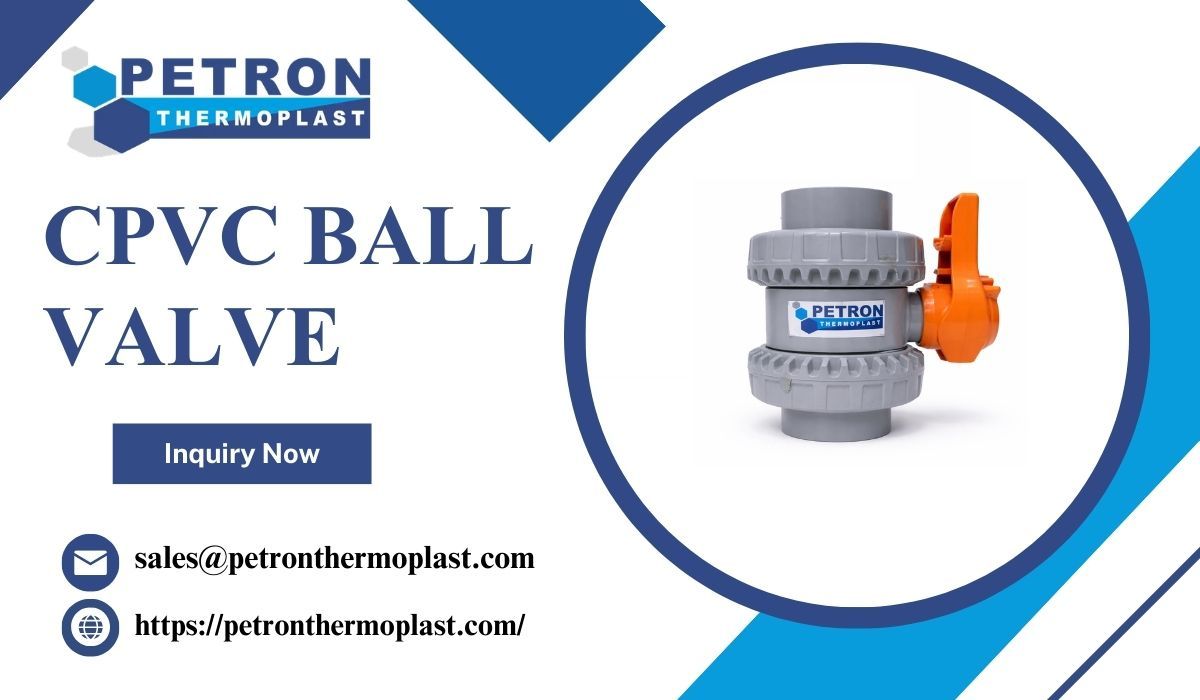
Best CPVC Ball Valves for Heavy Engineering Industries
Heavy engineering industries operate in some of the most demanding environments in the industrial world. From chemical processing and power generation to metallurgy, infrastructure development, and large-scale manufacturing, these sectors require piping and flow control systems that can withstand high pressure, aggressive chemicals, and continuous operation. In such critical applications, CPVC ball valves have emerged as a preferred solution for reliable and long-term fluid control.
This blog explores why CPVC ball valves are ideal for heavy engineering industries, their technical advantages, applications, selection criteria, and how leading manufacturers like Petron Thermoplast deliver performance-driven solutions for industrial buyers.
Understanding CPVC Ball Valves
CPVC (Chlorinated Polyvinyl Chloride) is an advanced thermoplastic material engineered for high-temperature and chemically aggressive environments. When used in ball valve construction, CPVC offers superior strength, durability, and resistance compared to standard PVC.
A CPVC ball valve works using a spherical ball with a central bore. Rotating the handle by 90 degrees aligns or blocks the flow path, providing quick and precise shut-off. This simple yet robust mechanism makes CPVC ball valves ideal for heavy-duty industrial operations.
Why Heavy Engineering Industries Prefer CPVC Ball Valves?
Heavy engineering sectors demand equipment that performs consistently under extreme working conditions. CPVC ball valves meet these requirements through several critical advantages.
1. Exceptional Chemical Resistance
Industrial fluids often include acids, alkalis, solvents, and corrosive compounds. CPVC resists chemical attack from most industrial chemicals, making it suitable for:
Acid transfer lines
Chemical dosing systems
Effluent treatment plants
Solvent handling units
This resistance reduces corrosion-related failures and extends system life.
2. High Temperature Tolerance
Unlike conventional PVC, CPVC can withstand operating temperatures up to 93°C (200°F). This makes it suitable for hot water systems, thermal processing lines, and high-temperature chemical applications.
3. Superior Mechanical Strength
Heavy engineering installations involve high flow rates, pressure variations, and mechanical stress. CPVC ball valves are designed with reinforced bodies and precision-molded components that maintain structural integrity even in demanding environments.
4. Lightweight and Easy Handling
Compared to metal valves, CPVC ball valves are significantly lighter. This reduces installation time, lowers labor costs, and simplifies maintenance in large industrial facilities.
5. Corrosion-Free Performance
Metal valves are prone to rust, scaling, and pitting over time. CPVC is non-metallic and corrosion-free, ensuring consistent flow and reducing downtime caused by degradation.
Key Applications in Heavy Engineering Industries
CPVC ball valves play a vital role across multiple heavy engineering sectors.
Chemical and Petrochemical Plants
In chemical processing units, CPVC ball valves control the flow of aggressive media such as sulfuric acid, hydrochloric acid, and caustic solutions. Their resistance to chemical attack ensures operational safety and reliability.
Power Generation Facilities
Thermal and hydro power plants require durable valves for cooling water systems, chemical dosing, and water treatment units. CPVC valves perform efficiently under continuous duty cycles.
Steel and Metal Processing Units
Steel plants and metal finishing facilities use CPVC ball valves in pickling lines, electroplating units, and wastewater treatment systems, where chemical exposure is constant.
Infrastructure and EPC Projects
Large-scale engineering projects such as refineries, industrial parks, and manufacturing hubs depend on CPVC valves for reliable pipeline networks and utility systems.
Water and Effluent Treatment Plants
CPVC ball valves regulate chemical dosing, filtration systems, and treated water distribution, ensuring smooth and contamination-free operations.
Technical Features of Industrial-Grade CPVC Ball Valves
High-quality CPVC ball valves for heavy engineering applications are engineered with advanced design features.
Precision-Molded Valve Body
Ensures uniform thickness, leak-proof performance, and resistance to deformation under pressure.
Full Bore Design
Allows unrestricted flow, minimizing pressure loss and improving system efficiency.
PTFE or Reinforced Seats
Provide smooth operation, low friction, and excellent sealing performance.
High-Strength Stem Assembly
Ensures durability and safe torque transmission during frequent operation.
Double O-Ring Sealing
Prevents external leakage and enhances safety in hazardous environments.
Benefits of Using CPVC Ball Valves in Heavy Engineering
Reduced Maintenance Costs
CPVC valves require minimal servicing due to corrosion resistance and stable material properties.
Longer Service Life
With proper installation and operation, CPVC ball valves can deliver decades of reliable performance.
Improved Process Safety
Leak-free sealing and chemical compatibility reduce the risk of accidents and environmental hazards.
Cost Efficiency
Lower initial cost compared to alloy or stainless-steel valves, combined with reduced maintenance expenses, offers excellent long-term value.
Operational Flexibility
Suitable for a wide range of pressures, temperatures, and fluid types, enabling versatile system design.
How to Select the Right CPVC Ball Valve for Industrial Use?
Choosing the correct CPVC ball valve is essential for ensuring optimal performance.
1. Pressure Rating
Select valves rated for your operating pressure to avoid premature failure.
2. Temperature Range
Ensure compatibility with maximum process temperatures.
3. Chemical Compatibility
Verify resistance against specific chemicals used in your system.
4. Connection Type
Common options include threaded, socket weld, and flanged connections. Choose based on system design.
5. Valve Size
Proper sizing prevents flow restrictions and pressure loss.
6. Certification and Standards
Look for valves manufactured in compliance with international quality and safety standards.
Installation and Maintenance Best Practices
Proper Installation
Align pipelines accurately
Avoid excessive tightening
Use compatible sealants
Ensure correct torque application
Routine Inspection
Regularly check for wear, handle movement, and sealing integrity to prevent unplanned downtime.
Cleaning and Flushing
Periodic flushing removes deposits and maintains smooth valve operation.
Replacement Planning
Maintain spare inventory for critical lines to ensure uninterrupted production.
Role of Quality Manufacturers in Industrial Performance
The performance of CPVC ball valves depends significantly on manufacturing quality. Reputed suppliers invest in:
Advanced molding technology
Precision machining
Rigorous quality testing
Material traceability
International compliance systems
Companies like Petron Thermoplast focus on delivering customized, export-quality CPVC valves designed specifically for heavy engineering environments. Their solutions cater to EPC contractors, plant operators, and global industrial buyers seeking reliability and consistency.
Future Trends in CPVC Valve Technology
With growing industrial automation and sustainability initiatives, CPVC ball valves are evolving to meet future requirements.
Smart Valve Integration
Compatibility with sensors and monitoring systems for real-time process control.
Enhanced Material Formulations
Improved resistance to extreme temperatures and aggressive chemicals.
Eco-Friendly Manufacturing
Sustainable production methods to reduce environmental impact.
Customized Engineering Solutions
Application-specific valve designs for specialized industries.
These advancements will further strengthen CPVC’s position in heavy engineering infrastructure.
Why CPVC Ball Valves Are the Smart Choice for Heavy Engineering?
In heavy engineering industries, equipment reliability directly impacts productivity, safety, and profitability. CPVC ball valves provide an ideal balance of performance, durability, and cost efficiency.
They offer:
Strong chemical and thermal resistance
Long operational life
Low maintenance requirements
Superior sealing performance
Excellent return on investment
By choosing high-quality CPVC ball valves from trusted manufacturers, industrial buyers can ensure uninterrupted operations and long-term system stability.
Conclusion
The demand for reliable flow control solutions in heavy engineering industries continues to grow. CPVC ball valves have proven themselves as dependable, cost-effective, and high-performance components in modern industrial piping systems.
From chemical plants and power stations to infrastructure projects and metal processing units, CPVC ball valves deliver unmatched operational reliability. When sourced from experienced manufacturers like Petron Thermoplast, these valves become strategic assets for industrial success. If you are planning to upgrade or expand your industrial piping network, investing in premium CPVC ball valves is a step toward safer operations, reduced downtime, and sustainable growth.
Appreciate the creator