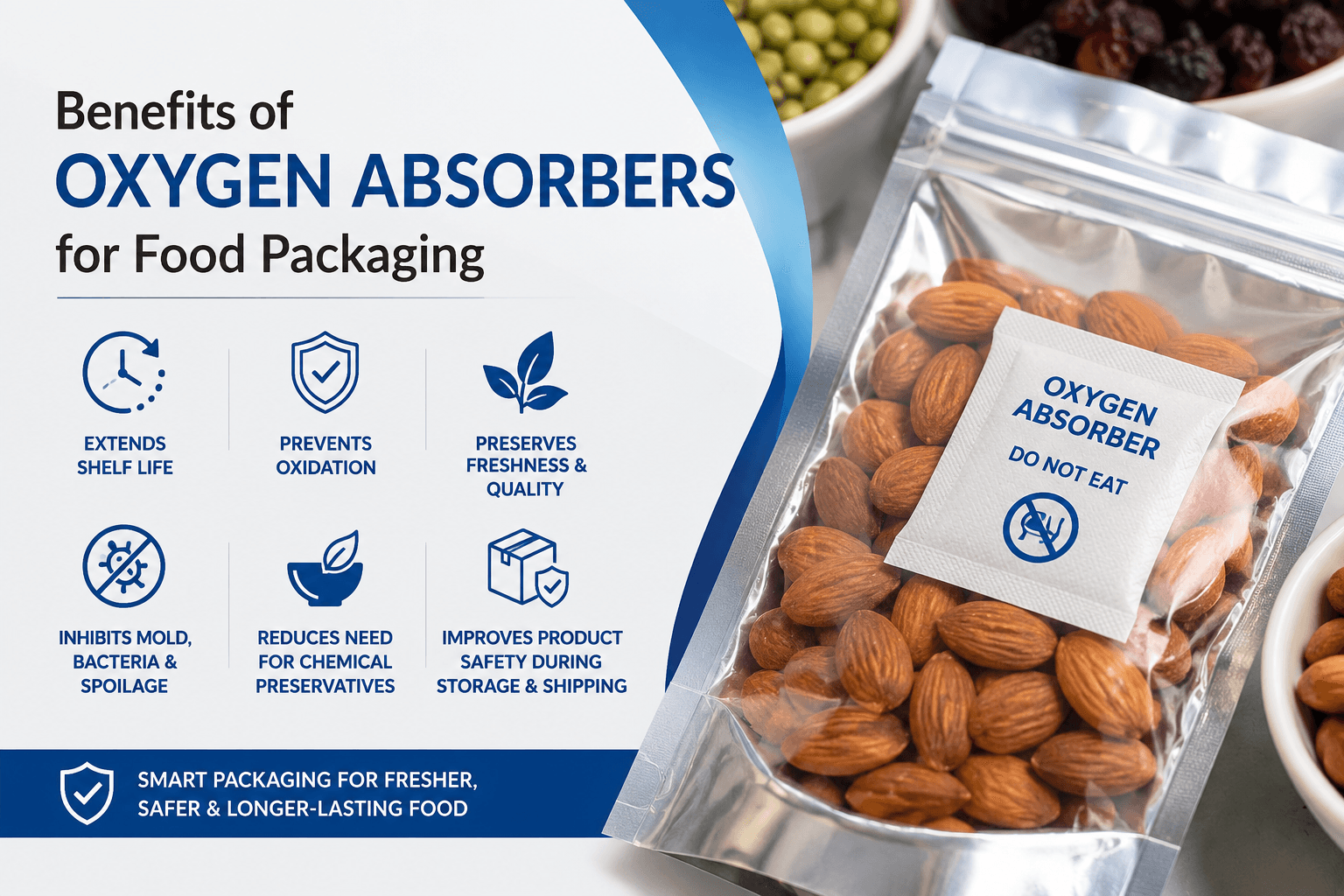
Benefits of Oxygen Absorbers for Food Packaging
Food packaging has evolved significantly over the years as manufacturers focus on extending shelf life, maintaining product quality, and reducing food waste. One of the most effective technologies used in modern food preservation is the oxygen absorber. These small yet powerful packets play a major role in protecting packaged food products from spoilage, oxidation, mold growth, and quality degradation.
Oxygen absorbers are widely used across the food industry for products such as snacks, dry fruits, spices, bakery products, ready-to-eat meals, coffee, pet food, and dehydrated foods. By reducing oxygen levels inside sealed packaging, they help manufacturers deliver fresher and safer products to consumers.
What Are Oxygen Absorbers?
Oxygen absorbers are active packaging solutions designed to remove oxygen from sealed packaging environments. They usually contain iron powder, salt, and natural minerals that chemically react with oxygen and absorb it from the surrounding air.
Once placed inside an airtight package, oxygen absorbers can reduce oxygen levels to extremely low concentrations. This creates a protective environment that slows down oxidation, microbial growth, and product deterioration.
Unlike moisture absorbers that control humidity, oxygen absorbers specifically target oxygen exposure, which is one of the primary causes of food spoilage.
Why Oxygen Is Harmful to Food Products
Oxygen can negatively impact food quality in several ways. When food is exposed to oxygen for extended periods, it may lead to:
Oxidation of fats and oils
Loss of flavor and aroma
Color fading or discoloration
Nutritional degradation
Mold and bacterial growth
Reduced shelf life
Texture changes
Many packaged food products contain oils, vitamins, proteins, and natural ingredients that are highly sensitive to oxygen exposure. This is why oxygen control is critical in modern food packaging systems.
Major Benefits of Oxygen Absorbers for Food Packaging
1. Extends Shelf Life
One of the biggest advantages of oxygen absorbers is their ability to significantly extend product shelf life. By removing oxygen from sealed packaging, food products remain fresher for a longer period.
This is especially important for:
Dry foods
Snacks
Dehydrated meals
Nuts and seeds
Coffee
Spices
Bakery products
Manufacturers can reduce spoilage rates and maintain product quality during transportation and storage.
2. Prevents Oxidation
Oxidation is a chemical reaction that occurs when oxygen interacts with food components such as fats, oils, and vitamins. This process can produce rancid odors, unpleasant taste, and nutritional loss.
Oxygen absorbers help prevent:
Rancidity in oily foods
Flavor deterioration
Nutrient breakdown
Unpleasant odors
This makes them highly valuable for products with sensitive ingredients.
3. Protects Food Freshness
Consumers expect packaged foods to taste fresh even after weeks or months of storage. Oxygen absorbers help maintain:
Original flavor
Natural aroma
Product texture
Crispness
Product appearance
For example, snacks remain crunchy, coffee retains aroma, and dry fruits maintain quality for extended periods.
4. Controls Mold and Microbial Growth
Mold and aerobic bacteria require oxygen to survive and multiply. Reducing oxygen levels inside packaging creates an unfavorable environment for microbial growth.
Oxygen absorbers help:
Reduce mold growth
Limit bacterial activity
Prevent spoilage
Improve food safety
This is particularly useful for bakery items, cheese products, dried seafood, and pet food packaging.
5. Reduces Need for Chemical Preservatives
Modern consumers increasingly prefer clean-label and preservative-free foods. Oxygen absorbers provide a natural method of food preservation without directly adding chemicals to the product.
Manufacturers can reduce reliance on:
Artificial preservatives
Excess sodium
Chemical stabilizers
This supports healthier and more natural food packaging solutions.
6. Improves Product Stability During Transportation
Food products often travel through varying environmental conditions during shipping and export. Temperature fluctuations and humidity changes can accelerate spoilage when oxygen is present.
Oxygen absorbers help maintain product stability throughout:
Warehousing
Long-distance transportation
Export shipping
Retail shelf storage
This is especially important for global food supply chains.
7. Preserves Nutritional Value
Many vitamins and nutrients are sensitive to oxidation. Oxygen exposure can reduce the nutritional quality of packaged foods over time.
Oxygen absorbers help preserve:
Vitamins
Natural antioxidants
Proteins
Nutritional integrity
This helps manufacturers maintain product value and quality consistency.
8. Supports Sustainable Food Packaging
Food waste is a major global challenge. Oxygen absorbers contribute to sustainability by reducing spoilage and minimizing discarded food products.
Benefits include:
Lower food waste
Reduced product returns
Improved inventory management
Longer retail shelf life
This improves supply chain efficiency while supporting sustainable packaging goals.
Common Food Products Using Oxygen Absorbers
Oxygen absorbers are widely used across various food categories, including:
Dry Foods
Rice
Flour
Pasta
Beans
Cereals
Snacks
Chips
Crackers
Popcorn
Protein snacks
Dehydrated Products
Freeze-dried meals
Instant foods
Soup mixes
Bakery Products
Bread
Cakes
Cookies
Beverage Products
Coffee
Tea
Powdered drinks
Natural Foods
Nuts
Dry fruits
Seeds
Herbs
Spices
Pet Food
Dry pet food
Treats
Nutritional supplements
Oxygen Absorbers vs Vacuum Packaging
Many people assume vacuum sealing alone is enough to preserve food, but some oxygen often remains inside the package even after vacuum sealing.
Oxygen absorbers complement vacuum packaging by removing residual oxygen that vacuum systems cannot completely eliminate.
Together, they provide:
Better shelf life
Enhanced freshness
Improved oxidation protection
This combination is widely used in commercial food packaging.
Oxygen Absorbers vs Silica Gel
Although both are used in packaging, oxygen absorbers and silica gel serve different purposes.
Oxygen Absorbers
Remove oxygen
Prevent oxidation
Control aerobic microbial growth
Silica Gel
Absorbs moisture
Controls humidity
Prevents condensation
In some packaging systems, both are used together for maximum protection.
Factors to Consider When Choosing Oxygen Absorbers
Selecting the correct oxygen absorber depends on several factors:
Package size
Food type
Moisture content
Packaging material
Desired shelf life
Oxygen permeability
Using the wrong absorber size may reduce effectiveness. Food manufacturers usually calculate required oxygen absorption capacity based on package volume and oxygen transmission rate.
Importance of Airtight Packaging
Oxygen absorbers only work effectively when used inside properly sealed and airtight packaging.
Common packaging materials include:
Vacuum pouches
Metalized films
High-barrier laminates
PET containers
Glass jars
Poor sealing can allow oxygen to re-enter the package and reduce performance.
Safety of Oxygen Absorbers
Oxygen absorbers are generally safe when used correctly in food packaging applications. The contents are enclosed inside sealed sachets and are not intended for consumption.
Most oxygen absorbers are:
Non-toxic when unopened
Food-safe for packaging applications
Compliant with food packaging standards
Manufacturers usually include warning labels such as “Do Not Eat” for consumer safety.
Future of Oxygen Absorber Technology
As the food industry continues to evolve, demand for advanced active packaging solutions is increasing rapidly. Modern oxygen absorber technologies are becoming:
More efficient
Smaller in size
Faster acting
Environmentally friendly
Innovations in smart packaging and sustainable packaging materials are also driving growth in oxygen scavenging technologies worldwide.
Conclusion
Oxygen absorbers have become an essential component of modern food packaging systems. They help protect food products from oxidation, spoilage, microbial growth, and quality degradation while significantly extending shelf life.
From snacks and coffee to dry foods and pet products, oxygen absorbers improve freshness, preserve flavor, maintain nutritional value, and reduce food waste. As consumer demand for high-quality and preservative-free foods continues to grow, oxygen absorber technology will remain a critical solution for food manufacturers and packaging industries worldwide.
By combining oxygen absorbers with high-barrier packaging materials and proper sealing methods, businesses can ensure safer, fresher, and longer-lasting food products for global markets.
Appreciate the creator