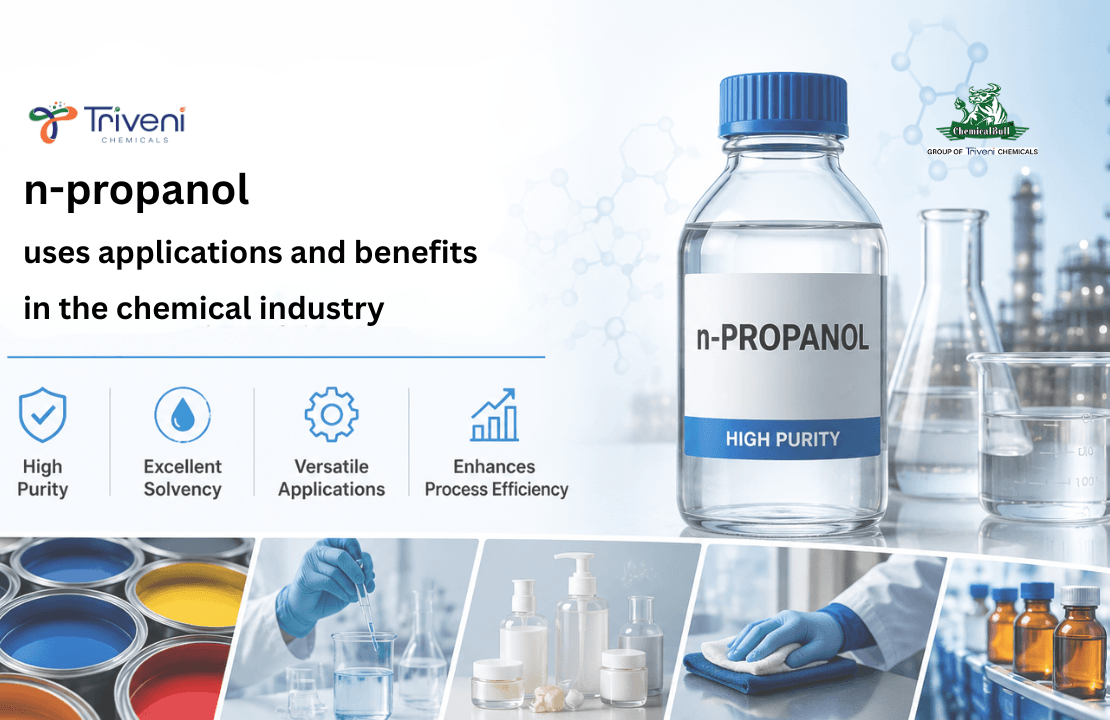
B2B Sourcing Guide: Key Procurement Metrics for Buying n-Propanol
In modern chemical manufacturing, purchasing high-quality solvents is a critical step that directly impacts factory production line runtimes, final product quality, and workplace safety. Among the primary aliphatic alcohol group, normal propyl alcohol (n-propanol) is an essential component used across high-performance surface coatings, flexible packaging printing inks, and specialized chemical extractions.
To maintain a smooth, disruption-free assembly line, procurement managers must look beyond basic material safety data sheets. Buyers need a clear understanding of physical chemical traits, strict storage handling safety, and the right distribution networks required to secure consistent raw material quality.
Physical Properties and Processing Benefits
Normal propyl alcohol (CH3CH2CH2OH, CAS No. 71-23-8) is a clear, colorless, mobile liquid with a characteristic sweet, alcohol-like scent. A defining physical feature of n-propanol is its stable boiling point of approximately 97°C, which gives it a slower and highly predictable evaporation rate compared to lighter compounds like methanol or ethanol.
For technical blending plants and chemical engineers, this controlled volatility provides significant production advantages:
Eliminating Surface Defects: Lighter alcohols flash off too quickly from wet coatings, causing rapid temperature drops that trap moisture and air. This results in costly defects like pinholing or an uneven surface finish. Because n-propanol evaporates at a balanced pace, it allows liquid polymers ample time to flow and level out into a smooth, high-gloss protective barrier.
Superior Solvency: It features complete miscibility in distilled water and dissolves effortlessly alongside organic hydrocarbons, aromatic esters, and related industrial intermediate bases.
Building Reliable Sourcing Networks Over Spot Risks
Maintaining tight chemical quality metrics is non-negotiable for large-scale compounding lines to protect downstream profit margins. Procurement teams often rely on unverified local spot brokers to manage sudden volume spikes. However, this transactional approach introduces major technical risks, such as trace water contamination or unexpected acidity shifts that can ruin an entire production batch.
In precision applications—such as Active Pharmaceutical Ingredients (APIs) or high-speed packaging polymers—even a minor 0.2% drop in chemical purity can lead to rapid batch cloudiness, phase separation, or complete formulation failure. To prevent these expensive technical bottlenecks, modern enterprise plants build long-term volume agreements with established, batch-certified n-Propanol suppliers.
Buying raw materials directly through prominent n-Propanol wholesalers guarantees that incoming delivery lots maintain a consistent minimum purity profile of $\geq 99.8\%$ matching international ASTM D3893 standards. This contractual strategy provides processing plants with the batch-to-batch consistency necessary to eliminate production defects and reduce raw material waste.
Commercial Applications and Distribution Safety
The unique evaporation mechanics and deep polar solvency of this alcohol allow it to solve critical problems across multiple industrial sectors:
High-Speed Packaging Presses: Commercial packaging lines operate on automated flexographic and rotogravure presses. Inks must remain fluid on intricate rollers during brief line stoppages to prevent severe clogging. The compound acts as an exceptional evaporation retarder, keeping resin binders completely dissolved during the press run while flashing off cleanly once stamped onto flexible plastic or paper substrates.
Supply Chain Resilience: To keep these industrial applications running without supply hiccups, corporate purchase managers actively rely on asset-backed n-Propanol distributors. These entities maintain localized buffer stocks and utilize specialized road tankers to ensure safe, on-time deliveries. For massive blending setups requiring large, continuous volumes, building structural ties with primary tier-1 n-Propanol manufacturers allows factories to optimize raw material costs and secure direct technical testing records from the source.
Engineering Controls and Storage Compliance
Because n-propanol is classified as a Class 3 Highly Flammable Liquid with a flash point of roughly 22°C, industrial facilities must enforce strict engineering controls during bulk unloading and long-term storage:
Metallurgical Integration: Bulk storage systems, transfer pipelines, and valves must be built using Grade 304 or 316 Stainless Steel. Contact with copper, brass, aluminum, or low-density plastics is strictly prohibited to avoid trace chemical discoloration.
Static Mitigation: Complete electrical bonding and grounding of all road tankers and unloading pumps are mandatory before liquid transfer to eliminate static spark hazards near volatile vapors.
Atmospheric Control: Advanced plants implement low-pressure dry nitrogen blanketing inside tank headspaces. This blocks the alcohol from absorbing atmospheric moisture, ensuring the certified chemical profile remains completely intact over extended storage cycles.
FAQs
Q1: What is the standard minimum purity required for enterprise-grade manufacturing?
Ans: Procurement teams must always verify a strict minimum purity threshold of 99.8%, fully supported by a batch-specific, genuine Certificate of Analysis (COA).
Q2: How is this compound scaled up by primary manufacturers?
Ans: Global n-Propanol manufacturers synthesize this solvent through the hydroformylation of ethylene to create propanal intermediate, which is then hydrogenated and run through multi-stage fractional distillation to strip away traces of water and impurities.
Appreciate the creator