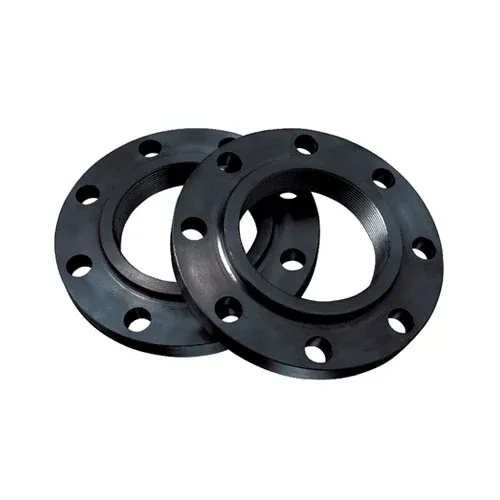
ASTM A694 F52 Flanges: Strength & Reliability for High-Pressure Systems
In industries where high-pressure transmission systems are the backbone of operations, selecting the right flange material is critical. ASTM A694 F52 flanges have become a preferred choice in sectors like oil & gas, petrochemical, and power generation, thanks to their robust strength, superior toughness, and excellent weldability. These flanges are designed to meet the challenges of demanding environments, ensuring safety, performance, and long service life.
🔍 What is ASTM A694 F52?
ASTM A694 F52 is a specification developed by ASTM International for carbon and alloy steel forgings intended for use in high-pressure transmission service. The "F52" denotes a specific yield strength grade of 52 ksi (358 MPa), making it suitable for moderate to high-pressure systems.
These flanges are commonly used in pipeline components, including valves, fittings, and flanges, particularly in oilfield and natural gas transmission lines.
🛠️ Types of ASTM A694 F52 Flanges
ASTM A694 F52 flanges are available in a range of types to suit different industrial requirements:
Weld Neck Flanges (WN)
Provide high strength and stress resistance.
Ideal for high-temperature and pressure applications.
Slip-On Flanges (SO)
Easier to install and align.
Suitable for lower-pressure environments.
Blind Flanges (BL)
Used to seal pipe ends and allow inspection or modification.
Excellent for high-pressure pipelines.
Socket Weld Flanges (SW)
Good for small-diameter, high-pressure pipes.
Provide strong and leak-proof joints.
Threaded Flanges (TH)
Used in low-pressure systems where welding is not feasible.
Easy to assemble and disassemble.
Lap Joint Flanges (LJ)
Used with stub ends.
Ideal for systems that require frequent dismantling.
📐 Mechanical Properties of ASTM A694 F52
Property
Value
Yield Strength
≥ 52,000 psi (358 MPa)
Tensile Strength
≥ 66,000 psi (455 MPa)
Elongation
≥ 21%
Hardness
≤ 235 HBW
These properties ensure that F52 flanges perform well under mechanical stress and pressure fluctuations, making them dependable in tough environments.
🌍 Applications of ASTM A694 F52 Flanges
ASTM A694 F52 flanges are extensively used in:
Oil & Gas Transmission Pipelines
Petrochemical Processing Plants
Power Generation Plants
Refineries and Chemical Plants
Offshore Drilling and Subsea Equipment
Their strength, reliability, and corrosion resistance (especially when coated) make them suitable for high-pressure, corrosive, or variable-temperature applications.
✅ Advantages of ASTM A694 F52 Flanges
High Strength-to-Weight Ratio: Ensures safe performance under pressure without adding excessive weight to the system.
Weldability: Excellent for seamless joining with pipe systems.
Cost-Effective: Offers a balance between performance and affordability.
Versatility: Available in various flange types and dimensions to meet diverse industrial needs.
Corrosion Protection: Often provided with galvanizing, painting, or coating to resist harsh environments.
🧪 Heat Treatment & Testing
F52 flanges are typically normalized or quenched and tempered to enhance their mechanical properties. They undergo a series of rigorous quality checks:
Ultrasonic Testing
Hardness Testing
Tensile and Yield Strength Tests
Impact Testing (if required for low-temperature service)
📏 Standards and Specifications
ASTM A694 F52 flanges are produced according to global industry standards:
ASME B16.5 – Pipe flanges and flanged fittings up to 24"
ASME B16.47 – Large-diameter steel flanges
MSS SP-44 – Steel pipeline flanges
API 6A / API 6D – Oilfield and transmission applications
🔚 Conclusion
ASTM A694 F52 flanges are a smart and reliable solution for high-pressure piping systems that require strength, durability, and performance. Their mechanical properties, adaptability, and ease of installation make them an ideal choice across various industries.
If you’re in the business of fluid transmission and want to ensure long-lasting connections in your systems, ASTM A694 F52 flanges are a top-tier investment in safety and efficiency.
Appreciate the creator