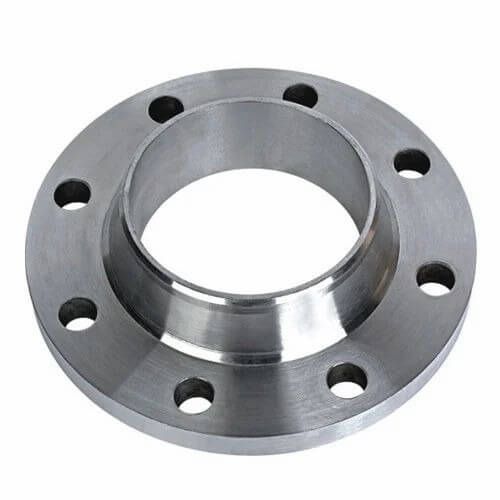
ASTM A105 Flanges: The Backbone of Carbon Steel Flange Applications
ASTM A105 flanges are among the most widely used components in carbon steel piping systems across industries like oil and gas, petrochemicals, power generation, and water treatment. Engineered for strength, versatility, and cost-effectiveness, these flanges are forged from carbon steel and designed to meet the rigorous demands of high-temperature and high-pressure applications. The ASTM A105 standard sets specifications for carbon steel forgings used in piping components such as flanges, fittings, and valves.
In this article, we explore the essential characteristics, types, benefits, and applications of ASTM A105 carbon steel flanges, providing valuable insights into why they are integral to modern industrial infrastructure.
Understanding ASTM A105 Material
ASTM A105 refers to a specification developed by ASTM International that governs carbon steel forgings for piping applications. This standard is primarily applied to components intended for ambient- and higher-temperature service in pressure systems. The material is typically supplied in a normalized, normalized and tempered, or quenched and tempered condition to enhance mechanical properties.
Key chemical composition includes:
Carbon (C): ≤ 0.35%
Manganese (Mn): 0.60–1.05%
Phosphorus (P): ≤ 0.035%
Sulfur (S): ≤ 0.040%
Silicon (Si): 0.10–0.35%
The material exhibits excellent mechanical strength and moderate corrosion resistance, making it suitable for welded and bolted connections in pressurized piping systems.
Types of ASTM A105 Carbon Steel Flanges
ASTM A105 carbon steel flanges are manufactured in various designs to meet different connection and service requirements:
Weld Neck Flanges (WN): Designed for high-pressure systems, providing reinforced strength at the welded joint.
Slip-On Flanges (SO): Easy to install and ideal for low-pressure applications.
Blind Flanges (BL): Used to seal off pipe ends or pressure vessel openings.
Socket Weld Flanges (SW): Suitable for small-diameter high-pressure piping.
Threaded Flanges (TH): Useful for piping systems where welding is not feasible.
Lap Joint Flanges (LJ): Typically used in systems requiring frequent dismantling.
Orifice Flanges: Designed to measure the flow of liquids or gases in a pipeline.
Each flange type serves a distinct purpose and is selected based on pressure class, fluid type, temperature, and connection design.
Pressure Ratings and Dimensions
ASTM A105 flanges are available in pressure ratings ranging from Class 150 to Class 2500, as per ASME B16.5 and ASME B16.47 standards. The dimensions and tolerances follow internationally accepted norms, ensuring compatibility with other piping components.
Sizes range from ½” to 60” nominal bore (NB), with flange face types including Raised Face (RF), Flat Face (FF), and Ring Type Joint (RTJ).
Advantages of ASTM A105 Carbon Steel Flanges
High Strength: Superior tensile and yield strength for high-pressure conditions.
Cost-Effective: Compared to alloy or stainless steel, carbon steel offers a favorable price-performance ratio.
Weldability: Excellent welding characteristics simplify installation and repairs.
Wide Availability: Readily available in multiple dimensions and pressure ratings.
Thermal Resistance: Performs well in elevated temperature applications.
These advantages make ASTM A105 flanges a popular choice for projects with budget constraints and robust mechanical requirements.
Applications of ASTM A105 Flanges
Carbon steel flanges made from ASTM A105 material are employed across a wide array of industries:
Oil & Gas Pipelines
Petrochemical Plants
Power Generation
Chemical Processing
Water Supply and Wastewater Management
Boiler and Heat Exchanger Systems
Their mechanical properties and adaptability make them suitable for both aboveground and underground installations, including offshore environments with protective coatings.
Testing and Quality Assurance
To ensure the reliability of ASTM A105 flanges, manufacturers subject them to a range of tests, including:
Hydrostatic Testing
Ultrasonic Testing (UT)
Magnetic Particle Testing (MPT)
Tensile and Hardness Testing
Chemical Composition Analysis
Stringent quality control and adherence to international standards ensure the integrity of each flange used in critical operations.
Conclusion
ASTM A105 flanges stand as a testament to the durability and functionality of carbon steel components in industrial piping systems. Their adaptability, strength, and economic value make them indispensable for engineers and procurement specialists worldwide. Whether it’s transporting natural gas through a high-pressure pipeline or managing fluids in a power plant, ASTM A105 carbon steel flanges deliver consistent performance under challenging conditions.
When selecting flanges for your next project, ASTM A105 offers a proven balance of performance, reliability, and value—making it the go-to specification for carbon steel flange applications.
Appreciate the creator