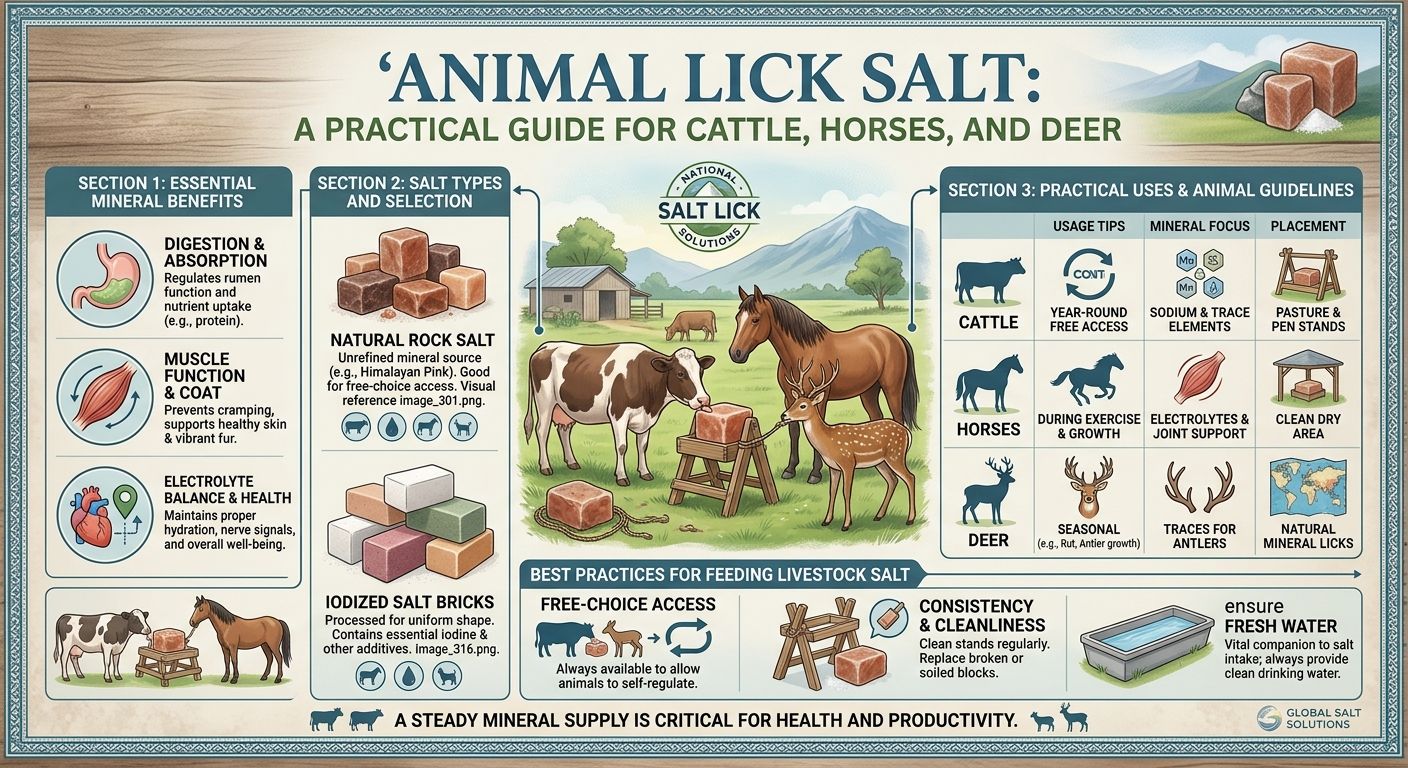
Animal Lick Salt: A Practical Guide for Cattle, Horses, and Deer
Animals need a balanced diet to stay active and maintain normal body functions. Along with forage, feed, and clean water, minerals can be an important part of livestock management. Salt is one of the common mineral sources provided to farm animals.
An animal lick salt (https://himalyanpinksalt.com/lick-salt/) product gives livestock access to salt in a convenient form. Salt blocks and loose mineral products are available for different animals, including cattle, horses, and other grazing livestock.
Choosing the right product matters because mineral needs vary between species, age groups, diets, and environments.
What Is Animal Lick Salt?
An animal salt lick is a block or other form of salt designed for animals to lick as needed. These products can contain plain salt or a mixture of salt and additional minerals.
Salt provides sodium and chloride, which are essential nutrients. However, a salt block should not be considered a complete source of every mineral an animal needs.
Farmers should consider the animal's complete diet when deciding whether additional mineral supplementation is appropriate.
Why Salt Is Used for Livestock
Salt is commonly included in livestock feeding programs because sodium and chloride have important roles in normal body processes.
Animals obtain nutrients from pasture, hay, grains, and formulated feeds. Depending on the diet and conditions, supplemental salt may be provided separately.
A salt block can be a practical way to offer supplemental salt in outdoor environments.
Choosing a Salt Lick Round Rock
A salt lick round rock (https://himalyanpinksalt.com/lick-salt/) is one form of salt product designed for animals. Its rounded shape can make it convenient to place in certain grazing areas.
When selecting a round salt lick, consider the animal species, block size, ingredients, durability, and manufacturer's feeding recommendations.
A product intended for cattle should not automatically be assumed to be ideal for horses or other animals.
Salt Lick for Cattle
A salt lick for cattle (https://himalyanpinksalt.com/lick-salt/) is commonly placed in grazing areas or near feeding facilities.
Cattle may receive salt through their regular feed, mineral mixes, or supplemental blocks. The appropriate amount depends on the animal's diet and management conditions.
A salt lick for cattle should always be used alongside access to fresh, clean drinking water.
Salt Licks for Horses
Horses and salt licks (https://himalyanpinksalt.com/lick-salt/) are often discussed together because horses may receive supplemental salt through blocks or loose salt.
A salt lick for horses can provide a convenient source of salt, especially when individual animals have different feeding routines.
A horse salt lick should be selected specifically for horses and used according to the product instructions.
Some horses may prefer loose salt over a block, while others readily use a salt block.
Salt Licks for Horses During Different Seasons
Salt requirements and water consumption can change with environmental conditions.
During hot weather, horses may sweat more, which increases their loss of electrolytes. Providing adequate clean water and following appropriate feeding guidance becomes particularly important.
During cooler periods, animals may have different activity and feeding patterns.
Salt licks for horses should therefore be considered as part of an overall feeding and management plan rather than as a one-size-fits-all solution.
Deer Salt Lick and Wild Deer
A deer salt lick is often discussed in connection with wildlife observation and habitat management.
A salt lick for deer may attract deer because salt contains sodium, but wildlife feeding practices can have ecological and legal considerations.
If managing or observing wild deer, check local wildlife regulations before placing mineral products outdoors. Feeding wildlife can sometimes create unintended risks or may be restricted in certain areas.
Deer Licking Salt Block
A deer licking salt block can last for a considerable period depending on weather, animal activity, and block size.
If salt blocks are used in an approved wildlife-management setting, placement should be carefully considered.
Avoid areas where a block could become contaminated by waste, standing water, or other pollutants.
Animal Salt Lick for Farm Animals
An animal salt lick can be useful for different types of livestock, but the product should match the intended species.
Cattle, horses, sheep, and goats have different nutritional requirements. Some mineral blocks also contain copper or other minerals that may not be suitable at the same levels for every species.
Always read the product label before giving a mineral block to an animal.
Himalyan Pink Salt for Animal Licks
Himalyan pink salt is sometimes used as an ingredient in animal salt products because of its natural mineral appearance and salt content.
When choosing Himalayan salt for livestock, the most important factor is whether the product is specifically manufactured and labeled for animal use.
Do not assume that a salt intended for human consumption is automatically suitable as livestock supplementation.
A properly formulated animal product should provide clear feeding and usage instructions.
Salt Licks and Fresh Water
Fresh water is essential whenever animals have access to supplemental salt.
Salt intake and water consumption are closely connected. Animals need adequate water to maintain normal hydration.
Make sure water sources are clean, accessible, and suitable for the number of animals using them.
A salt block should never be used as a replacement for proper hydration or balanced nutrition.
Where to Place an Animal Lick Salt Block
Placement can affect how easily animals use a salt block.
For livestock, blocks are often placed in accessible areas where animals naturally spend time. However, they should be protected from excessive contamination and standing water.
Avoid placing salt directly in muddy or heavily contaminated areas.
For grazing animals, a suitable location can make the product easier to monitor and maintain.
How to Monitor Salt Consumption
Farmers should periodically check salt blocks to see how quickly they are being consumed.
Fast consumption may indicate that animals are actively using the product, while very slow consumption may simply mean the animals are receiving enough salt elsewhere.
The condition of the block should also be checked regularly.
Monitoring helps farmers understand how the product fits into the overall feeding program.
Salt Licks and Mineral Supplements
Plain salt blocks and mineral blocks are not the same.
A plain salt block mainly provides salt, while a mineral block may contain additional nutrients.
This difference is important when selecting a product. If livestock already receive minerals through their feed, adding another mineral source may not always be necessary.
For specific dietary concerns, consult a qualified veterinarian or livestock nutrition professional.
Natural Salt Licks for Livestock
Many farmers prefer simple products made from natural salt. A natural-looking block can be convenient, but appearance alone does not determine nutritional suitability.
When buying salt licks, check the ingredient and mineral information rather than choosing solely based on color or shape.
The product should be appropriate for the species receiving it.
Benefits of Proper Salt Management
Good salt management is part of responsible livestock care.
A well-planned approach can help farmers:
Provide supplemental sodium and chloride
Monitor mineral intake
Support a balanced feeding program
Make salt accessible during grazing
Adjust supplementation according to diet
Avoid unnecessary mineral duplication
Salt should always be considered within the animal's complete nutritional program.
Final Thoughts
An animal lick salt product can be a practical way to provide supplemental salt to livestock. From a salt lick for cattle to a horse salt lick, different animals require different products and management practices.
Products such as a salt lick round rock, deer salt lick, and Himalyan pink salt may serve different purposes, but they should always be selected according to their intended use.
Fresh water, balanced feed, appropriate minerals, and regular monitoring remain essential parts of responsible animal care.
Frequently Asked Questions
1. What is an animal salt lick?
An animal salt lick is a salt block or similar product provided to animals as a supplemental source of salt.
2. Are salt licks suitable for cattle?
Yes, salt licks can be used for cattle when the product is specifically intended for cattle and fits their overall diet.
3. Can horses use a salt lick?
Yes. A salt lick for horses can provide supplemental salt, but the product should be appropriate for horses and used according to its instructions.
4. What is a deer salt lick?
A deer salt lick is a salt or mineral product associated with deer. Wildlife-feeding rules should be checked before using one outdoors.
5. Is Himalayan pink salt suitable for animals?
Only use Himalyan pink salt when it is specifically produced and labeled as suitable for the intended animal. Human food salt should not automatically be substituted for animal mineral products.
Appreciate the creator