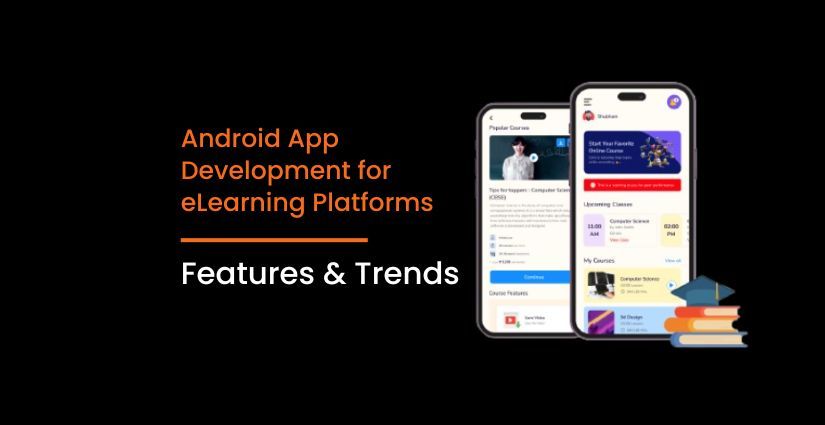
Android App Development for eLearning Platforms: Features & Trends
Android App Development for eLearning Platforms: Features & Trends
The rapid evolution of digital technology has transformed how people learn, teach, and interact with educational content. Among all digital platforms, Android holds a dominant share of the global mobile operating system market, making it a powerful channel for delivering educational content at scale. From K-12 education and higher learning to corporate training and skill development, Android apps are reshaping the eLearning ecosystem.
In this blog, we explore the essentials of Android app development for eLearning platforms, key features that drive engagement, and the latest trends shaping the future of mobile learning. Whether you are an EdTech startup, an educational institution, or an enterprise, partnering with a custom Android app development agency can help you build a scalable, future-ready solution.
Why Android for eLearning Platforms?
Android dominates the global smartphone market, especially in emerging economies where mobile-first learning is on the rise. This makes Android an ideal platform for eLearning solutions that aim to reach a broad and diverse audience.
Here are a few reasons why Android is a preferred choice:
Wider Market Reach: Android devices are available across multiple price ranges, increasing accessibility.
Open Ecosystem: Flexible development environment with customizable features.
Google Integration: Seamless integration with Google Classroom, Drive, Meet, and other tools.
Scalability: Suitable for startups as well as large educational enterprises.
By leveraging professional eLearning App Development services, organizations can create feature-rich Android apps that cater to different learning needs and demographics.
Core Features of Android eLearning Apps
A successful eLearning app must offer more than just digital content. It should create an engaging, interactive, and seamless learning experience. Below are the essential features every Android eLearning platform should include:
1. User-Friendly Interface (UI/UX)
The app’s design plays a critical role in user engagement. A clean, intuitive interface ensures learners can easily navigate courses, track progress, and access resources without confusion.
Key UI/UX elements:
Simple navigation menu
Personalized dashboards
Responsive design for various screen sizes
Accessibility features for learners with disabilities
A custom Android app development agency can tailor the user interface to align with your brand and target audience.
2. Secure User Registration & Profiles
User authentication is fundamental for managing learners and educators.
Features include:
Email and social login integration
Role-based access (student, teacher, admin)
Secure authentication protocols
User profile customization
Personalized profiles help track learning progress and provide tailored recommendations.
3. Course Management System
A robust course management system (CMS) enables administrators and instructors to:
Upload and manage course materials
Organize modules and lessons
Schedule live sessions
Assign quizzes and tasks
This backend functionality is a core component of comprehensive eLearning App Development services, ensuring content is structured and easy to manage.
4. Multimedia Content Support
Modern learners expect dynamic and interactive content. Android eLearning apps should support:
Video lectures
Audio podcasts
PDFs and eBooks
Infographics
Interactive animations
Video streaming optimization is especially important to ensure smooth playback even on slower internet connections.
5. Live Classes & Video Conferencing
Real-time interaction enhances engagement and improves learning outcomes.
Key features:
Live streaming integration
Screen sharing
Real-time chat
Session recording
Polls and Q&A tools
Integration with APIs like Zoom, Google Meet, or WebRTC enhances real-time collaboration.
6. Offline Learning Capabilities
Not all learners have consistent internet access. Offline functionality allows users to:
Download lessons
Access saved content without internet
Sync progress once reconnected
Offline access significantly improves user retention and accessibility.
7. Assessments & Quizzes
Evaluation tools are essential to measure learner progress.
Important components:
MCQs, descriptive, and interactive questions
Timed assessments
Instant feedback
Auto-grading system
Progress reports
Gamified assessments encourage active participation.
8. Push Notifications & Reminders
Push notifications help maintain user engagement by reminding learners about:
Upcoming classes
Assignment deadlines
New course launches
Special announcements
Smart notifications based on user behavior increase course completion rates.
9. Gamification Elements
Gamification transforms learning into an engaging experience.
Features include:
Points and badges
Leaderboards
Achievement levels
Rewards and certificates
These elements motivate learners and foster healthy competition.
10. Payment Integration
For paid courses, secure payment integration is essential.
Supported payment methods:
Credit/debit cards
UPI and digital wallets
In-app purchases
Subscription-based billing
Security protocols like SSL encryption and PCI compliance are critical.
Advanced Features in Modern eLearning Apps
With growing competition in the EdTech industry, basic features are no longer enough. Advanced technologies are now shaping next-generation learning experiences.
1. AI-Powered Personalization
The integration of AI in education is revolutionizing how students learn. AI-powered Android apps can:
Recommend personalized courses
Analyze learning patterns
Provide adaptive learning paths
Offer real-time performance insights
AI-driven chatbots also provide 24/7 student support, answering queries instantly.
2. Machine Learning for Predictive Analytics
Machine learning models can predict:
Student performance trends
Dropout risks
Content effectiveness
Learning behavior patterns
These insights help educators improve curriculum and engagement strategies.
3. Augmented Reality (AR) & Virtual Reality (VR)
AR and VR are enhancing immersive learning experiences.
Examples include:
Virtual science labs
3D anatomy models
Historical site simulations
Interactive skill training modules
Android devices with ARCore compatibility enable innovative educational experiences.
4. Cloud Integration
Cloud-based infrastructure ensures:
Scalable storage
Real-time data synchronization
Secure data backup
Cross-device access
Cloud integration also simplifies app maintenance and updates.
5. Blockchain for Certification
Blockchain technology ensures secure and verifiable digital certificates.
Benefits:
Tamper-proof credentials
Easy verification by employers
Increased trust and credibility
Technology Stack for Android eLearning Apps
A strong technical foundation ensures performance and scalability.
Frontend:
Kotlin or Java
Jetpack Compose
Android SDK
Backend:
Node.js / Django / Laravel
Firebase
RESTful APIs
Database:
MySQL
PostgreSQL
MongoDB
Cloud:
AWS
Google Cloud
Microsoft Azure
An experienced Custom android app development agency selects the right tech stack based on your business model and scalability requirements.
Key Trends in Android eLearning App Development
The EdTech industry is evolving rapidly. Here are the most influential trends shaping Android eLearning platforms:
1. Microlearning
Microlearning delivers content in short, focused modules. This approach:
Improves retention
Fits into busy schedules
Enhances user engagement
Short videos, quick quizzes, and bite-sized lessons are gaining popularity.
2. Mobile-First Learning
As smartphone usage increases globally, mobile-first design has become essential.
Features include:
Vertical video formats
Thumb-friendly navigation
Optimized loading speed
Lightweight app architecture
Mobile-first strategies ensure seamless user experiences.
3. Social Learning Integration
Social features increase interaction and collaboration.
Examples:
Discussion forums
Peer reviews
Group projects
Social media sharing
These features create a community-driven learning environment.
4. Subscription-Based Learning Models
Instead of one-time purchases, many platforms now offer subscription plans.
Benefits:
Recurring revenue
Continuous user engagement
Access to updated content
Flexible pricing strategies enhance user retention.
5. Data-Driven Learning Insights
Analytics dashboards help educators monitor:
User engagement metrics
Course completion rates
Assessment performance
User feedback
Data-driven decision-making improves overall platform effectiveness.
6. Voice Search & Smart Assistants
With the rise of voice technology, integrating voice search in eLearning apps enhances accessibility.
Learners can:
Search courses using voice commands
Navigate modules hands-free
Access quick answers instantly
7. Hybrid Learning Solutions
Blended learning combines online and offline education.
Android apps now support:
Classroom integration
Attendance tracking
Hybrid lesson management
Teacher-parent communication
This model is widely adopted in schools and universities.
Benefits of Investing in Android eLearning App Development
Investing in professional eLearning App Development services provides long-term advantages:
Expanded global reach
Enhanced learner engagement
Scalable infrastructure
Increased revenue streams
Improved brand authority
Real-time performance tracking
Partnering with a reliable Custom android app development agency ensures your app meets industry standards and adapts to future technological advancements.
Challenges in Android eLearning App Development
While the opportunities are vast, developers must overcome certain challenges:
Device fragmentation
Data security concerns
Maintaining user engagement
Managing large multimedia files
Ensuring seamless performance on low-end devices
A strategic development approach and continuous testing help mitigate these issues.
The Future of AI in Education and Android Apps
The future of AI in education is incredibly promising. AI will continue to:
Enable hyper-personalized learning experiences
Automate administrative tasks
Improve accessibility through speech-to-text tools
Support multilingual content translation
Offer intelligent tutoring systems
As AI models become more sophisticated, Android eLearning apps will evolve into intelligent learning ecosystems rather than simple content delivery platforms.
Steps to Build a Successful Android eLearning App
Define your target audience
Conduct market research
Identify core and advanced features
Choose the right monetization strategy
Design intuitive UI/UX
Develop and test thoroughly
Launch and gather feedback
Continuously update and optimize
Working with an experienced Custom android app development agency ensures that each phase is handled professionally, reducing risks and accelerating time to market.
Conclusion
Android app development for eLearning platforms is no longer just an option—it is a necessity in today’s digital education landscape. With increasing demand for flexible, accessible, and personalized learning, Android apps are becoming central to the EdTech revolution.
From essential features like multimedia support and secure authentication to advanced innovations powered by AI in education, modern eLearning apps must deliver dynamic, engaging, and scalable solutions. Emerging trends such as microlearning, gamification, AR/VR integration, and data-driven insights are shaping the future of mobile education.
By investing in professional eLearning App Development services and collaborating with a skilled Custom android app development agency, businesses and institutions can create transformative learning experiences that empower users worldwide.
Appreciate the creator