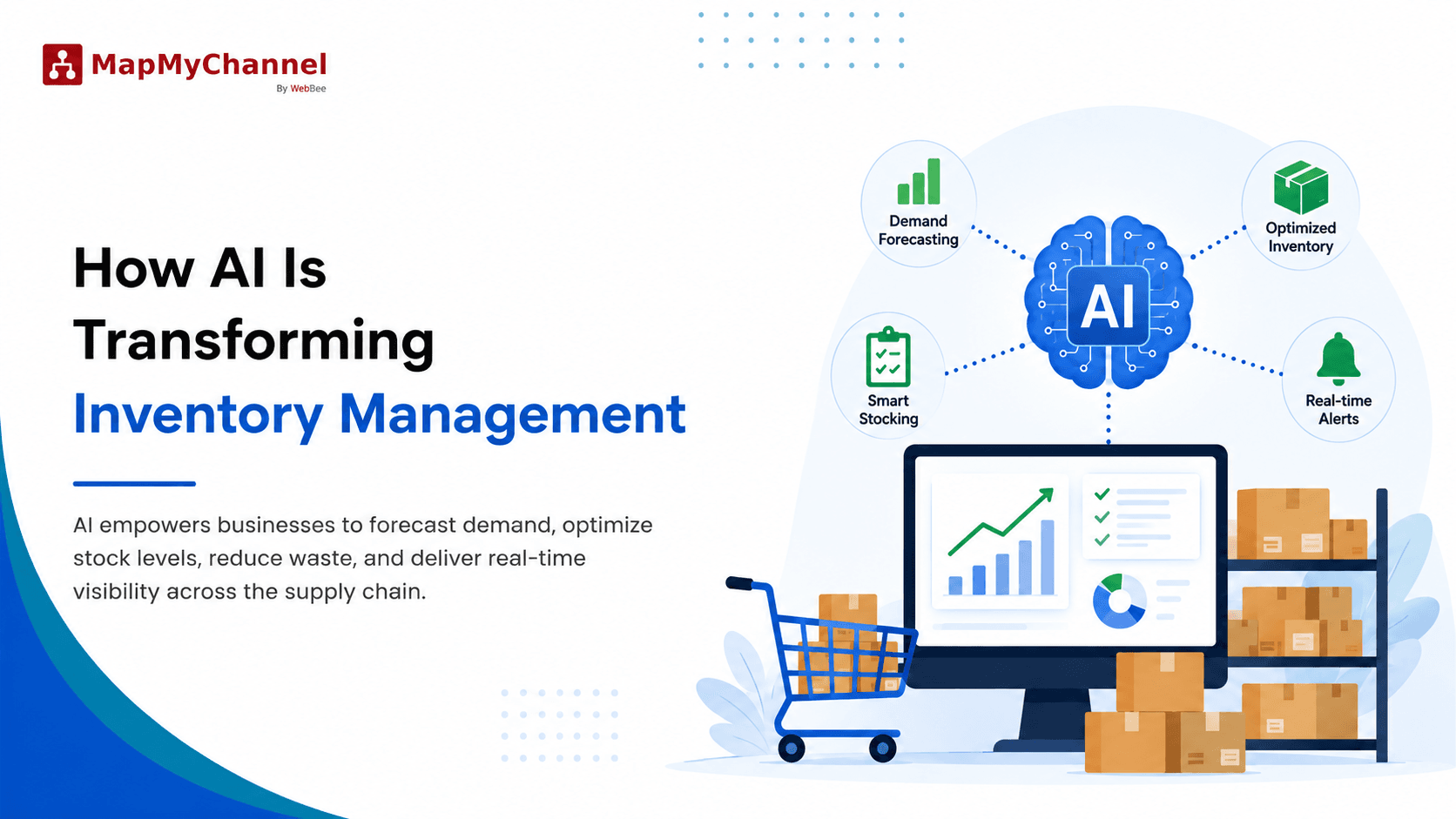
AI Leading to the Transformation of eCommerce Inventory Management
In today's world, people shop a lot on marketplaces. So managing inventory is not about keeping products on shelves. It is about understanding what customers want and delivering it.
Artificial Intelligence is changing e-commerce and inventory management. It helps with forecasting, tracking stock in real-time, and making automated decisions. AI uses data to predict what products will be in demand. This helps reduce waste, avoid running out of stock, and provides a shopping experience.
This change is not about technology; it is also about people. It helps businesses focus less on managing stock and more on connecting with their customers. We will discuss the future of inventory management in the following sections.
Defining AI in Inventory Management
AI in inventory management is about simplifying the complex task of handling inventory in a more efficient way. Traditionally, inventory management required the sellers to count products in their storage and ensure they were available when customers needed them. With AI, this process becomes more efficient and predictive. By using tools like machine learning and data analysis, businesses can forecast demand, manage suppliers, and automate stocking with greater accuracy. AI helps with the optimization of inventory, balancing enough products to meet demand while reducing costs related to dead stock or lost products.
What is Changing with AI in Inventory Management?
From smarter restocking to real-time tracking and easier audits, modern tools are reshaping inventory management. Here’s how it is keeping customers satisfied:
1. Enhanced Data Analysis
Modern inventory management is becoming smarter by using advanced tools that can quickly study large sets of data from sales, customer habits, and market trends. These insights help businesses improve stock planning and forecast demand more accurately. With this precision, companies know the best times and quantities to restock, reducing shortages and dead stock.
2. Automated Order Fulfillment
Order fulfillment is evolving with smarter automation that speeds up picking, packing, and shipping. Robots can quickly find items, reduce mistakes, and even calculate the best way to pack boxes. They also verify orders and track shipments in real time, making the process faster and more reliable.
3. Real-Time Inventory Tracking
Modern inventory tracking is becoming more precise with systems that gather data from scanners, RFID tags, and sensors across warehouses. These tools keep records updated in real time, showing exactly where items are and how they move. Managers receive instant alerts when stock runs low or unusual changes occur, making it easier to act quickly.
4. Inventory Audits
Inventory audits are becoming easier with smart automation that handles stock counting and reconciliation. Data from scanners, RFID tags, and sensors is processed instantly, keeping records accurate and reducing human error. This system quickly spots discrepancies, alerts managers to low stock, and even predicts future issues by analyzing past trends.
AI Streamlining Inventory Control
Streamlining inventory control through AI allows you to handle business better with:
Smarter demand forecasting – Predicts customer needs more accurately, helping businesses avoid stockouts or excess inventory while keeping shelves balanced.
Automated stock replenishment – Ensures products are restocked at the right time and in the right quantity, reducing manual effort and errors.
Real-time tracking – Monitors stock movement continuously, giving managers clear visibility and preventing shortages or overstocking.
Efficient audits – Simplifies stock counting and reconciliation, minimizing human error and keeping records accurate without frequent manual checks.
Supplier management – Improves coordination with suppliers by analyzing performance and ensuring timely deliveries to maintain smooth operations.
Allow AI to Handle your Inventory
Managing inventory becomes far simpler when smart technology steps in to analyze and break down complex data. For sellers, this means less manual effort and more focus on growth. By streamlining repetitive tasks, businesses can save time, cut costs, and operate with greater efficiency. The result is smoother processes that not only boost sales but also strengthen brand value. With better insights and seamless e-commerce operations, companies gain momentum and stay ahead in competitive markets. Ultimately, this approach helps businesses deliver consistency, reliability, and customer satisfaction, all while making inventory control less of a burden and more of a strategic advantage.
Appreciate the creator