A Relative Signed the Consent Form, but the Patient Later Objected: What Happens Legally?
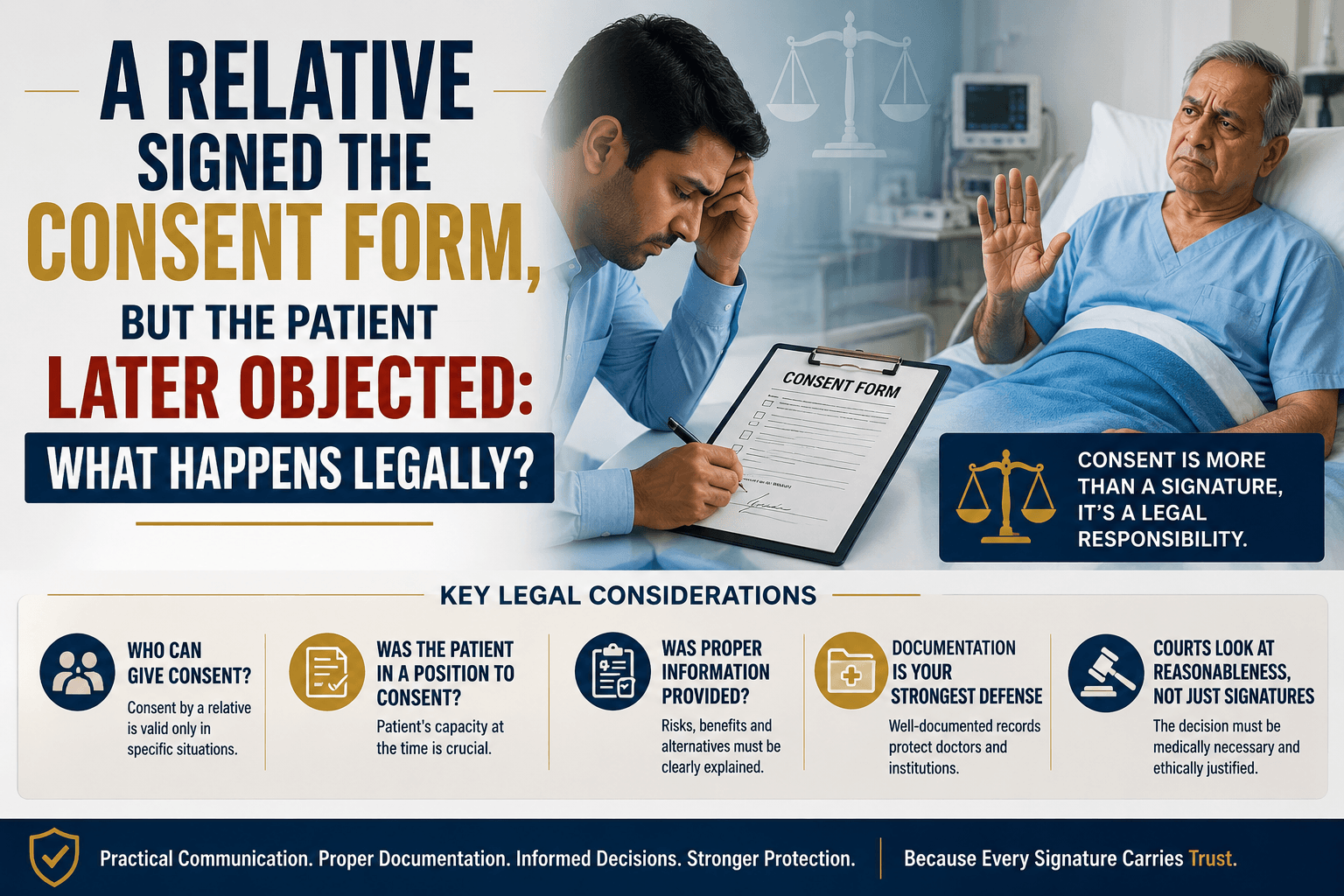
Healthcare decisions often need to be made quickly, especially during emergencies or serious medical situations. In many cases, a family member or close relative signs the consent form on behalf of the patient. But what happens if the patient later claims they never agreed to the treatment and objects after the procedure is completed?
This situation can create significant medico-legal concerns for doctors and healthcare institutions. As a trusted Medico legal advisor in Delhi, Dr. Vimal Kant Goyal frequently highlights the importance of proper consent procedures and clear communication between doctors, patients, and family members.
Understanding the legal implications of consent can help healthcare professionals avoid disputes and protect both patient rights and medical practice.
Understanding Medical Consent
Consent is one of the most important principles in healthcare. Before performing a procedure, treatment, surgery, or medical intervention, doctors must obtain informed consent from the patient whenever possible.
Consent is not simply a signature on a form. It is a process through which a patient understands:
The diagnosis
Proposed treatment
Benefits of treatment
Possible risks and complications
Alternative options
Consequences of refusing treatment
When patients make informed decisions, trust and transparency are strengthened.
Can a Relative Legally Sign a Consent Form?
The answer depends on the patient's condition at the time consent is required.
Situations Where Relative Consent May Be Valid
A relative may sign consent when:
The patient is unconscious
The patient is mentally incapacitated
The patient is under the influence of medication affecting decision-making capacity
The patient is a minor
Emergency treatment is required and delay could threaten life
In such circumstances, doctors often rely on close relatives or legally authorized representatives to provide consent.
However, proper documentation remains essential.
What Happens If the Patient Later Objects?
This is where legal complications can arise.
Imagine a situation where:
A patient was semi-conscious.
A family member signed the consent form.
Treatment was performed successfully.
Later, the patient claims they were never informed and never agreed to the procedure.
The patient's objection may trigger questions about whether valid informed consent was obtained.
Key Legal Questions That May Arise
Authorities may examine:
Was the patient capable of giving consent?
Why was consent obtained from a relative instead of the patient?
Was the patient's condition properly documented?
Were discussions recorded in medical records?
Was the procedure medically necessary?
The answers to these questions often determine whether doctors acted appropriately.
The Importance of Assessing Patient Capacity
One of the most critical factors in such cases is patient capacity.
What Is Decision-Making Capacity?
Decision-making capacity refers to a patient's ability to:
Understand information
Evaluate risks and benefits
Communicate decisions
Make informed choices
If a patient possesses decision-making capacity, doctors should generally seek consent directly from the patient rather than from relatives.
Failure to do so may increase medico-legal risk.
Why Documentation Becomes the Doctor's Best Protection
When disputes arise, documentation often becomes the strongest defense.
Doctors should record:
Patient condition
Mental status
Discussions with family members
Reasons for obtaining relative consent
Risks explained
Emergency circumstances
Many legal disputes are resolved based on the quality of medical records rather than verbal explanations.
This is why maintaining accurate records is a fundamental aspect of professional practice.
Common Mistakes That Increase Legal Risk
Several mistakes can make doctors vulnerable when dealing with consent-related disputes.
Obtaining Relative Consent Without Proper Justification
If the patient was capable of understanding and signing, obtaining consent solely from a relative may raise legal concerns.
Incomplete Documentation
Missing notes regarding patient condition or discussions with family members can weaken the doctor's position.
Poor Communication
Patients who feel excluded from medical decisions are more likely to object later.
Assuming Family Consent Equals Patient Consent
Doctors should remember that family members cannot automatically replace a competent patient's decision-making rights.
How Doctors Can Prevent Future Consent Disputes
Preventing disputes is always better than defending them later.
Communicate Clearly
Whenever possible, involve the patient directly in discussions.
Document Thoroughly
Record every important conversation related to consent.
Assess Capacity Carefully
Document why the patient could or could not provide consent.
Use Witnesses When Appropriate
Witnessed consent discussions may strengthen transparency.
Update Consent if Circumstances Change
If a patient's condition improves and they regain decision-making capacity, doctors should consider obtaining direct consent whenever feasible.
At this stage, guidance from a qualified Medico legal consultant in Delhi can help healthcare providers establish strong consent protocols and reduce future legal exposure.
How Courts Often View Such Cases
Courts generally focus on whether doctors acted reasonably and in the patient's best interests.
Important considerations include:
Medical necessity
Emergency circumstances
Patient capacity
Quality of documentation
Communication efforts
If doctors can demonstrate that they followed accepted medical standards and acted responsibly, their position is usually strengthened.
The Emotional Side of Consent Disputes
Beyond legal issues, consent disputes often affect trust between doctors and patients.
Patients want to feel respected and involved in decisions regarding their health.
When communication is lacking, even successful medical outcomes can lead to dissatisfaction.
Doctors who prioritize empathy, transparency, and patient engagement often experience fewer complaints and stronger patient relationships.
Practical Lessons for Healthcare Professionals
This scenario teaches several important lessons:
Consent is a process, not just paperwork.
Documentation is essential.
Patient autonomy must be respected.
Communication prevents misunderstandings.
Capacity assessment should never be overlooked.
By adopting these practices, doctors can significantly reduce medico-legal challenges.
Frequently Asked Questions
Can a family member always sign a consent form for a patient?
No. If a patient has the capacity to understand and make decisions, consent should generally be obtained directly from the patient.
What if treatment was an emergency?
In genuine emergencies where delay may endanger life or health, doctors may proceed according to accepted medical and legal principles.
Can a patient object after treatment is completed?
Yes. Patients may later question or object to treatment, especially if they believe informed consent was not properly obtained.
Why is documentation so important in consent disputes?
Documentation provides evidence regarding patient condition, discussions, decision-making capacity, and treatment necessity.
How can doctors reduce consent-related legal risks?
Clear communication, proper capacity assessment, thorough documentation, and strong consent procedures are key protective measures.
Conclusion
Consent-related disputes remain one of the most sensitive medico-legal issues in healthcare. When a relative signs a consent form and a patient later objects, the situation can quickly become legally complex. The outcome often depends on patient capacity, medical necessity, communication quality, and documentation standards.
Healthcare professionals must remember that informed consent extends beyond obtaining signatures. It requires transparency, patient involvement, and careful record-keeping. By following best practices and seeking appropriate guidance when necessary, doctors can protect patient rights while reducing legal risks.
As healthcare regulations and patient awareness continue to evolve, consulting the Best Medico legal expert in Delhi can help doctors strengthen consent practices, improve compliance, and build a safer and more legally secure medical environment.
Appreciate the creator