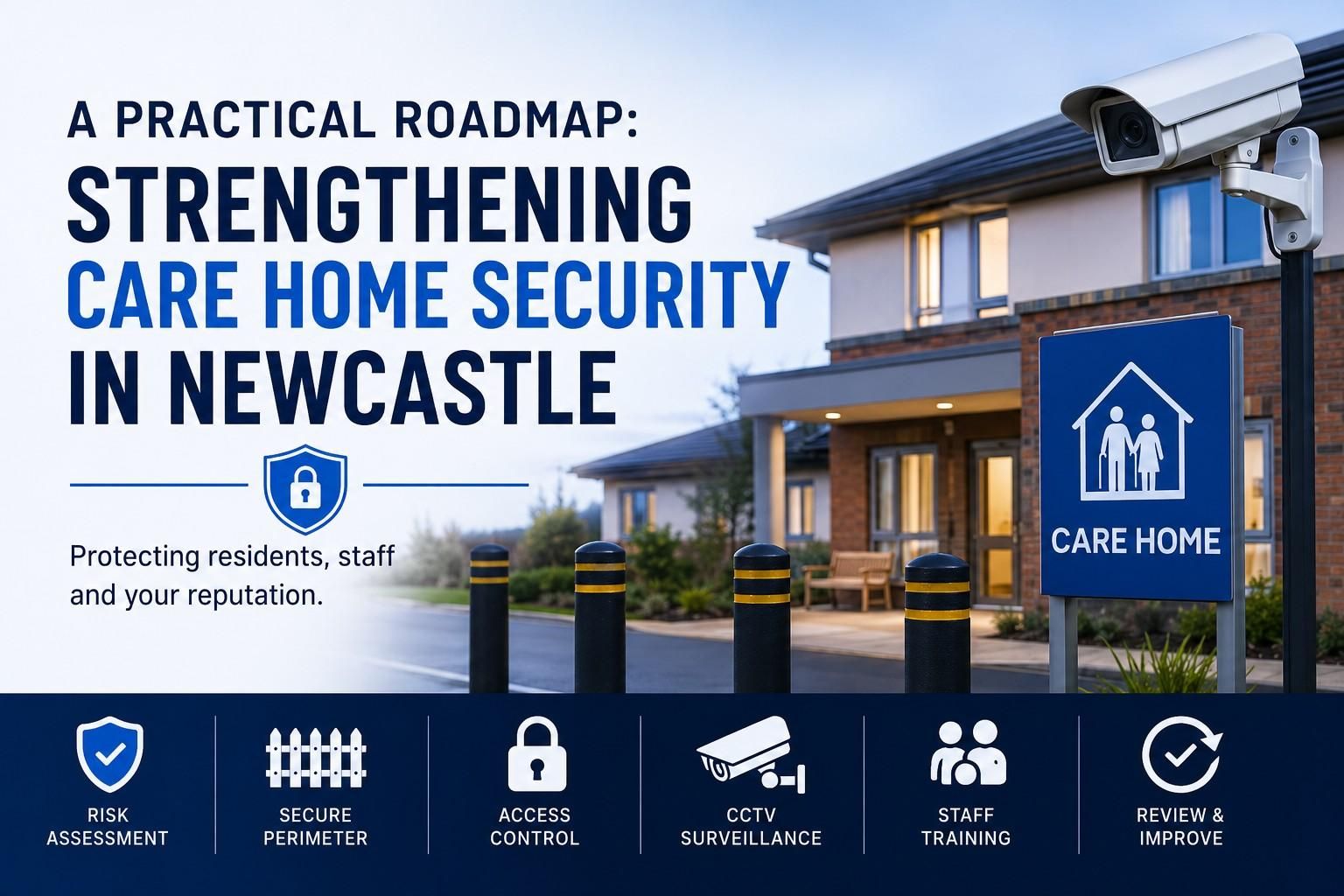
A Practical Roadmap: Strengthening Care Home Security in Newcastle
A stolen BMW crashed into Highcliffe Care Home at around 9:40 PM. The car had been reported stolen from Fenham, Newcastle, just twenty minutes earlier. Two elderly residents died. Others suffered fractures, bruises, and cuts. The structural damage left a gaping hole in the building.
That incident happened in Sunderland. But the car came from Newcastle. And it could have happened anywhere. The truth is that care homes across Newcastle face real and growing security threats. Not just from stolen vehicles crashing through walls.
The Care Quality Commission has made this clear. Inspectors found a Newcastle care home where the "premises were not always safe". Another home had a "longstanding track record" of failing to implement robust governance procedures.
Security is not an optional extra. It is a fundamental part of providing safe care. And it requires a systematic, practical approach.
This roadmap will walk you through exactly what you need to do to strengthen practical care home security in Newcastle. Step by step. No jargon. No fluff. Just actionable advice that protects your residents, your staff, and your reputation.
Step One – Conduct a Thorough Risk Assessment
You cannot fix what you have not identified. Start by walking every part of your site. Do this at different times of day. What looks secure at noon might look very different at midnight.
CQC inspectors will want to see that you have assessed environmental hazards. They expect you to identify risks related to the premises, equipment, and how you protect people from harm.
Ask yourself these questions:
Where are the entry points to your building? Front door, back door, fire exits, patio doors, windows.
Which of these are locked at all times? Which are only locked at night?
Who has keys or codes to each entrance?
Are your perimeter fences or walls in good condition? Any gaps?
Is your car park secure? Could a vehicle drive straight into your building?
Are there blind spots where someone could approach unseen?
What about lighting? Are dark areas giving cover to intruders?
Document everything. Take photos. Note every weakness. This becomes your action plan.
One Newcastle care home was found to have a "rotting window" and uncollected rubbish. Another had issues with mould, broken partitions, and unsafe furniture. These are not just maintenance problems. They are security vulnerabilities that CQC inspectors notice and record.
Step Two – Secure the Perimeter
The Highcliffe tragedy shows what happens when a building has no protection against vehicle intrusion. Bollards, barriers, and secure boundaries are not optional. They are essential.
Perimeter protection for Newcastle care facilities should include:
Vehicle barriers: Strong bollards or concrete planters at the front of your building. Position them to stop a vehicle from reaching the main structure.
Secure fencing: Around gardens, courtyards, and any outdoor areas where residents spend time.
Locked gates: All external gates should be locked outside of designated hours. Consider automated gates with controlled access.
Good lighting: Cover all entry points, car parks, and pathways. Darkness hides intruders.
CCTV coverage: Position cameras to cover every approach to your building. Make sure they work at night.
These measures protect against external threats. They also give residents and families peace of mind. Knowing that the building is physically secure matters.
Step Three – Control Who Comes In and Out
A man walked into a Newcastle care home via the front door, helped himself to a television, and left through the same entrance. No one stopped him. No one challenged him. That is an access control failure.
Access control systems for Newcastle care homes are about knowing who is on your premises at all times.
Start with the basics:
Locked front doors: Sounds obvious, but many care homes leave doors unlocked during the day for convenience. This is a serious risk.
Intercom systems: Visitors should identify themselves before being let in.
Visitor logs: Every visitor signs in and out. Staff check ID. No exceptions.
Keypad or card entry: For staff entrances and internal doors. Restrict access to certain areas.
Staff identification: Visible ID badges for all employees. Challenge anyone not wearing one.
Key control: Know who has keys. Change locks when staff leave.
CQC inspectors will look at how you manage visitors and control access. If your system is weak, they will find it. And they will record it.
Step Four – Install and Maintain CCTV
CCTV serves two purposes. It deters criminals. And it provides evidence if something does happen.
But cameras alone are not enough. They need to be:
Positioned correctly: Cover all entry points, corridors, car parks, and communal areas.
High quality: Clear enough to identify faces and vehicles.
Working: Regular maintenance checks. No broken cameras.
Monitored: Either by staff or through a remote monitoring service.
Compliant: You must follow UK laws, including the Data Protection Act and GDPR. Cameras in residents' bedrooms require additional safeguards and consent protocols.
CQC inspectors will check that your equipment is safe and properly maintained. They will also want to see that you are using technology to protect people.
If you are unsure about installation or compliance, consult a security company in Newcastle for care homes. They understand the specific requirements of healthcare environments and can design a system that works for your building and your budget.
Step Five – Train Your Staff
Security is everyone's responsibility. Your care staff are on the front line. They need to know what to look for and what to do.
Recent CQC inspections in Newcastle found breaches relating to staffing and fit and proper persons employed. That means providers failed to ensure that the right people were in place and properly trained.
Your training should cover:
Recognising suspicious behaviour: Visitors who seem out of place. Vehicles lingering outside. People asking unusual questions.
Following access protocols: Never letting anyone in without ID. Challenging unknown individuals.
Reporting concerns: A clear process for staff to report security issues. No fear of repercussions.
Lone worker safety: Panic alarms or attack systems for staff working alone or at night.
Emergency procedures: What to do in the event of an intruder, a vehicle incident, or a fire.
Bowland Lodge's safeguarding log omitted incidents, and there was a failure to adequately analyse risks. That is a training and governance failure. Your staff should know how to log incidents properly and understand why it matters.
Step Six – Review and Improve Continuously
Security is not a one-time project. It is an ongoing process.
CQC inspectors found six breaches at one Newcastle care agency relating to safe care and treatment, safeguarding, staffing, and how the service was managed. The service did not have effective systems in place to investigate safeguarding issues and incidents.
Avoid that fate by:
Regular audits: Walk your site monthly. Check locks, cameras, lighting, and fences.
Incident reviews: When something happens, investigate thoroughly. Learn from it.
Staff feedback: Ask your team what they see. They know the building better than anyone.
Policy updates: Keep your security policies current. Reflect changes in regulations or threats.
CQC preparation: Inspectors may walk the premises unaccompanied. Ensure all areas reflect your standards.
A care home that was previously rated "inadequate" in 2024 was re-graded to "requires improvement" in early 2025. Improvement is possible. But it takes consistent effort.
Step Seven – Partner with Local Security Experts
You are a care provider, not a security specialist. And that is fine. But it means you need the right partners.
A care home security brings specific advantages:
Local knowledge: They understand Newcastle's industrial estates, crime patterns, and specific challenges.
Healthcare expertise: They know the balance between protection and resident dignity.
CQC compliance: They understand regulatory requirements and can help you meet them.
Rapid response: When something goes wrong, a local team can reach you faster.
Personalised support: You speak to the same people. They know your site and your concerns.
Do not wait for an incident to force your hand. Assess your current defences. Identify the gaps. Start upgrading now.
Conclusion
The risks facing Newcastle care homes are real. Stolen vehicles crashing through walls. Burglars walking through unlocked doors. Former employees stealing from vulnerable residents. CQC inspections uncover serious safety failures.
But these risks are manageable. With a systematic approach, you can protect your residents, your staff, and your reputation.
Start with a thorough risk assessment. Secure your perimeter. Control access. Install and maintain CCTV. Train your staff. Review and improve continuously. And partner with local experts who understand your specific needs.
CQC-compliant security measures Newcastle are not about ticking boxes. They are about keeping people safe. Every measure you put in place is a barrier between a vulnerable resident and someone who means them harm.
The homes that get this right are the ones that pass inspections. The ones that earn good ratings. The ones that families trust.
Appreciate the creator