7 Warning Signs You May Need ENT Polyp Surgery
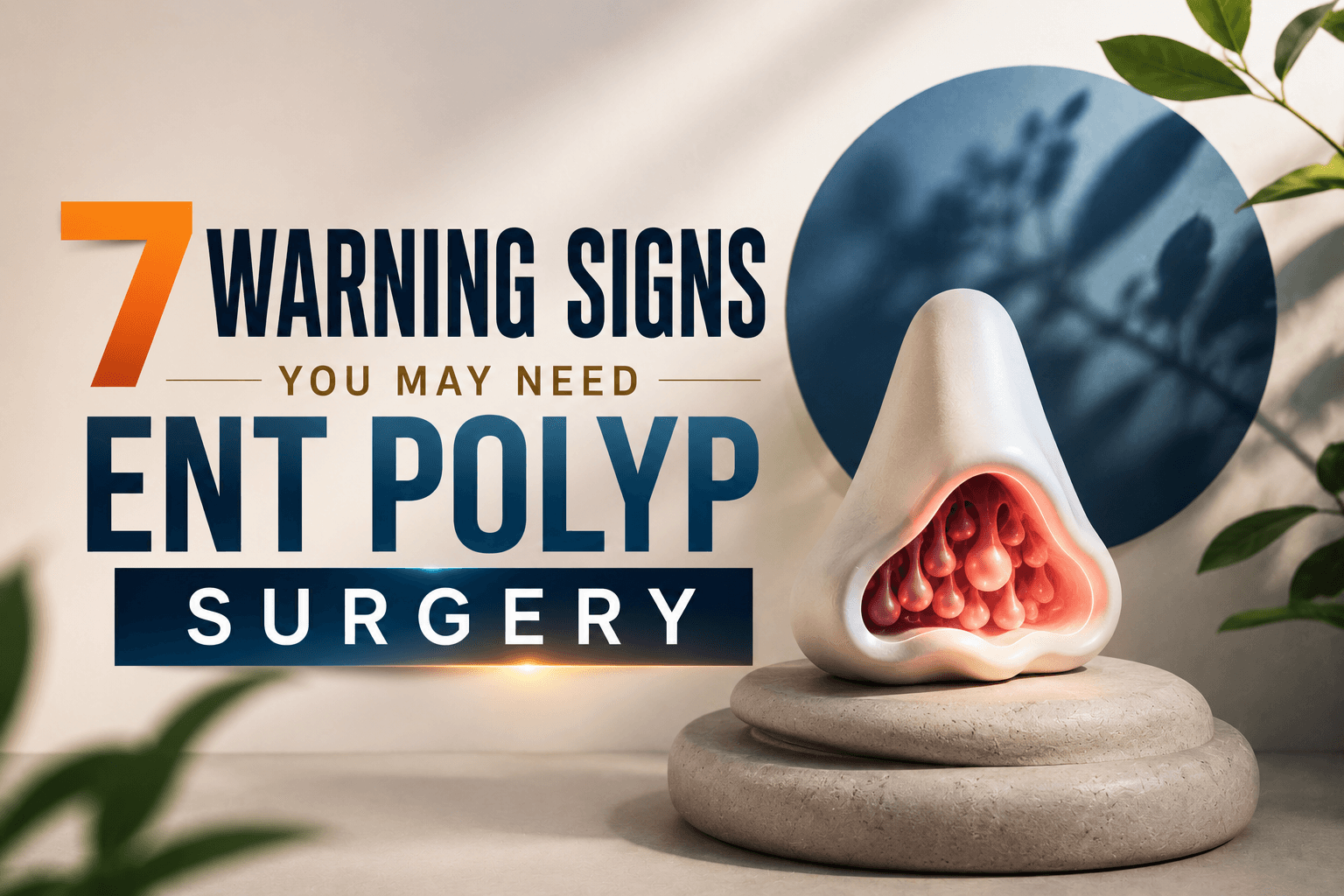
Breathing clearly through your nose should feel natural. But when your nose stays blocked for weeks, sinus infections keep coming back, or sleeping becomes difficult, something more serious may be happening.
Many people think a blocked nose is only caused by allergies or a cold. However, sometimes the real reason may be nasal polyps—soft growths inside the nose that can slowly block airflow.
The good news is that treatment options are available. While medicines may help some people, others may eventually need surgery for better relief.
If you are searching for ENT polyp surgery in Gurgaon, understanding the warning signs early may help you take the right step before symptoms become worse.
Dr. Manish Parshad, an experienced ENT specialist, helps patients understand nose and sinus problems and recommends treatment based on their condition.
What Are Nasal Polyps?
Nasal polyps are soft, painless growths that develop inside the nose or sinus passages. Small polyps may not cause major issues, but larger ones can block airflow and create long-term discomfort.
Many people do not realize they have polyps because symptoms often develop slowly.
So, how do you know when surgery may be needed?
Here are seven warning signs you should not ignore.
1. Your Nose Stays Blocked All the Time
A blocked nose that does not improve for weeks may be one of the biggest warning signs.
You may feel like:
One side of the nose stays blocked
Breathing through the nose feels difficult
Medicines only help for a short time
If nasal blockage becomes part of your daily life, it may be time for an ENT evaluation.
2. You Keep Getting Sinus Infections
Do sinus infections keep coming back again and again?
Repeated sinus infections can happen when nasal polyps block airflow and stop proper drainage inside the nose.
Common symptoms include:
Facial Pressure
Pain around the forehead, cheeks, or eyes.
Thick Nasal Discharge
Constant mucus that keeps returning.
Headaches
Pressure inside the sinuses may cause discomfort.
If infections continue despite medicines, further treatment may be needed.
3. You Have Trouble Sleeping
Many people do not connect sleep problems with nasal polyps.
Blocked breathing may lead to:
Loud Snoring
Poor airflow through the nose can worsen snoring.
Poor Sleep Quality
You may wake up feeling tired.
Mouth Breathing
Difficulty breathing through the nose at night.
Sleep plays an important role in health, so these symptoms should not be ignored.
4. You Are Losing Your Sense of Smell
One major warning sign of nasal polyps is a weak sense of smell.
You may notice:
Food smells weaker than before
Taste feels different
Everyday smells become harder to notice
This happens because nasal blockage can stop air from reaching smell receptors properly.
5. Medicines Are No Longer Helping
Many patients first try:
Nasal sprays
Allergy medicines
Sinus medicines
But if symptoms return quickly or never fully improve, surgery may become the better option.
Some people eventually explore Polyp removal Surgery in Gurgaon when non-surgical treatment no longer provides enough relief.
6. You Feel Pressure Around Your Face
Constant pressure around the nose, forehead, or eyes may be another sign.
This can happen because blocked sinuses create pressure inside the face.
People often describe it as:
Heavy feeling around the face
Sinus pressure headaches
Pain near the eyes
If this continues for a long time, medical advice becomes important.
7. Your Daily Life Is Being Affected
Sometimes people adjust to symptoms without realizing how much discomfort they are facing.
Ask yourself:
Is breathing becoming difficult?
Are sleep problems affecting energy?
Do sinus infections keep interrupting daily life?
Has smell or taste changed?
If the answer is yes, it may be time to speak with an ENT specialist.
When Is ENT Polyp Surgery Recommended?
Not everyone with nasal polyps needs surgery.
Doctors may recommend surgery if:
Symptoms continue for a long time
Medicines stop working
Polyps become too large
Breathing becomes difficult
Sinus infections keep returning
Modern procedures are often performed using endoscopic methods, which are less invasive and help improve recovery.
Many patients prefer visiting a trusted Nasal polyp Hospital in Gurgaon for proper diagnosis and treatment planning.
Is ENT Polyp Surgery Safe?
Yes, in most cases, surgery is considered safe when performed by an experienced ENT doctor.
Modern treatment techniques are designed to improve comfort and recovery.
Temporary swelling or mild discomfort may happen, but serious problems are uncommon.
Dr. Manish Parshad carefully examines every patient before recommending surgery to ensure the treatment is truly needed.
Recovery After Surgery
Recovery is usually manageable for many people.
Follow Medical Advice
Take medicines exactly as prescribed.
Avoid Dust and Smoke
This may help reduce irritation.
Attend Follow-Up Visits
Regular checkups help monitor healing.
Stay Patient
Healing takes time, and gradual improvement is normal.
Frequently Asked Questions (FAQs)
What are nasal polyps?
Nasal polyps are soft growths inside the nose that may block airflow and affect breathing.
When do doctors recommend surgery?
Surgery may be suggested when medicines stop helping or symptoms become severe.
Is ENT polyp surgery painful?
Modern procedures are generally comfortable, and recovery is manageable.
Can nasal polyps return after surgery?
Yes, polyps may return in some cases, which is why follow-up care is important.
How long does recovery take?
Recovery varies from person to person, but many people start feeling better within a few weeks.
Can surgery improve breathing?
Yes, many patients notice better airflow and breathing after treatment.
Conclusion
Nasal polyps can slowly affect breathing, sleep, smell, and daily comfort. Ignoring the warning signs may allow symptoms to become worse over time.
If you are dealing with long-term nasal blockage, repeated sinus infections, or breathing problems, speaking with an ENT specialist may help you understand the right treatment option. Dr. Manish Parshad focuses on patient-friendly care and proper diagnosis to help people improve their nose and sinus health.
Appreciate the creator