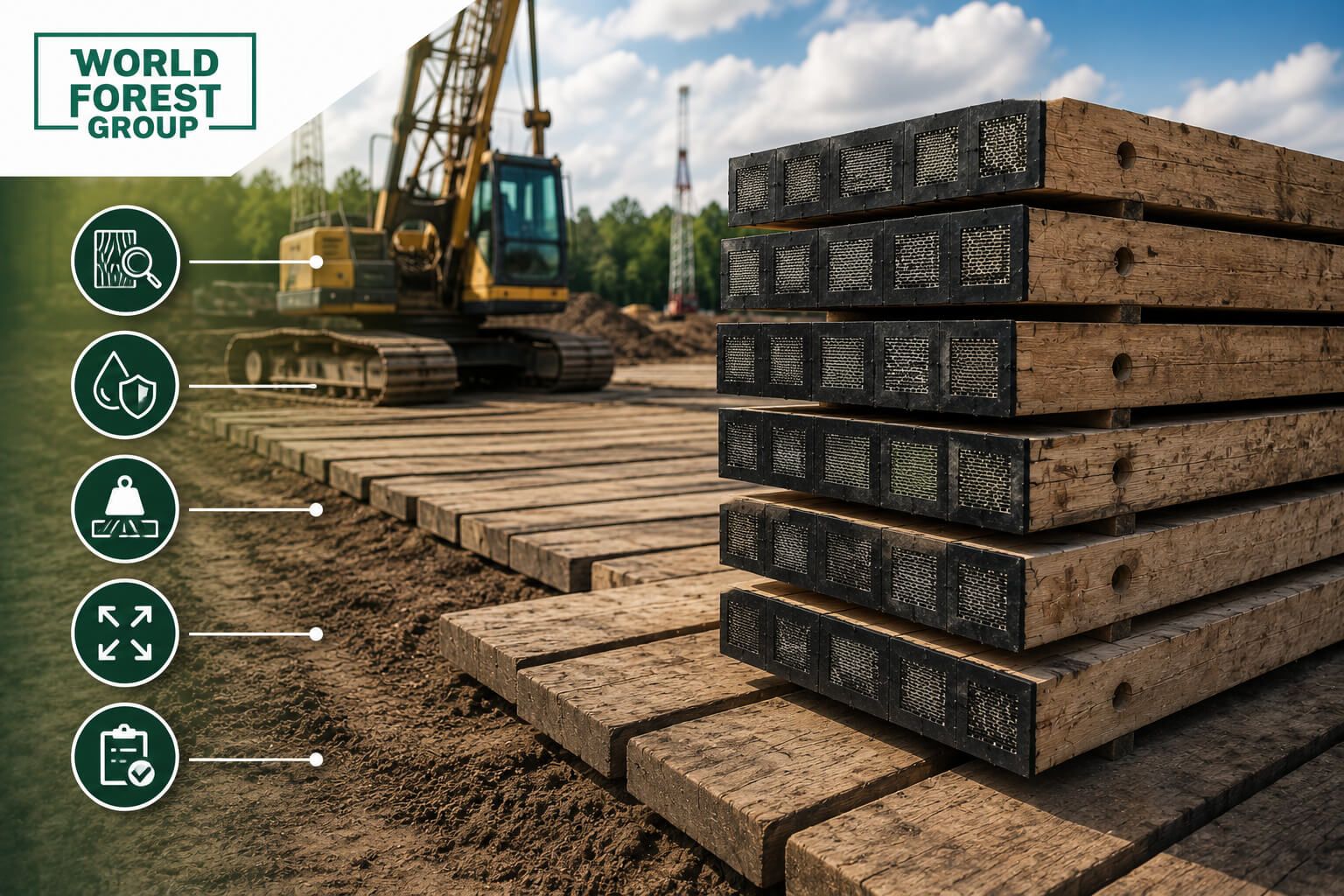
7 Questions to Ask Before Buying Timber Mats
Buying timber mats is more than comparing prices or selecting standard dimensions. The right choice can improve equipment stability, protect the ground, reduce maintenance costs, and keep your project moving on schedule. The wrong choice, however, can lead to equipment delays, damaged access roads, and unnecessary expenses that affect the entire job.
Experienced contractors know that every project has different requirements. Soil conditions, equipment loads, project duration, and weather all influence which mats will perform best. Asking the right questions before making a purchase helps eliminate guesswork and ensures you're investing in a solution that matches your project rather than forcing your project to adapt to the materials available.
Question 1: What Are My Site Conditions?
Start with the Ground, Not the Product
One of the first questions every contractor should ask is whether the ground can safely support heavy equipment.
A construction site with compact gravel behaves very differently from one with soft clay, wetlands, sandy soil, or recently backfilled trenches. Even within the same project, ground conditions can change from one area to another.
Before comparing products, walk the site and identify areas where machinery will travel repeatedly or remain stationary. These locations usually experience the greatest stress and should influence your purchasing decision.
The best timber mats are those that match your ground conditions—not simply the ones with the highest specifications.
Question 2: What Equipment Will Be Operating on the Mats?
Consider More Than Machine Weight
Many buyers focus only on the operating weight of their equipment, but that's only part of the equation.
Ground pressure depends on how that weight is distributed. A crawler crane, tracked excavator, wheeled loader, and fully loaded dump truck all place different stresses on the ground, even if their operating weights appear similar.
Think about how equipment will be used throughout the project. Machines that frequently stop, turn, lift, or carry heavy loads often require greater support than equipment traveling in a straight line.
Matching your mats to actual operating conditions improves both safety and long-term performance.
Question 3: How Long Will the Project Last?
Project Duration Affects Your Investment
Not every construction project has the same timeline.
A short-term utility repair may only require temporary access for a few weeks, while infrastructure, bridge, or renewable energy projects may continue for several months.
Longer projects usually justify investing in durable hardwood products that can withstand repeated heavy traffic without excessive wear. Quality Eucalyptus Timber Mats are often selected for these demanding applications because they offer the strength and durability needed for continuous use while remaining suitable for future projects.
When evaluating your options, think beyond today's project and consider how often the mats will be reused over the coming years.
Question 4: Will the Mats Be Used on Future Projects?
Think Beyond One Job
A common mistake is buying timber mats for a single project without considering future use.
If your company regularly works on civil construction, utility installations, bridge projects, or renewable energy developments, purchasing durable mats that can perform across different environments often provides better long-term value.
Before making a decision, ask whether the same mats will be suitable for future projects with different soil conditions or heavier equipment. Planning ahead can reduce replacement costs and improve your return on investment over time.
Question 5: Are the Mats Built for Heavy-Duty Construction?
Material Quality Makes a Difference
Not all timber mats offer the same level of performance.
The type of hardwood, manufacturing quality, and construction methods all affect durability. Lower-quality products may initially cost less but can wear faster under continuous heavy loading.
For demanding construction environments, many contractors prefer Eucalyptus Timber Mats because eucalyptus is a dense hardwood that provides excellent strength, durability, and resistance to repeated use. Investing in quality materials often reduces maintenance, minimizes downtime, and extends service life.
Instead of comparing products based only on price, compare how they'll perform throughout the life of the project.
Question 6: Does the Supplier Understand My Project?
Choose Experience Over Sales Talk
The best suppliers don't simply recommend the same product to every customer.
They ask questions about your equipment, ground conditions, project timeline, and access requirements before suggesting a solution. This helps ensure you're buying mats that match your project rather than settling for whatever happens to be in stock.
An experienced supplier should also provide guidance on sizing, handling, maintenance, and expected performance based on real job site conditions.
Companies like World Forest Group take this consultative approach by helping contractors choose Eucalyptus Timber Mats or Crane Mats that fit the practical demands of construction, infrastructure, and utility projects.
Question 7: Have I Considered the Total Cost Instead of Just the Purchase Price?
Look at the Bigger Picture
The purchase price is only one part of the overall investment.
Transportation, maintenance, repairs, equipment downtime, and future reuse all contribute to the total cost of ownership. Choosing the cheapest option today may result in higher costs if mats require frequent replacement or fail to support equipment effectively.
Experienced contractors calculate long-term value instead of focusing only on the initial invoice. A quality product that performs reliably across multiple projects often proves to be the more economical choice.
If you're still comparing options, our guides on How to Choose the Right Timber Mats for Your Construction Project, Timber Mats vs Composite Mats, and Timber Mat Maintenance provide additional information to help you make a confident decision.
Buying timber mats shouldn't be a rushed purchasing decision. Asking the right questions before placing an order helps you match the product to your site conditions, equipment, and long-term business needs. When you invest in quality Eucalyptus Timber Mats that suit your project, you're not only protecting the ground—you're helping your team work more safely, efficiently, and cost-effectively from the first day on site.
Frequently Asked Questions
Why should I inspect my site before buying timber mats?
A site assessment helps identify soil conditions, drainage issues, and areas of heavy equipment traffic, ensuring you choose mats that provide the right level of support.
Are Eucalyptus Timber Mats suitable for heavy construction projects?
Yes. Eucalyptus Timber Mats are valued for their strength, durability, and ability to handle repeated heavy equipment loads on demanding construction sites.
How many times can timber mats be reused?
With regular inspections, proper maintenance, and correct storage, quality hardwood timber mats can be reused across multiple projects for many years.
What should I ask a timber mat supplier before purchasing?
Ask about load capacity, recommended applications, material quality, maintenance requirements, expected service life, and whether the mats are suitable for your specific site conditions.
Appreciate the creator