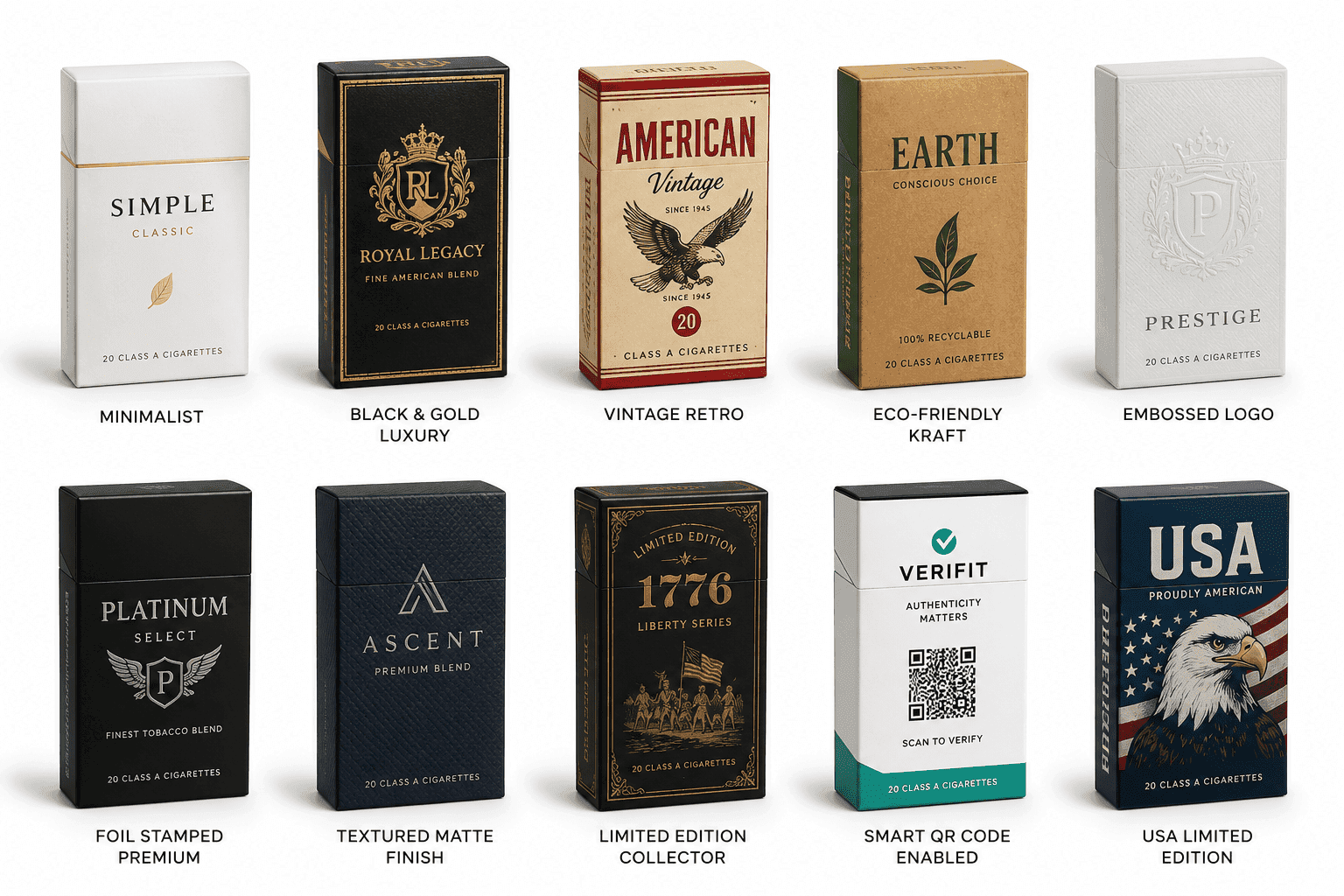
10 Custom Cigarette Packaging Design Ideas to Make Your Brand
In the highly competitive U.S. packaging and consumer goods market, cigarette and smoking-related product packaging has evolved far beyond simple protection. Today, it is about branding, compliance awareness, shelf impact, and emotional appeal. American consumers are highly influenced by visual identity, sustainability messaging, and premium presentation—making packaging design a major factor in brand success.
Whether you are targeting retail shelves, boutique smoke shops, or private-label manufacturing in the USA, your packaging design can directly influence trust and purchase decisions.
Below are 10 modern custom cigarette packaging design ideas tailored specifically for USA brands, wholesalers, and packaging businesses.
1. Minimalist Packaging Designs for Modern USA Brands
Minimalism continues to dominate the American packaging industry. Clean layouts, simple typography, and neutral colors communicate trust and sophistication.
For cigarette packaging, minimalist designs often include:
White or matte black backgrounds
Small, centered logos
Subtle warning label integration
Limited visual noise
This approach is especially popular among premium U.S. DTC brands and boutique smoke product lines. It gives a clean, modern shelf appearance that stands out without being loud.
Minimalist packaging also performs well in online retail listings, where clarity matters more than complexity.
2. Vintage Cigarette Box Designs with American Nostalgia
Vintage-inspired packaging taps into nostalgia marketing—a powerful trend in the U.S. consumer market.
These designs often feature:
Retro typography from early 1900s America
Sepia or faded color palettes
Classic emblem-style branding
Old advertising-inspired graphics
This style works well for brands that want to communicate heritage, tradition, or craftsmanship. In the U.S., vintage aesthetics are particularly effective in specialty shops and collectors’ markets.
3. Luxury Black-and-Gold Packaging Concepts
Luxury packaging is a strong segment in the U.S. premium goods industry. Black-and-gold designs instantly signal exclusivity and high value.
Key features include:
Matte black base with gold foil accents
Metallic embossing for logos
High-contrast typography
Soft-touch lamination
This design style is widely used in high-end lifestyle products, CBD-related packaging, and premium tobacco alternatives in the U.S. market.
It creates a strong “premium shelf presence” that appeals to upscale buyers.
4. Sustainable Kraft Packaging for Eco-Conscious USA Consumers
Sustainability is no longer optional in the U.S. packaging industry. Many American consumers actively prefer eco-friendly packaging solutions.
Kraft packaging for cigarette boxes offers:
Recyclable and biodegradable materials
Natural brown aesthetic
Eco-label messaging
Reduced ink usage designs
This style works especially well for brands targeting eco-conscious buyers or local artisan markets in the USA.
It also aligns with corporate sustainability goals, which are becoming more common across U.S. retail brands.
5. Embossed Branding Designs for Tactile Impact
Embossing adds physical depth and texture to packaging, creating a premium sensory experience.
Popular embossing uses include:
Raised brand logos
Textured borders
Highlighted typography
Symbolic brand marks
In the U.S. packaging industry, tactile branding plays a key role in consumer perception of quality. Customers often associate texture with luxury and authenticity.
This is particularly effective in retail environments where customers physically handle products before buying.
6. Foil Stamped Packaging for Eye-Catching Shelf Appeal
Foil stamping remains one of the most effective techniques for grabbing attention in competitive U.S. retail spaces.
Common foil applications:
Gold or silver logo stamping
Metallic borders
Highlighted product names
Decorative accents
This technique increases visibility under store lighting, making packaging stand out among competing brands.
In the USA, foil stamping is often used for premium tobacco-related packaging, collectible editions, and luxury product lines.
7. Textured Packaging Concepts for Sensory Branding
Texture-based packaging is becoming increasingly popular in the American design industry. It focuses on how the packaging feels as much as how it looks.
Examples include:
Soft-touch coatings
Linen-style textures
Raised surface patterns
Matte-grain finishes
This approach improves user experience and strengthens brand recall. In the U.S. market, tactile differentiation is a major advantage for brands competing on crowded shelves.
8. Limited Edition Packaging for Seasonal U.S. Campaigns
Limited edition packaging is a powerful marketing tool in the USA, especially during:
Holidays (Christmas, New Year)
Summer promotions
Brand anniversaries
Product launches
These designs often feature:
Special color variations
Collector’s edition numbering
Seasonal artwork
Event-based themes
Limited packaging creates urgency and exclusivity, encouraging faster purchase decisions. Many American brands use this strategy to boost short-term sales spikes.
9. Smart Packaging Features (QR & Digital Integration)
Smart packaging is rapidly growing in the U.S. consumer goods market. It bridges physical packaging with digital experiences.
Modern cigarette packaging may include:
QR codes for brand storytelling
Authenticity verification systems
Age verification portals
Interactive AR experiences
This approach is especially useful for compliance-heavy industries in the USA, where traceability and transparency matter.
Smart packaging also helps brands build stronger digital engagement beyond the shelf.
10. Bold Typography & High-Contrast Branding Designs
In competitive U.S. retail environments, bold typography can make or break shelf visibility.
Effective design elements include:
Large sans-serif fonts
High contrast color combinations
Minimal background distractions
Strong brand name focus
This style is commonly used by emerging U.S. brands that want immediate recognition. It works especially well in convenience stores, gas stations, and high-traffic retail environments.
Conclusion
Custom cigarette packaging boxes design in the USA is no longer just about protection—it is about branding, compliance awareness, consumer psychology, and shelf dominance.
From minimalist aesthetics to luxury foil stamping and smart digital integration, each design approach serves a unique purpose in the American market.
The most successful U.S. brands often combine multiple elements—such as minimalist layouts with embossed logos or sustainable kraft material with smart QR features—to create packaging that is both functional and emotionally engaging.
In 2026 and beyond, the U.S. packaging industry continues moving toward clean design, sustainability, and interactive brand experiences, making thoughtful packaging design one of the strongest competitive advantages for any cigarette or smoking-related brand.
Appreciate the creator